
Festival – Day of the Candles
FESTIVAL – DÍA DE LAS VELITAS
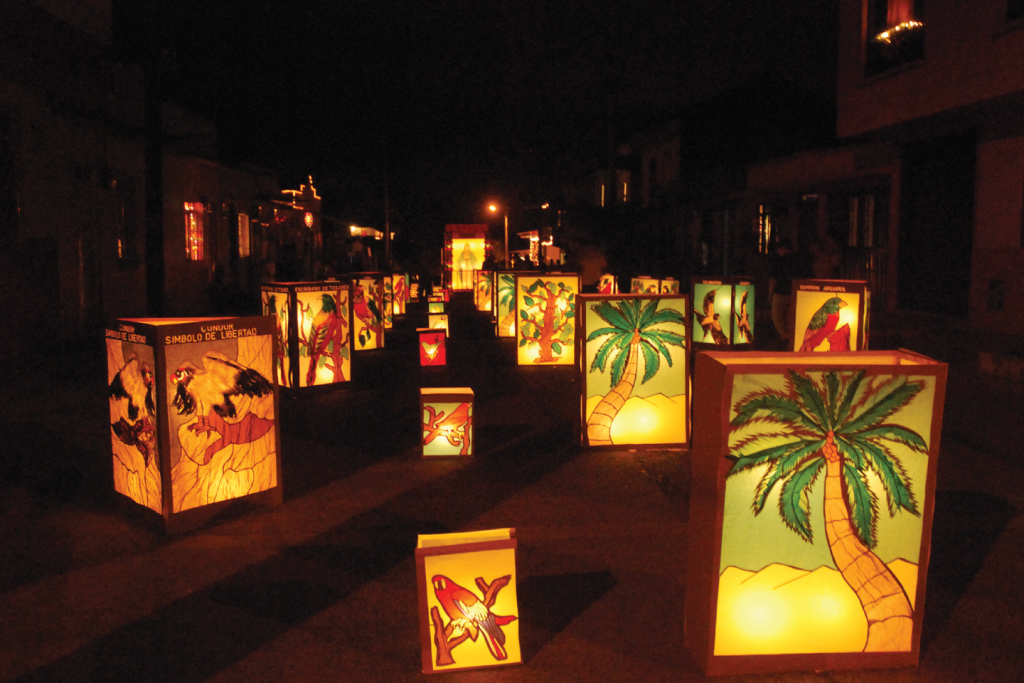
The streets of the entire country are filled with candles and bright colours, while families enjoy the party that marks the beginning of the Christmas celebrations. As the Christmas celebrations begin, songs such as Las Cuatro Fiestas, El Emperadorcito or Las Piragua are sung whilst families joyously gather in celebration.
The celebration of the Day of the Candles, known as Día de las Velitas, is one of the most significant holidays in Colombia and is celebrated every 7th of December. The date marks the beginning of the Christmas festivities and lights up the streets of pueblos and cities throughout the country.
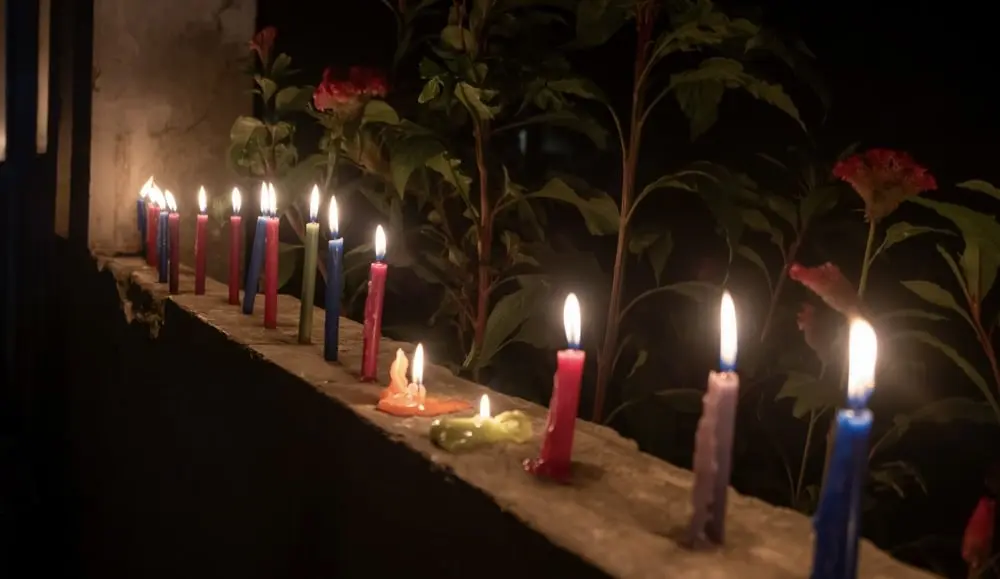
On the Day of the Candles, families light candles in front of their houses, display coloured lanterns as decoration and make wishes for the year that is about to begin. A special meal is prepared and in some places, the rosary is prayed and novenas are held.
Although the celebration has a religious origin, it is common for even non-believers to participate in the lighting of candles in the company of their loved ones.
In large cities, such as Bogotá, nighttime activities take place in museums, shops and parks for an evening of family fun. While in rural regions, horseback riding through the pueblo and traditional festive dishes are prepared while illuminated lanterns are hung in windows, balconies and doors of houses.
Day of the Candles is a unique Latin American expression of a larger celebration in the Catholic world, the Feast of the Immaculate Conception, instituted by Pope Pius IX in the mid-19th century. century. The concept behind this feast refers to the idea that in order for the Immaculate Conception to occur, the Virgin Mary had to have already been redeemed from sin from the moment she was conceived.
Starting around the fifth century, theologians debated the exact status of Mary’s holiness and grace until an international group of bishops in the 19th century. century strongly suggested Pope Pius IX declare the concepts behind the Immaculate Conception as official doctrine.
While the pope was in the process of publishing the apostolic epistle Inefables Deus, making this feast official, Catholics lit candles and lanterns in support of his intentions. This practice has continued to this day, especially in Colombia. From then on, the custom of lighting candles and hanging lanterns on doors and windows on the night of the 7th. December was established as a prelude to the celebration in honour of the Virgin. It is highly likely that the Spanish introduced the custom during the colonial era and the Colombians adapted the tradition to their own culture.
Nowadays, it is common to make a wish with each candle, or to organize parties and events in the streets and parks. In pueblos and cities such as Villa de Leyva, Medellín, Corrales, Boyacá and Quimbaya, Quindío, the Day of the Candles is celebrated with more enthusiasm, attracting hundreds of national and international visitors. In celebration of the Immaculate Conception, December 8th marks a national holiday in Colombia.
The essence of the celebration has remained intact over time. However, in recent years, the celebration has been evolving and it is now common for the candles to be accompanied by drawings or messages, sometimes of a political nature.
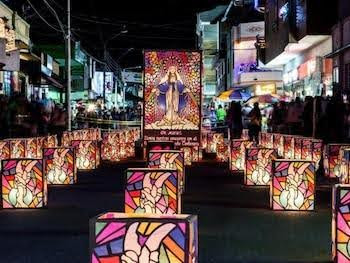
Quimbaya, Quindío
What happens during Little Candles Day?
The main activity for Day of the Candles is the lighting of candles in all forms, single candles of all colours, candles in glass holders and candles in paper lanterns known as faroles. These faroles are often red and slightly pointed, but they come in other colours, too.
Sometimes they are made of glass in the form of flowers or are simply paper bags not unlike the farolitos (little paper lanterns) common at Christmas.
The candles are placed in almost every imaginable area. In houses, they may be in doorways or on windowsills, or lining a walkway or a balcony.
Public spaces may have a spontaneous collection of candles in any little spot, such as sidewalks or a planned lighting in a public square.
Much larger candle decorations might stretch as far as the eye can see in rows and rows of candles and lanterns, creating a magical feeling.
Each person lights a candle as a way of making a wish for the upcoming year but also expressing gratitude. This act is both a personal and religious one dedicated to the Virgin Mary, a gesture also said to guide the Virgin to homes.
However, not everyone who participates in the celebrations is religious and some simply enjoy setting intentions for the new year and joining in the festivities.
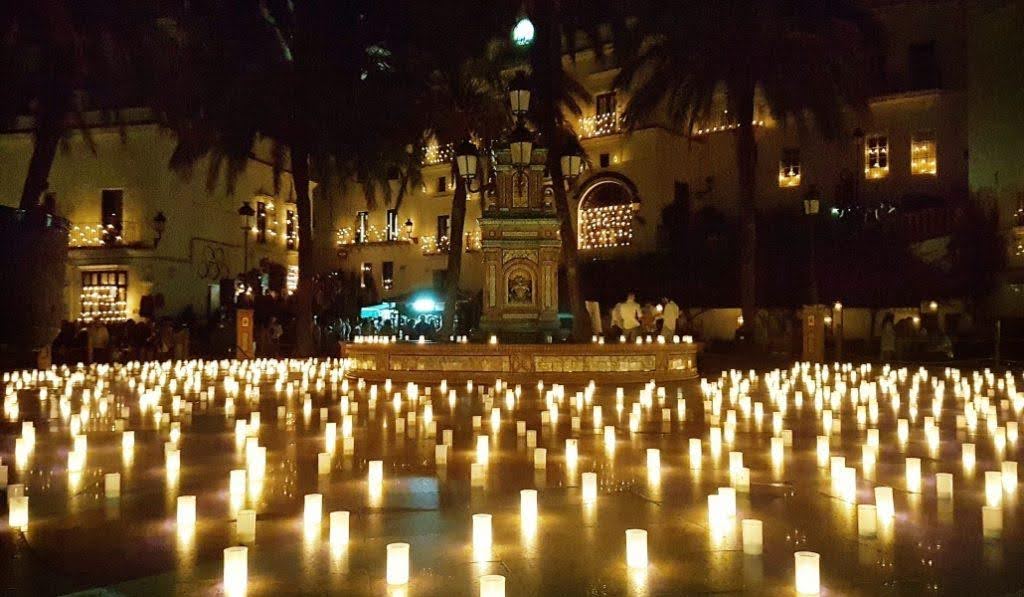
Bogotá
Celebrations are varied; some spend it with their family, and many go out dancing with their friends. Many people choose to dress up and party.
Families may then gather at home after going out to observe the lit beauty of the night.
As in many other Catholic countries of the world, the next day initiates the Christmas season. To celebrate the Feast of the Immaculate Conception, some may go to mass or hang a white flag with an image of the Virgin Mary on it outside their home.
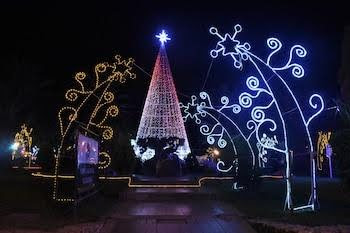
Nobsa, Boyacá
Special local Day of the Candles celebrations
Each Colombian pueblo has its own special way of celebrating. From the Caribbean to the Pacific, in the three mountain ranges and the Llanos, in Quimbaya, Ipiales, Pasto and Túquerres, some celebrate at the beginning of the night of the 7th, others in the early morning of the 8th. Bonfires are lit in the mountains and fields, in the capitals, the buildings and parks are illuminated, and the country lights up with candles and lanterns. Each town or city has its own special way of enjoying this evening meant for reflection, hope, and a renewed sense of spirit.
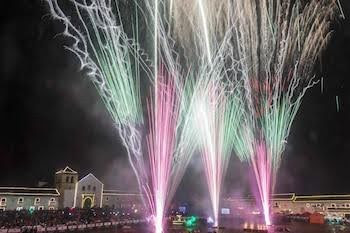
Villa de Leyva
Bogota
Situated high in the Andes Mountains, Bogotá, the capital of Colombia, features some of its best festive decorations on this special evening. Decorations are scattered all over the city and traffic is closed on many streets to allow people to admire the lights. Traditionally, families stroll around for cultural events, shopping and admiring Nativity scenes. Bogotá museums, stores and shopping malls often stay open late on this day and there may be live concerts.
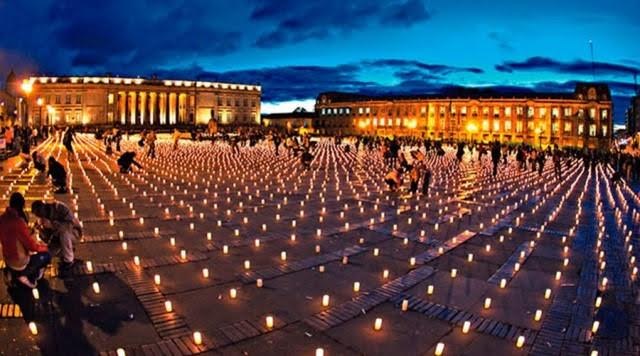
Plaza Bolívar, Bogotá
Medellin
Not only do candles get lit all over Medellín, but the city’s Christmas lights are turned on at this time as well. The Desfile de Mitos y Leyendas (Myths and Legends Parade) is the highlight of the evening for many. Colombian legends come alive in the form of huge floats, costumed dancers and masked musicians in the carnivalesque event.
Fireworks top off the evening in this northwestern city, capital of the Antioquia region.
As many of the residents in the Paisa region are of Jewish descent, the Día de las Velitas takes place several nights before December 8th, similar to Hanukkah traditions.
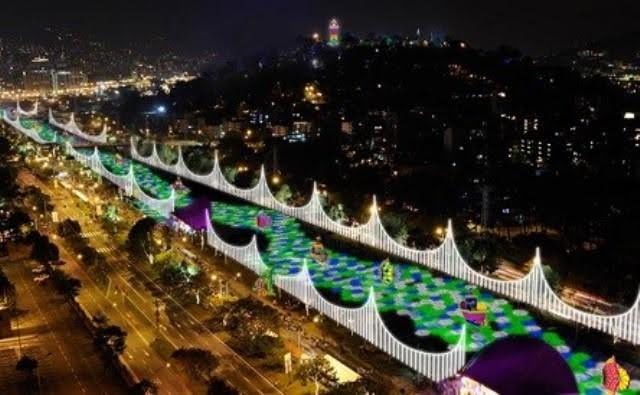
Rio Medellín
Barranquilla
In the Caribbean Region of Colombia, people light up candles and lanterns during the early hours of December 8th. Many Catholics wake up before dawn to light candles with their families, some staying up all night to light the candles and celebrate. Much like in other religions of Colombia, family gatherings are a very important way to share the celebrations, having plenty of food and drink.
Barranquilla was the birthplace of Adolfo Echeverría and a woman named Nury Borrás. Respectively, they authored and sang Las Cuatro Fiestas (The Four Celebrations), a song honouring the festivities around this time of year in Colombia, Day of the Candles, Christmas, the New Year and Carnival.
The composition with a Caribbean twist, written in the early 60s, became a popular holiday tune. It can be heard all over Colombia during December and January, but is particularly popular on the night of the 7th. December. Echeverría also wrote another song for this special day, Inmaculada. Those from Barranquilla take special pride in the origin of these songs.
As mentioned, Barranquilla residents rise in the very early morning hours of the 8th. December to light and position their faroles.
Quimbaya
Located in the north-western part of Colombia in the coffee growing axis, Quimbaya holds its famous Concurso de Velas y Faroles (Candle and Lantern Contest) every year for Día de las Velitas.
Hundreds of craftspeople compete for the prize by creating elaborate, colourful lanterns honouring the Immaculate Conception. The artisans may present their wax-lit creations on an entire street, creating an artistic installation for all to enjoy. There are sometimes as many as 40,000 faroles in the streets of Quimbaya.
Moreover, the Quimbaya native people in Colombia believe in the Christmas Panther. This belief is thought to have derived from when Spanish colonialists from Antioquia arrived and their belief of the Immaculate Conception was combined with the assumption that the fear of fire kept the panthers away.
During Day of the Candles, it is commonplace to see the sculptures of this panther surrounded by lit candles. The panther is exhibited in different forms, made with a variety of materials.
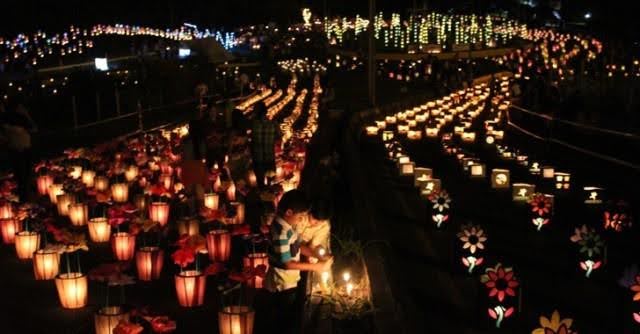
Streets in Quimbaya
Cali
It is common for residents of Valle del Cauca and visitors to stroll along the banks of the Cali River. This river is elegantly illuminated in preparation for Christmas.
Rural areas
In smaller, more remote pueblos, families may prepare traditional food and display homemade decorations. In mountainous regions, they may light a bonfire after a more practical activity that often occurs around this time of year in many parts of the world, collecting wood and kindling.
What does Little Candles Day mean for Colombian Children?
The Day of the Candles is considered a cherished childhood tradition. The combination of family celebrations, being thankful and the beauty of their pueblo can be a very meaningful experience for a child or young person.
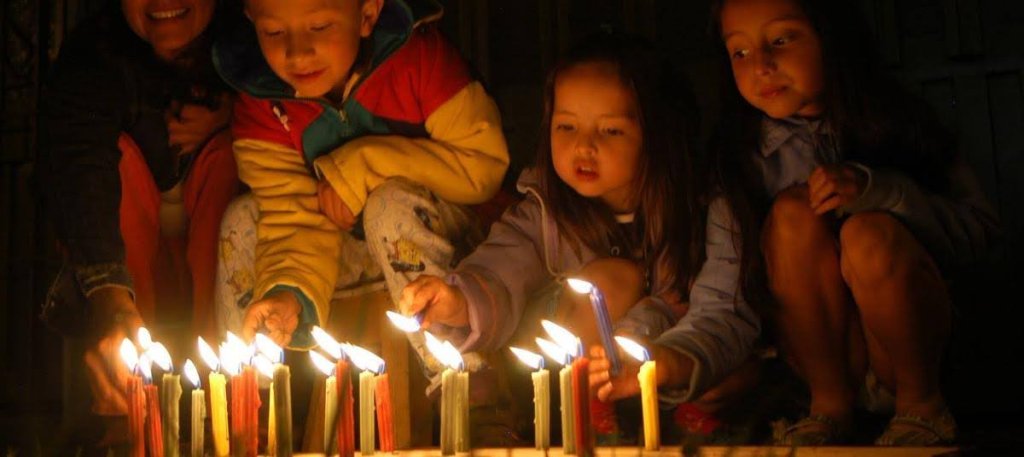
Children lighting their candles.
Like to create or customize a fantastico package tour of Colombia? Use our Plan My Trip page to start planning your dream Colombian vacation now!