
FESTIVALS DURING SEMANA SANTA
With the overwhelming majority of Colombians being of the Catholic faith, it is unsurprising that Easter, Pascua and Holy Week, Semana Santa, are one of the most important holidays of the year.
Many people take off work to complement the two days of holidays to get a full week of well-deserved holiday time. With so many people not working and the religious significance of the holiday, the country is awash with festivities and traditions of different kinds, especially in some of the smaller towns in the countryside.
One of the most famous celebrations during the Semana Santa is in Popayán, Cauca. Their Easter festivities, which have been held there since at least 1558, are the second largest of their kind, after those in Seville, Spain.
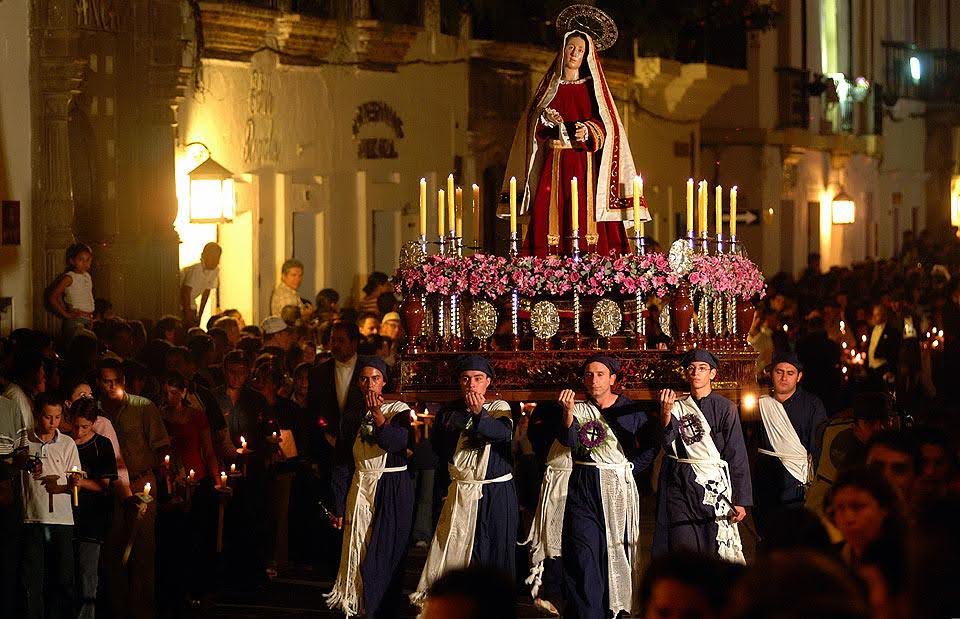
Popayán
Popayán, which has been rebuilt after it was destroyed by an earthquake in 1983, is known as the white city because of its whitewashed colonial buildings and has several spectacular churches. People from all over the region and country flock here for the religious processions held during Semana Santa. Tens of thousands of people take part in the parades, which include huge wooden statues of religious figures such as Jesus Christ and his disciples.
The processions, declared a Masterpiece of the Oral and Intangible Heritage of Humanity by UNESCO, occur throughout the week leading up to Easter, with the biggest and most popular ones on the nights of Maundy Thursday and Good Friday.
Another popular destination to experience Colombian religious culture is Mompox, Bolívar. This city, along the banks of the Magdalena River, was once an important trading point during the colonial period due to its proximity to the Caribbean coast where goods such as gold, emeralds, tobacco and slaves were brought in and out of the country.
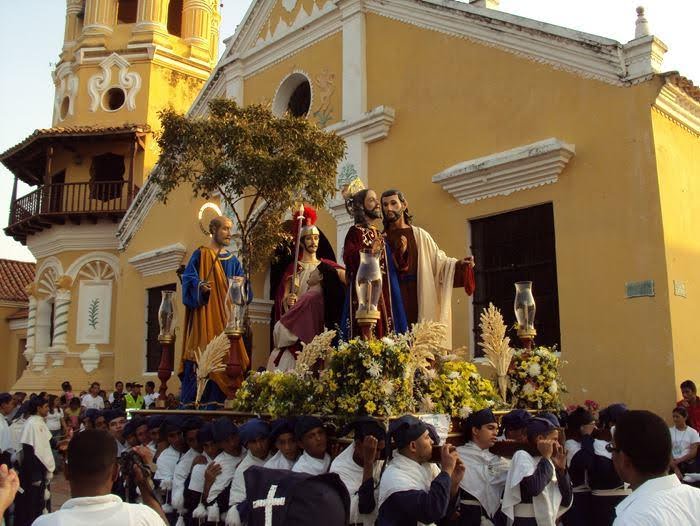
Mompox
During Semana Santa, the city hosts parades through the streets with participants carrying images and statues of religious characters to commemorate the death and resurrection of Christ.

Mompox
Heading south, towards the border with Ecuador, in the department of Nariño, is the beautiful Gothic basilica Santuario Nuestra Señora de las Lajas.
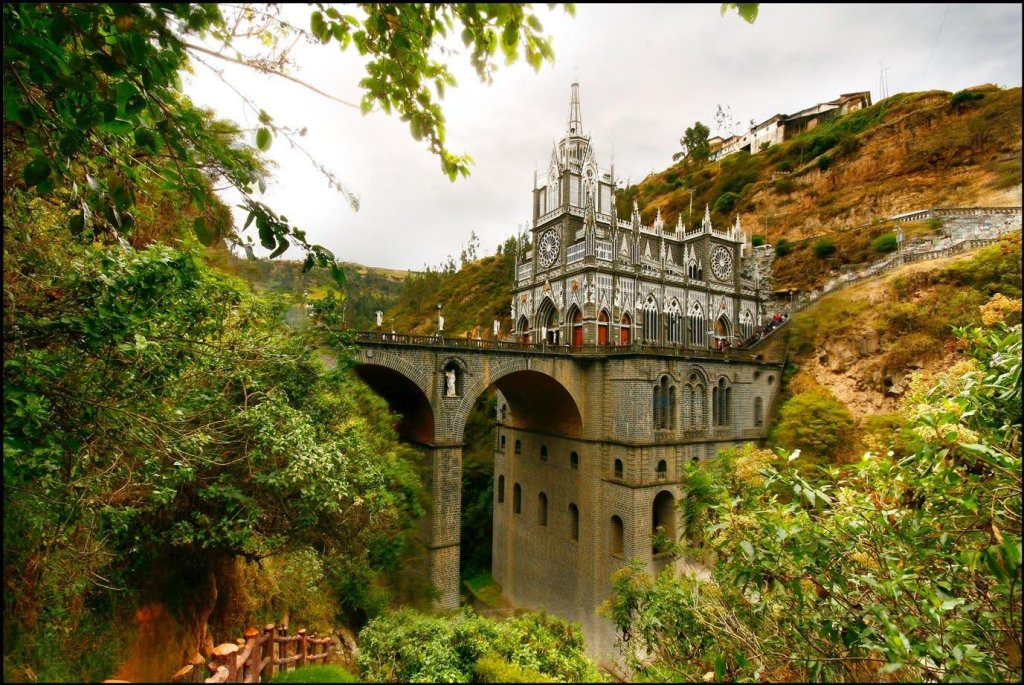
Santuario Nuestra Señora de las Lajas
The pueblo of Ipiales draws pilgrims and tourists alike from both countries, keen to take part in the religious rites brought over by the Spanish during the times of the conquistadors. Although this century-old tradition of the Easter celebration is largely linked to the Catholic church, current interpretations include aspects of indigenous culture, such as typical food offerings from the region.
The sanctuary sits impressively in a canyon across the Guáitara River, making it one of the most picturesque sights in the country. Well worth a trip just for a photo shoot.
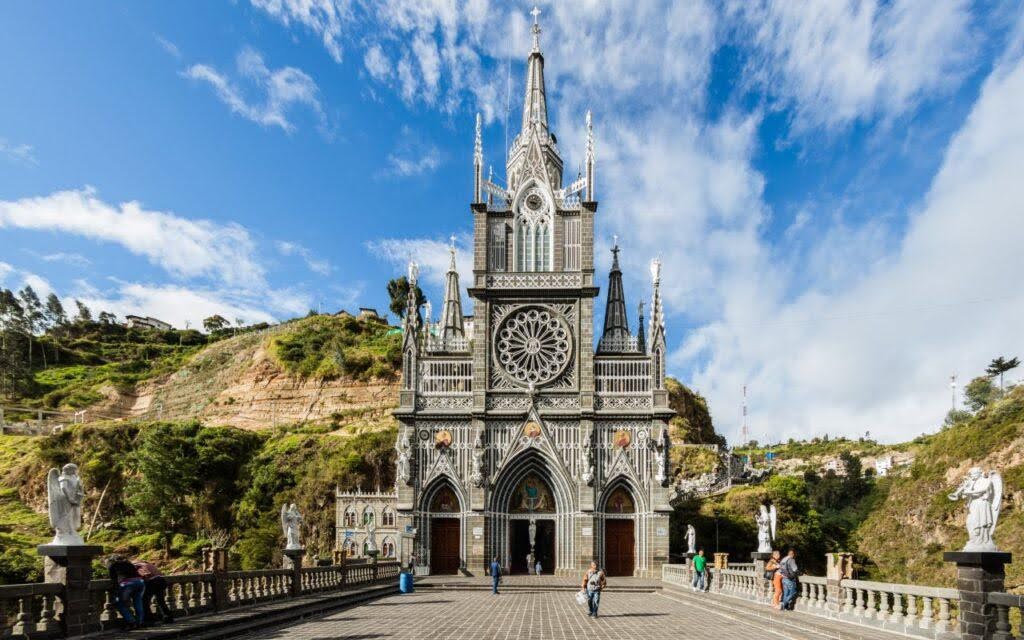
Santuario Nuestra Señora de las Lajas, Ipiales
In Bogotá, it is a tradition during this period to ascend the Monserrate mountain. It is a hike of nearly an hour all uphill, where the last section is the hardest because it is particularly steep. However, once you arrive,e the effort is rewarded with a truly spectacular view of the city below. For those less inclined to hike, fear not as there is the option of taking the cable car.
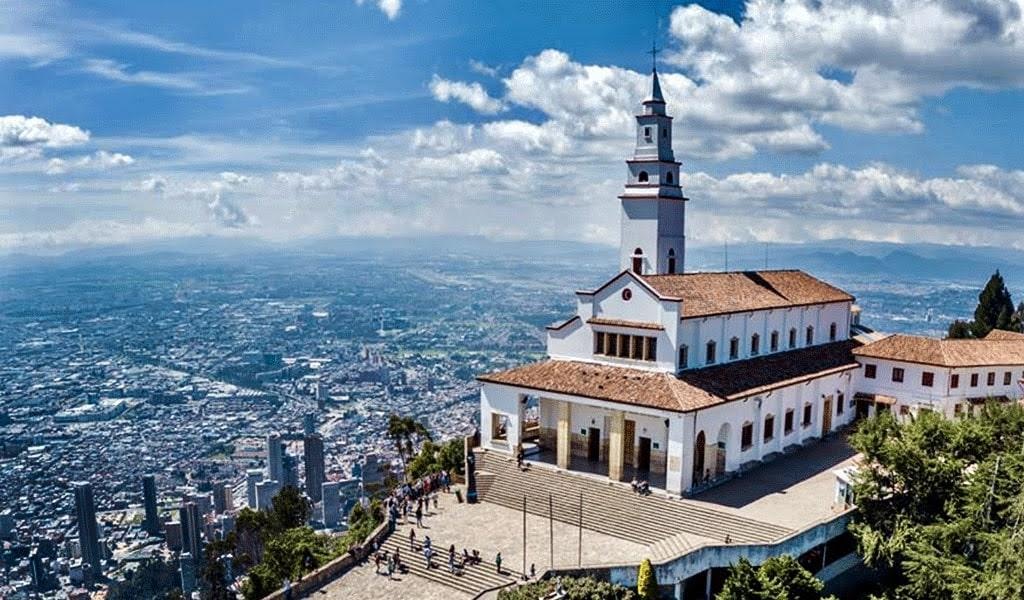
Monserrate
For those staying in Bogotá and looking for something to do outside the city over Easter, the Salt Cathedral in Zipaquirá is a tremendous option.
This popular tourist attraction just north of the capital is an underground church carved into the walls of a salt mine with the dark tunnels illuminated by different coloured lights creating a magical effect.
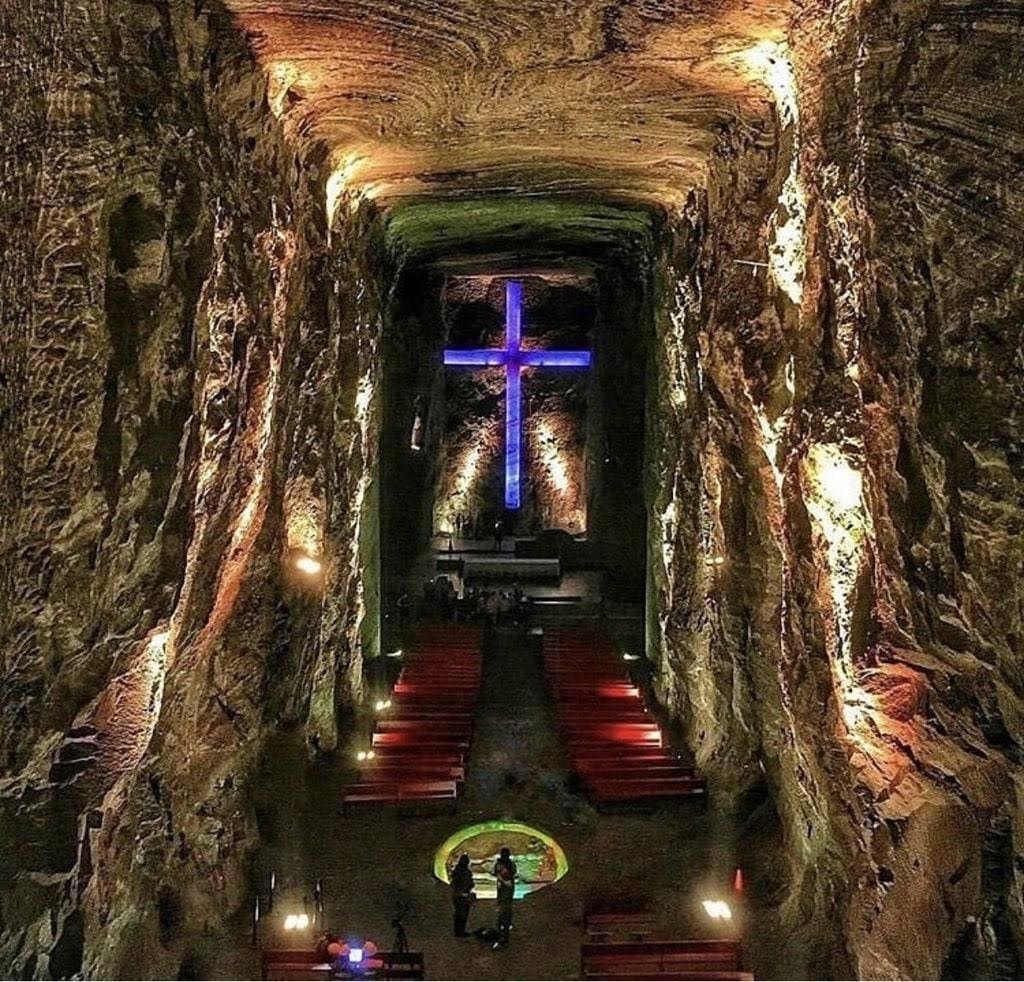
Salt Cathedral of Zipaquirá
The Sunday services at the cathedral attract thousands of worshippers every week and even higher numbers over Semana Santa, when processions are particularly popular for those wanting to follow the stations of the cross carved into the salt formations.
The Valle del Cauca city of Guadalajara de Buga is another famous destination for pilgrims and religious revellers. Each year, over half a million people descend on the city to take part in the Holy Week celebrations held around the pink structure that is the Basílica del Señor de los Milagros. Buga is also popular for a relaxing holiday due to its proximity to a number of ecotourism attractions such as Lake Calima, Reserva Forestal Alpes and Parque Natural de las Hermosas.
Jericó is an Antioquian city that is the birthplace of the first-ever Colombian saint, Mother Laura Montoya. Besides its stunning horizons and lush scenery, Jericó is a massively religious centre that is well worth the visit. During Holy Week, Jericó welcomes thousands of pilgrims and tourists who pay homage to the Immaculate Heart of Mary and participate in the week-long ceremonies.
Hosting some of the country’s best Easter parades for over 350 years, Santa Fé de Antioquia is yet another small colonial pueblo that comes alive with tradition during Semana Santa. During the week-long celebrations, the sleepy, cobblestone streets undergo an incredible transformation. The entire pueblo becomes enveloped with a perfumed cloud of incense as the women lead the processions, followed by a full orchestra and pilgrims carrying elaborate religious statues.
There is something uniquely compelling about spending Easter in Cartagena. It is not just the promise of sun-soaked days and a vibrant cultural scene; it is more about the opportunity to immerse oneself in living history. Strolling through the Old City, one is transported back in time, amidst colonial architecture and cobblestoned streets. Each corner tells a story, each festival a chapter in Cartagena’s rich historical narrative.
Cartagena is well familiar with the art of celebrations and at the Church of La Trinidad, you can attend the Via Crucis and various Holy Week celebrations.
For those who are not of a religious persuasion or are non-Catholic, you can take advantage of the week by taking a trip out of the city to one of the outlying islands.
In Tunja, Boyacá, the week is filled with cultural and religious rituals and spectacles. Each day, there is a procession that consists of dozens of floats representing Jesus’ road to crucifixion.
The floats are extremely heavy and the people carrying them are often barefoot or wearing minimal sandals. Participants wear cloaks and hoods and march through the city streets. It is fascinating to watch the procession and afterwards, enjoy a free symphony concert in a church, where a full orchestra plays stunning classical music, especially Mozart.
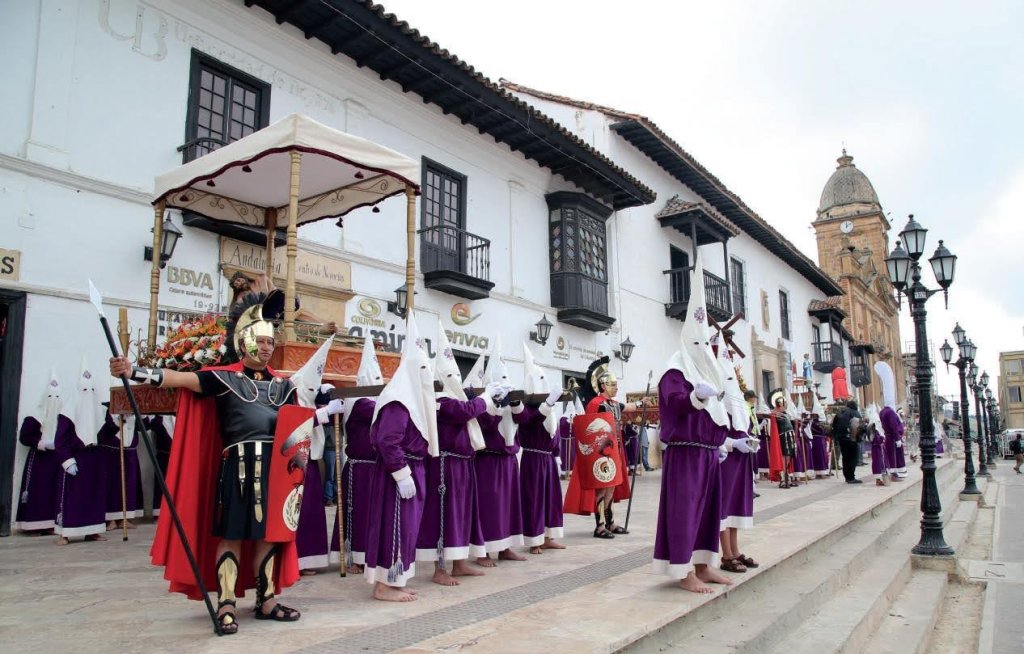
Tunja
Some smaller, less well-known pueblos also have their festivities. They include these:
Holy Week in Pamplona, Santander, which shares a border with Venezuela, is the centre of Santander’s culture. In the colonial period, Pamplona was an important road corridor, since expeditions departed from it for territories still unknown at the time.
The main event is the children’s Holy Week Parade, where hundreds of children, who have been rehearsing at school, participate in processions and other ceremonial acts. Dressed as nuns and Nazarenes among others, they fulfil the roles of the processions and parade through the streets of Pamplona in wildly coloured clothing. Within the framework of this religious celebration, there is also the International Choral Music Festival, whose main stage is the Santa Clara Cathedral of Pamplona.
Holy Week in Yopal, Casanare is something different and unlike most pueblos of Colombia. Activities are not characterized by processions or religious events, but rather by complementary activities that occur during the week. This includes craft shows, sports activities, religious concerts, theatre and activities that better facilitate young people’s understanding of religious mysteries.
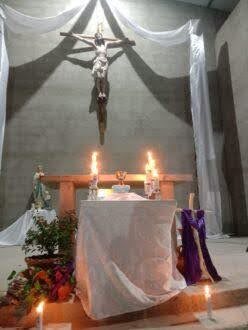
Our Lady of Guadalupe Chapel, Yopal
Honda, Tolima musical traditions are the focus of Semana Santa in this most beautiful of pueblos. Visitors can enjoy numerous concerts from local groups as well as a performance on Good Friday by the Tolima Conservatory Symphony. They can also enjoy Honda’s fabulous climate and natural beauty with a fishing excursion or a ferry ride on the Magdalena River.
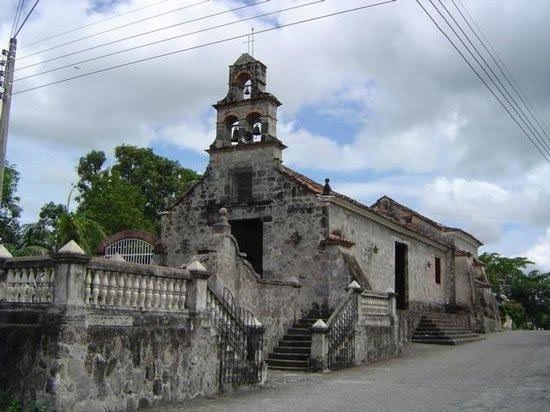
Santuario de la Ermita, Honda
Girón, Santander is known for its captivating religious processions and rich colonial history. Here visitors can enjoy a polyphonic choral concert on Palm Sunday, a procession of 600 lanterns on Good Friday or if you are in need of some entertainment, get a laugh at one of the many clown and harlequin performances.
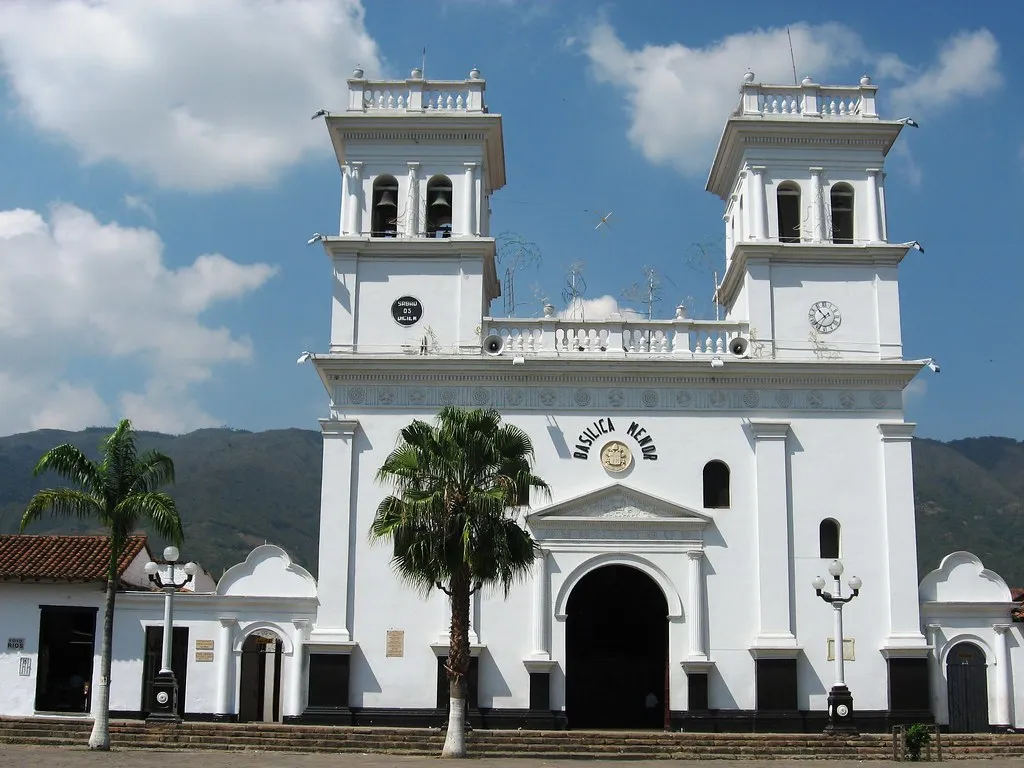
Girón
In Lorica, Cordoba, the church works to feed the soul while the locals make sure to feed the body. Culinary preparations begin two weeks before the Holy Week in this Caribbean pueblo. Visitors can sample local delicacies such as shrimp souffle, creole chicken stew and a selection of traditional indigenous candies.
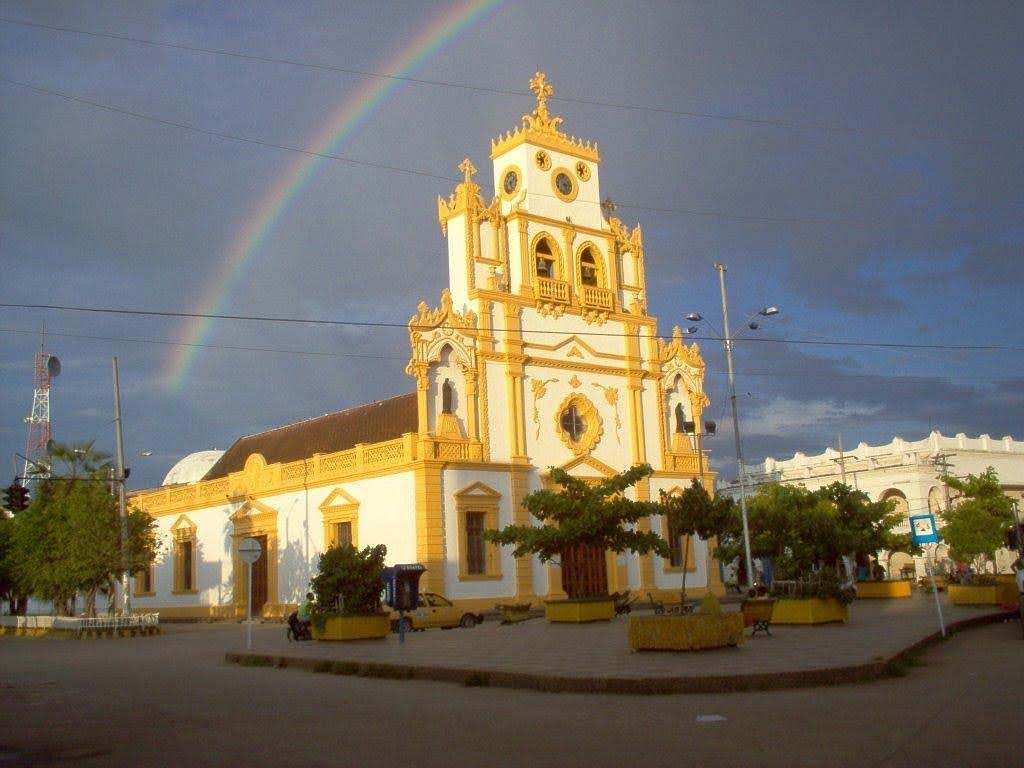
Lorica
The celebrations in Salamina, Caldas, focus on showcasing the pueblo’s extensive collection of art and fine jewellery. On Palm Sunday, a masterfully crafted wooden carving of Jesus is carried through the pueblo on a donkey. Later in the week, processions carry paintings through the town, some of which are hundreds of years old and were brought over from Europe by missionary priests, including Father Jose Joaquin Barco Angel.
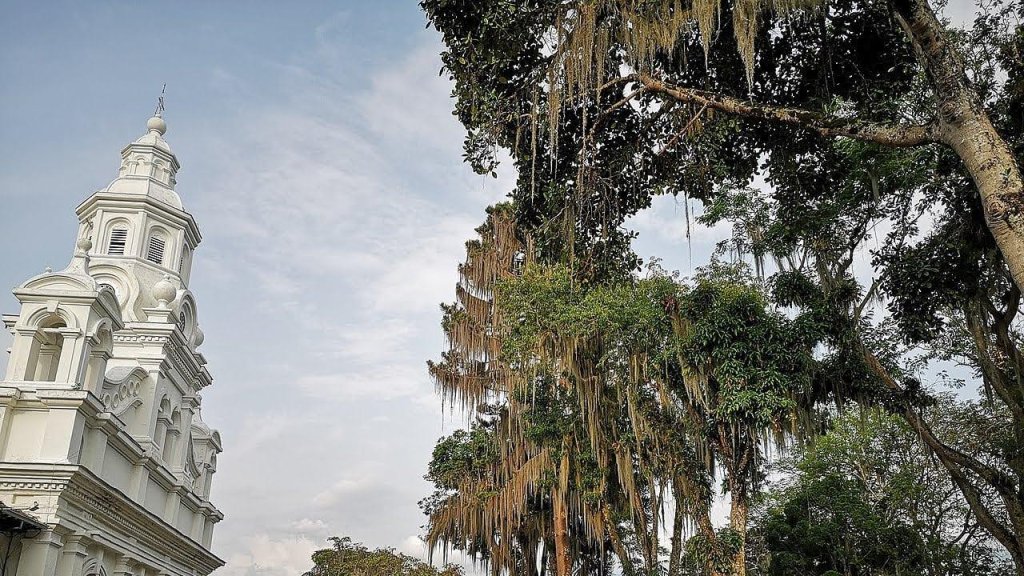
Minor Basilica of the Immaculate Conception, Salamina
There is always something happening in Colombia wherever you spend Semana Santa!
Like to create or customize a fantastico package tour of Colombia? Use our Plan My Trip page to start planning your dream Colombian vacation now!