
PUEBLOS PATRIMONIO VILLA DE LEYVA
(Colombian Heritage Towns: Villa de Leyva)
About a four-and-a-half-hour drive from Colombia’s capital, Bogotá, lies one of the country’s most charming and engaging historic pueblos.
Villa de Leyva
We work with and recommend booking flights with www.kiwi.com
Now known internationally, Villa de Santa María de Leyva—its formal name—was declared a Colombian national monument in 1954. As a result, much of the historical centre has survived in pristine condition. Many of its buildings date back to the town’s founding by colonizer Hernán Suárez de Villalobos in 1572. Initially, it was a retreat for military officers, clergy and the nobility.
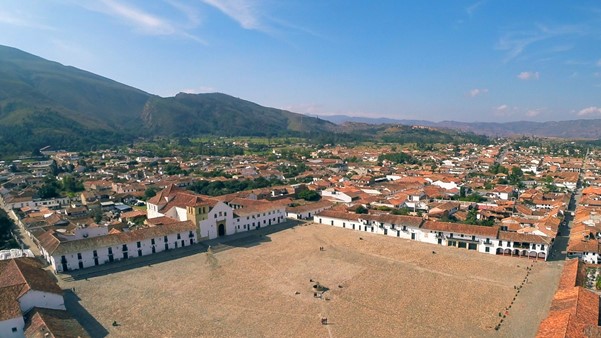
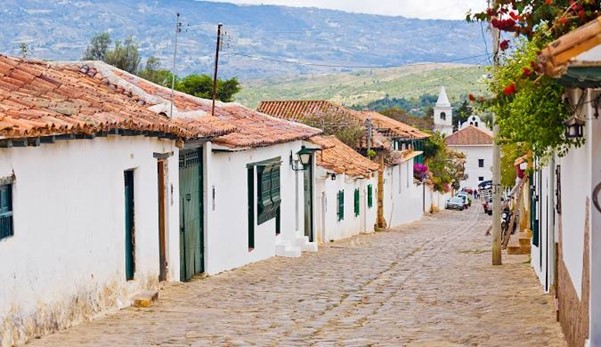
The colonial pueblo feels frozen in time, with its whitewashed buildings and cobblestone streets perfectly preserved.
It has also been made a Pueblo Patrimonio (Heritage Town), one of eighteen in the country.
Even new buildings reflect the Spanish colonial legacy, with two-storey townhouses featuring wooden balconies and charming square courtyards.
Villa de Leyva is a destination that combines history, culture and nature, offering an authentic and enriching travel experience. Whether you’re into colonial architecture, outdoor adventures, or local culture, Villa de Leyva offers everything for a memorable visit.
Villa de Leyva and its surrounding countryside rank among the safest places in Colombia to explore off the beaten path. Nearby are multiple waterfalls, a desert, adventure-sport opportunities and even some vineyards.
The physical beauty of the surrounding countryside and mild, dry climate have long attracted visitors.
Villa de Leyva is Colombia’s most renowned historical pueblo, known for its rich culture, traditions, and colonial architecture. Designated a Pueblo Patrimonio, the town offers a fascinating journey into the past, attracting visitors worldwide with its historical charm.
CLIMATE AND WEATHER
In Villa de Leyva, summers are comfortable, winters are short, cool, and wet, with overcast skies much of the time. Over the course of the year, the temperature typically varies from 10°C/50°F to 22°C/72°F and rarely goes below 5°C/41°F or above 24°C/75°F.
The warm season lasts nearly 4 months, from late December to early April, with an average daily high temperature above 22°C/72°F. The warmest month of the year in Villa de Leyva is May, with an average high of 21°C/70f and low of 13°C/55f.
The cool season lasts for 3 months, from late June to mid-September, with an average daily high temperature below 21°C/70°F. The coolest month of the year is January, with an average low of 10°C/50°F and high of 22°C/72°F.
The wet season lasts 9 months, from mid-March to early December, with a greater than 54% chance of a given day being a wet day. The month with the most wet days in Villa de Leyva is May. The dry season lasts nearly 4 months, from early December to mid-March, with the fewest wet days in January.
In Villa de Leyva, summers are mild, winters are short, cool, and wet, with frequent overcast skies. Naturally, using high-factor sunscreen is essential. The elevation of Villa de Leyva is 2,144m/7,037 feet above sea level and has a population of about 17,000 people.
Architecturally, the historic center of Villa de Leyva has remained largely intact since its 16th-century foundation. At the heart of this Colombian colonial gem sits a vast river-stone plaza, the largest in Colombia and among the largest in South America. A small Mudejar fountain, which supplied water to the locals for nearly four centuries, is the only interruption to the expanse.
The 150,695 sqft/14,000 sqm plaza is a sea of cobbles surrounded by whitewashed colonial buildings. The 17th-century Parish Church of Our Lady of the Rosary is found on the northern side. The building exhibits colonial baroque architecture and still has its original altarpieces carved from wood and covered with gold.
In most Colombian cities, the main plaza is named after Simón Bolívar, the historic liberator, but this one is traditionally known as Plaza Mayor. The City Hall offices, museums and commercial enterprises are located in the surrounding buildings.
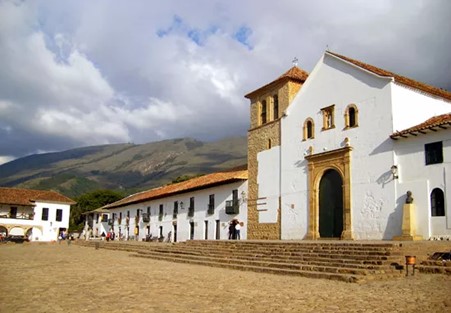
Around the main plaza and the cobbled streets are many notable colonial buildings, including the Iglesia Catedral, Iglesia del Carmen, Museo Antonio Nariño, San Francisco Convent, and Casa del Congreso. Also visit La Mesopotamia, an old flour mill built four years before Villa de Leyva’s foundation, now converted into a hotel.
 Begin organizing your dream Colombian getaway right away by using our Plan My Trip page!
The area around Villa de Leyva is ideal for outdoor adventure enthusiasts.
Chibchas Cave Paintings can be viewed approximately 7 kms/4 miles from Villa de Leyva.
Villa de Leyva’s Desert landscape can be thoroughly enjoyed with activities like motocross or mountain biking and at the same time searching for fossils.
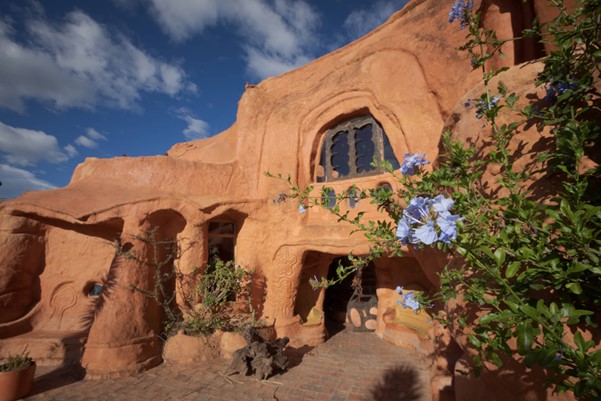
Casa Terracota is a building project that uses the four elements, earth, air, water and fire, to transform fired clay into architecture.
The world’s largest ceramic building contains other arts and crafts for visitors to admire.
Just a fifteen-minute drive out of town is one of Colombia’s most ancient sites.
Monquira Archaeological Park, El Infiernito is a very unusual site to see if you are interested in astronomy and pre-Columbian history. It is an ancient astronomical centre of the Muisca communities, who used stone monoliths in the shape of a phallus (symbol of fertility) and the rays of the sun to determine the seasons and establish a calendar for the harvesting of crops.
In the surrounding fields, many rectangular stones of different sizes have been found and it is assumed that they were used for Indigenous worship and ritual.
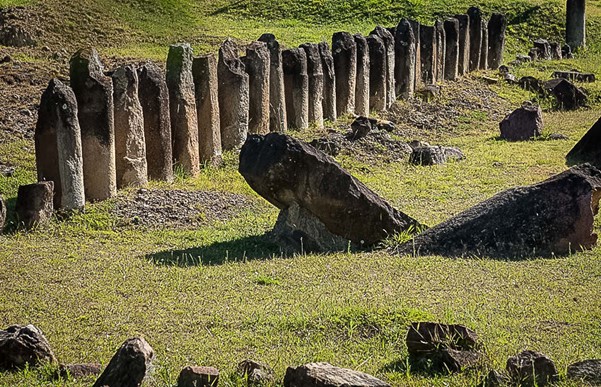
A visit to Monquirá Archaeological Park can be combined with a side trip to the nearby Convento del Santo Ecce Homo, an important 17th-century Dominican-order monastery.
Its architecture displays one of the finest examples of Mudéjar art in what was formerly New Granada. The monastery’s gardens also, surprisingly, feature one of the phallic megaliths transported from nearby Monquirá, combining the many layers of history found in Villa de Leyva.
Convento Santo Ecce Homo
The Iguana Fora and Fauna Sanctuary features the sacred Lake Iguaque, which, according to Muisca mythology, is the cradle of humanity. The Muisca’s mother goddess, Bachué, is fabled to have emerged from the lake, for which reason the Muisca believe that pilgrimage to the sacred lake cleans the soul and purifies the spirit.
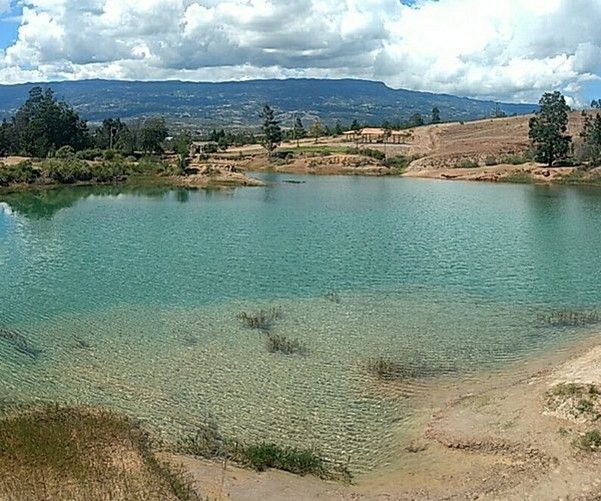
A visit to the desert area to see the marvellous Pozos Azules (blue pools,) which are just a little over a mile from Villa de Leyva. The Pozos Azules are two man-made pools that, although they are on private property, can be visited by the public.
There are incomparable views, as the greenish-blue of the pools changes depending on the temperature, which serves as a striking contrast against the desert backdrop.
There are two important Cultural events during the year, Villa Film Festival and the International Independent Film Festival. Both events are dedicated to the art of filmmaking with screenings, workshops and conferences.
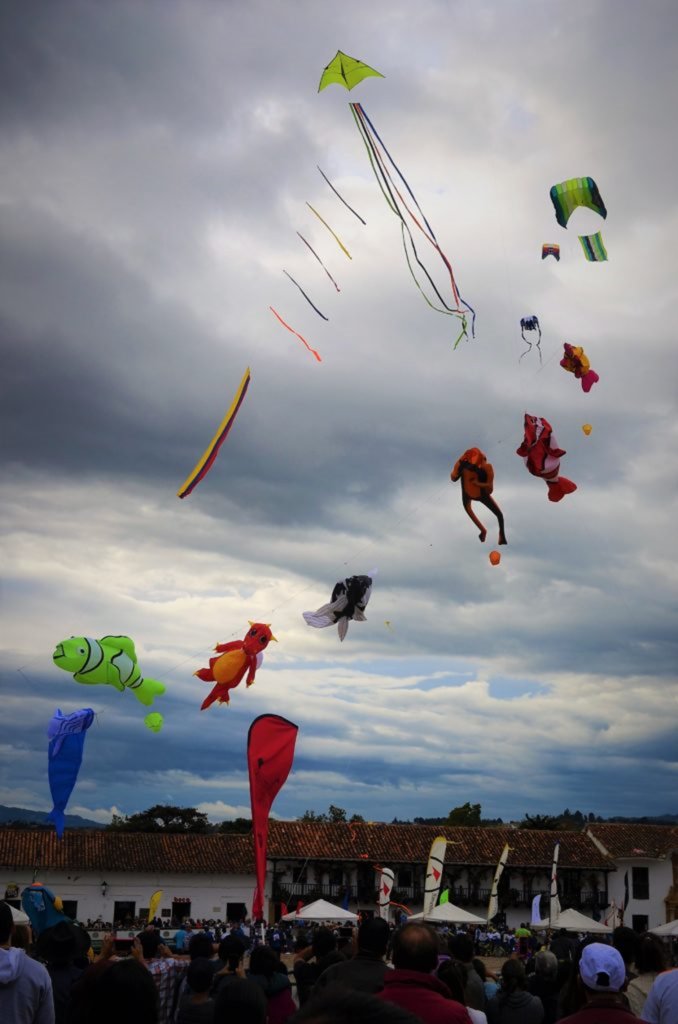
The National Kite Festival in August takes advantage of the region’s strong winds for flying kites.
Thanks to the favourable conditions of Villa de Leyva’s night sky, the municipality is an exceptional place for stargazing.
The Astronomy Festival gives the public an opportunity to admire the stars using telescopes installed in the Plaza Mayor.
The Ain Karim winery, formally known as Marques de Villa de Leyva, is famous for producing some of Colombia’s award-winning wines, in a country not particularly famous for its fine wines. Ain Karim, however, has been internationally recognized for the quality of its red, white and rosé wines. There are walking tours of the vineyard, followed by a tasting.
GASTRONOMY
The culinary scene in Villa de Leyva showcases traditional Colombian flavours. Visitors can savour local specialties such as arepas, empanadas and a variety of dishes featuring regional ingredients.
Street vendors and local eateries offer an authentic taste of the region’s gastronomy.
The traditional gastronomy of Boyacá uses farm-fresh ingredients and has been strongly influenced by local Indigenous cultures.
Arepa Boyacense
Colombia’s famous arepas are the foundation of many meals, with each part of the country having its own unique way of preparing these circular corn breads. Even within Boyacá, each one of the department’s pueblos has its own distinct version of this Colombian favourite.
Here, the arepas are made with precooked yellow corn flour, wheat flour, butter, curd, cheese, whole milk, salt and grated panela. The slightly sweet flavour of these arepas makes them somewhat addictive.

Sutamarchán Sausage
The Stomachal sausage/longaniza is known as one of the best sausages in all of Colombia. Prepared with the best quality pork meat, the delicious sausage is typically cut into pieces and accompanied by creole potatoes and chili for a delicious explosion of flavours. This famous longaniza is the perfect addition to any meal in Villa de Leyva.
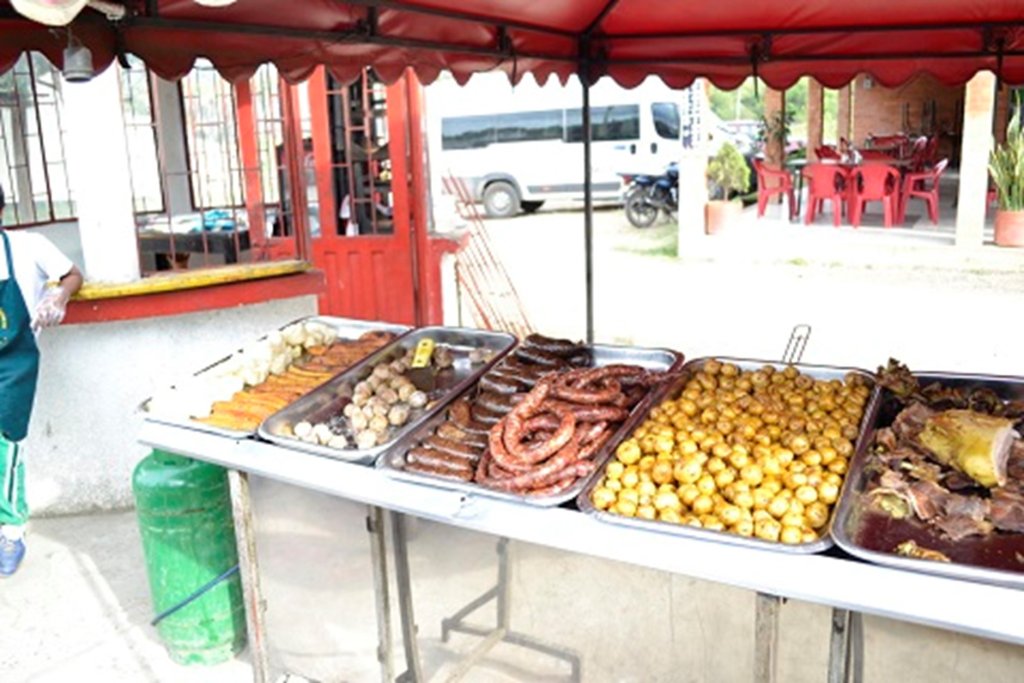
Cocido Boyacense/Boyacense Stew
This traditional dish is one of those foods that people remember after their visit. The unique stew is another example of a dish that has been inherited from the ancient Indigenous Muisca gastronomy. Using ancestral and farm-fresh ingredients, Boyacense Stew is typically made with turnips, broad beans, hibia (a tuber known as uqa in Quechua), green peas and chicken, pork, or beef ribs. The stew is particularly emblematic of the beautiful town of Villa de Leyva.
Fruits
Situated in the Andes Mountain Range, the climate of Boyacá varies from pueblo to pueblo, depending on the altitude. Thanks to these varying climates across the department, visitors can enjoy a wide variety of locally grown fruits, including mango, bananas, peaches, passionfruit, pear, dragon fruit, strawberries and many more.
Some of the more exotic fruits grown in Boyacá that you might not have heard of include uchuva, lulo and feijoa.
The history of Villa de Leyva, from its original foundation to its current status as a Pueblo Patrimonio, encapsulates a rich tapestry of cultural and historical significance, illustrating the pueblo’s evolution over centuries and its enduring legacy in Colombian heritage.
While exploring Villa de Leyva, it is advisable to embrace the pueblo’s unhurried pace. The charm lies in strolling along cobblestone streets, admiring colonial architecture and engaging with the friendly locals.
It is better to stay overnight at Villa de Leyva as day trips from Bogotá make for a very long day.
Like to create or customize a fantastico package tour of Colombia? Use our Plan My Trip page to start planning your dream Colombian vacation now!