
SANTA FÉ DE ANTIOQUIA
We work with and recommend booking flights with www.kiwi.com
Deep within the Central Cordillera of the Andes in north eastern Colombia, Santa Fé de Antioquia rises more than 1,650 feet/500 meters above sea level, between the Cauca and Tonusco rivers. Founded in 1541 by Jorge Robledo, Santa Fé de Antioquia, originally Villa de Santafé, became the City of Antioquia in 1545 after receiving its coat of arms from King Felipe II of Spain.
By 1547, it had been elevated to Parish Church by Popayan’s Archbishop, and seven years later, it became the capital of the surrounding region of Antioquia. In his eagerness to declare these lands part of the Spanish Crown, Robledo inserted the colonial imprint on its architecture, which is still preserved intact today. Santa Fé was the capital of the department of Antioquia until 1826, when the government moved to Medellín.
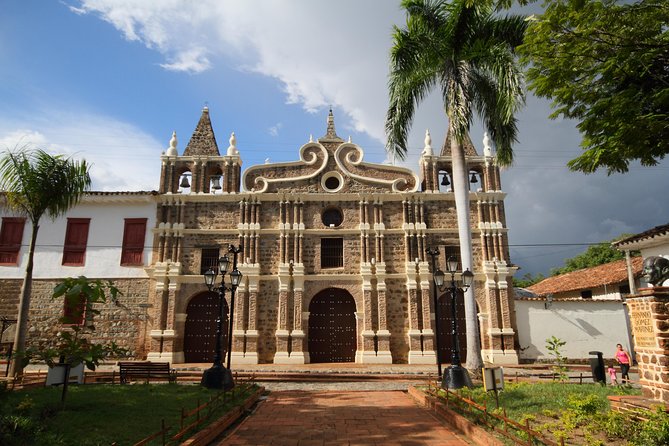
The stunning colonial pueblo of Santa Fé de Antioquia is an easy and scenic drive from Medellín. Santa Fé de Antioquia is one of eighteen Pueblos Patrimonio to be honoured by the Colombian government for their pivotal role in history.
There are whitewashed buildings with colourful doors and windows decorated with flowers. The cobblestone streets portray an antique feel to the pueblo. It is truly a beautiful sight to behold.
GETTING TO SANTA FÉ DE ANTIOQUIA
Santa Fé is situated about 90 minutes north of Medellín by car and easily accessible as a day trip by bus. To get there using public transportation, take a bus from Terminal del Norte in Medellín.
Returning to Medellín, buses leave from the small bus terminal, which is located just a short distance from Plaza Mayor Simón Bolívar.
CLIMATE AND WEATHER
Santa Fé de Antioquia is known for its year-round warm climate, making it a popular weekend getaway. Visitors can enjoy traditional Antioquian cuisine and explore local museums.
The climate in Santa Fé de Antioquia remains fairly constant, offering comfortable temperatures throughout the year. Typically, average maximum daytime temperatures range from a comfortable 25c/77f in August to an equally comfortable 23c/73f in the coolest month, January. Nights are cooler, with lows often dropping to around 13c/54f during the cooler months.
Santa Fé de Antioquia is known for its substantial rainfall, with annual precipitation reaching 2,983mm/117 inches. However, there is significant variation throughout the year. Expect heavy rainfall in April, with an average of 386mm/15 inches of precipitation over 20 rainy days.
In contrast, January offers drier and sunnier days, with around 104mm/4 inches of rainfall over 12 rainy days. Humidity is high year-round.
Lightweight tropical cotton clothing is recommended with a wide-brimmed hat and high-factor sunscreen. Good hiking footwear is essential. A light jacket for the evening is a good idea. Santa Fé is at an altitude of 500m/1,640 feet.
Santa Fé de Antioquia is a colonial gem that serves as a living museum of Colombia’s history. This former gold mining pueblo charms visitors with its well-preserved architecture and cobblestone streets.
Cradled by the lush green vegetation of the surrounding mountains, the cobblestone streets of the historic centre meander past homes dating back to the 16th century that are made of rammed earth, adobe and bahareque (wattle and daub). The Cathedral, constructed in 1797 and additional churches demonstrate the colonial influence of the Catholic Church and the architectural wealth of the pueblo.
THINGS TO DO AND SEE
The pueblo’s centre piece is the whitewashed Cathedral Basilica of the Immaculate Conception, dominating the main plaza. Surrounding it are colourful colonial houses with wooden balconies, some now converted into boutique hotels, restaurants and artisan shops.
Recently renovated, the Plaza Mayor Simón Bolívar Park is in the historic centre of Santa Fé de Antioquia and is the principal meeting place for locals. There are walkways shaded by tall trees with gardens, seats and a fabulous fountain. There are many street stalls that sell arts and crafts as well as the delicious tamarind sweets/candy.
On the north eastern side of this plaza is the Cathedral Basilica of the Immaculate Conception. A beautiful church built between 1797 and 1837, in neoclassical Renaissance style, whose central altar and sanctuary are totally gorgeous. The rectangular tower is 47m/154 feet high.
In the Sacristy, there are revered pieces of art and jewels. The Cathedral was designed by Fray Domingo de Petrés, who also designed the Bogotá Cathedral.
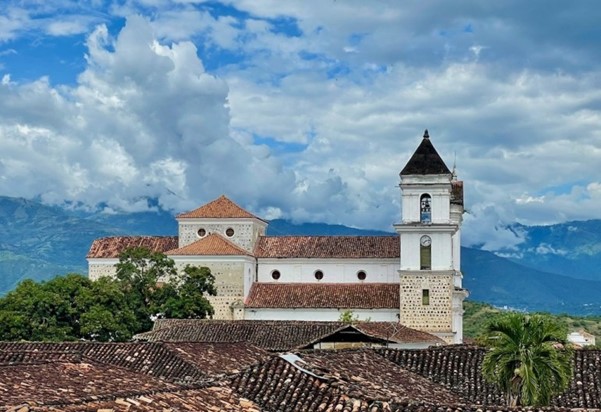 Cathedral Basilica of the Immaculate Conception
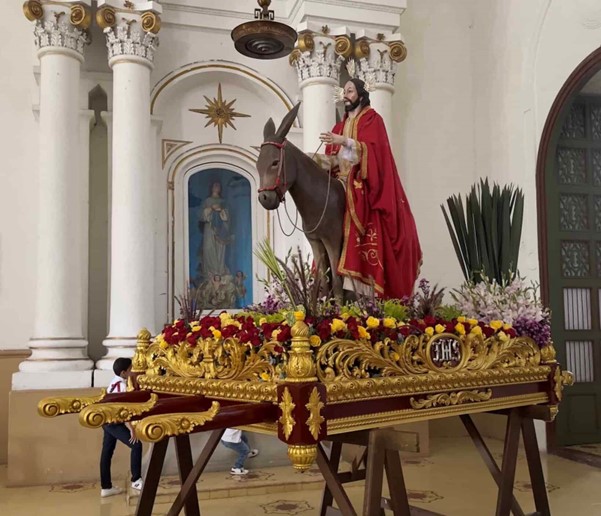 Semana Santa/Holy Week Processional Carriages
Santa Fé de Antioquia has numerous buildings dedicated to the Catholic religion, among which the following are the most interesting:
The Church of Santa Bárbara, with an imposing façade made of stone and brick, this church was built in 1728. It is the oldest church in the municipality and is very popular among those wishing to be married.
The Church of Our Lady of Chiquinquirá is of a neoclassical design in the Plazuela Martínez Pardo. In the centre of the plaza is a monument displaying two women, one indigenous and one Spanish. Above them, a tribute to Jorge Robledo, founder of Santa Fé. Next to this church is the Archbishop’s Palace.
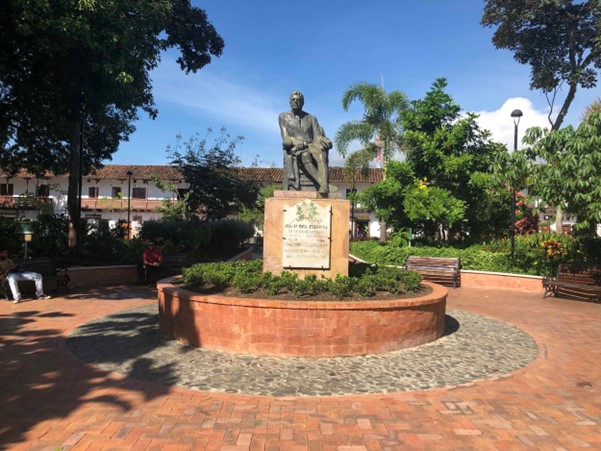 Statue of Juan del Corral
The churches of San Pedro Claver, San Martín de Porrés, Jesús Nazareno and Nuestra Señora del Carmen are others worth mentioning.
Museums of Santa Fé de Antioquia
- Juan del Corral Museum on Calle de la Amargura is the guardian of the city’s historical heritage.
It is an imposing building, where articles and documents donated by the community are preserved, which tell the history of the pueblo.
The museum exhibits nearly five hundred objects, including documents, colonial art and different archaeological and other pieces in seven rooms. - Francisco Cristóbal Toro Museum of Religious Art has a collection that includes decorative pieces from the colonial era. Items made of gold, paintings and two rooms dedicated to the processions of Semana Santa/Holy Week and Mother Laura.
- The goldsmiths of Santa Fé de Antioquia: Wandering along the narrow streets, the sound of a hammer lightly striking metal intrigues the ears. These are the goldsmiths at work. The pieces they carve are true works of art belonging to a tradition dating back more than five centuries. Each of their creations is unique and meticulously assembled from the precious metal extracted from the mines of Santa Fé. So enjoy a privileged moment with one of these jewellers, who will let you discover their technique. Acquire an incredible custom-made piece.
 Begin organizing your dream Colombian getaway right away by using our Plan My Trip page!
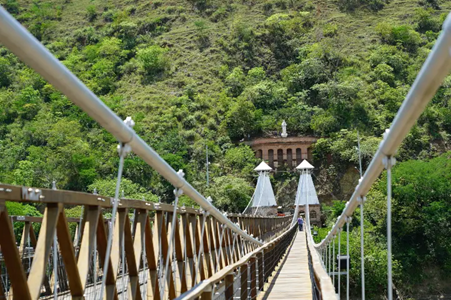
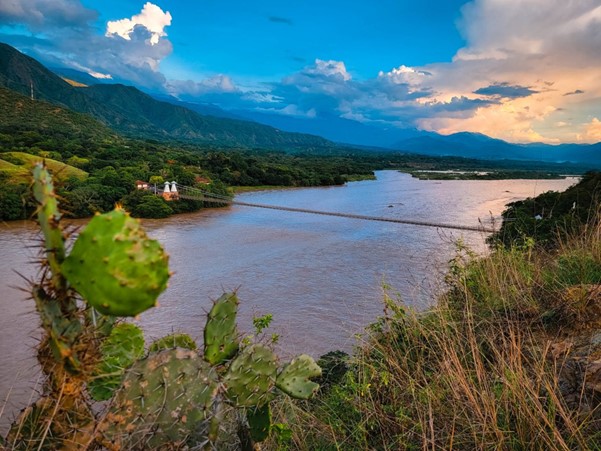
Ten minutes from the city centre of Santa Fé de Antioquia, there is the Puente de Occidente, a National Monument, a famous emblem of the pueblo and an architectural icon. The bridge is 291 meters/955 feet long across the Cauca River.
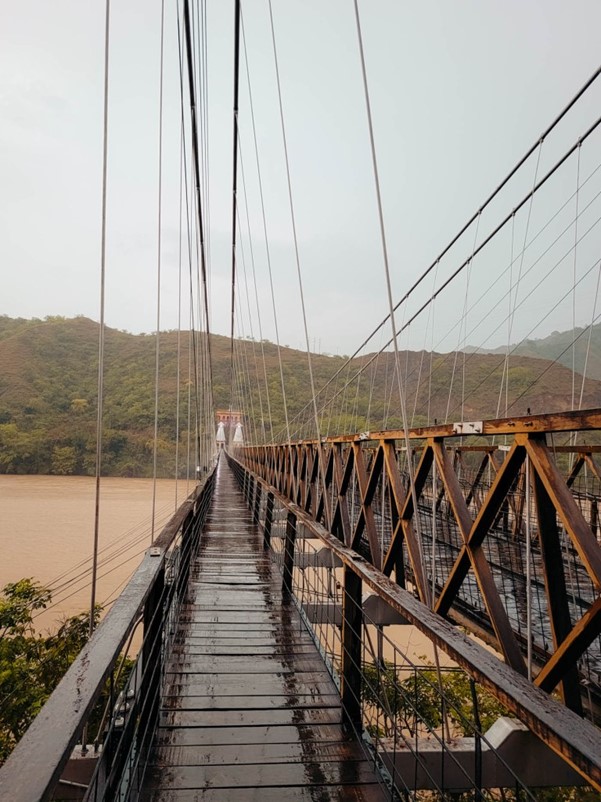
Designed by engineer José María Villa in 1887, this suspension bridge brought an economic boom to the region. It connected the residents with the remainder of the country, allowing the flow of goods and passengers to and from the coast to the interior.
At the time, this was the longest of its kind on the continent and was initially open only to pedestrians, but was later also opened to light vehicles.
 Make your Colombian dreams a reality with our Plan My Trip page—begin your journey now!
POPULAR CULTURAL EVENTS
The pueblo comes alive during its many festivals, including the Festival of Sweets and Typical Cuisine in October, showcasing the region’s culinary traditions.
- The Tamarind Festival takes place in August and includes activities such as exhibitions, dance performances and everything and anything related to the tamarind.
- An open-air film and video festival is held in December with free admission.
- The celebration of Semana Santa/Holy Week is a wonderful time to appreciate the faith of Santa Fé, unique in its customs and traditions.
- The Diablitos Festival commemorates slavery in colonial times when slaves were only given one day of rest per year. A big fiesta/party was traditionally held on the day, in which slaves dressed up as their masters with masks and capes. When slavery was finally abolished, this festival was created and is celebrated at the end of December.
GASTRONOMY
Gastronomy lovers will be able to delight in the authentic flavours of Antioquia cuisine. The pueblo’s traditional dishes showcase the region’s rich agricultural heritage, with fresh produce sourced from nearby farms.
The Colombian national dish is the bandeja paisa. This is a typical dish from the region of Antioquia and is composed of beef, ground meat, chicharrón (fried pork belly or rind), chorizo, black beans, rice, fried egg, plantains, arepas, hogao and avocado.
Other traditional local specialties include sancocho, a filling broth with chicken or meat with vegetables and obleas, a popular caramel-filled wafer.
Complement these local specialties with refreshing fruit juices or a glass of locally produced aguardiente, a distinctive Colombian liquor. The vibrant food scene offers a delightful taste of Santa Fé de Antioquia’s cultural tapestry.
Like to create or customize a fantastico package tour of Colombia? Use our Plan My Trip page to start planning your dream Colombian vacation now!