
SANTA CRUZ DE MOMPOX
We work with and recommend booking flights with www.kiwi.com
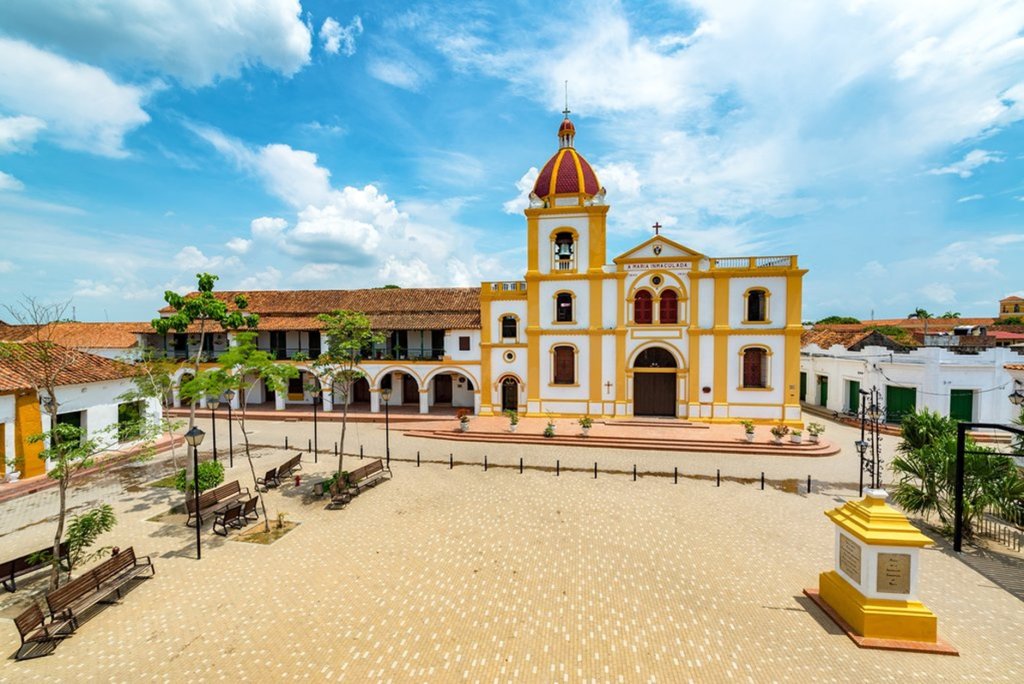
Santa Cruz de Mompox is a pueblo that has been petrified in time, while the rest of Colombia has evolved and modernised. Mompox remains much as it used to be during colonial times.
For this reason, it was declared a World Heritage site by UNESCO in 1995.
The Colombian government named it a Pueblo Patrimonio (Heritage Town) in 2010, one of only eleven municipalities that were initially selected nationwide. There are now eighteen.
Relatively close to the famous city of Cartagena de Indias, in the department of Bolívar, Santa Cruz de Mompox is a magical pueblo on an island surrounded by the mighty Magdalena River. Exuding history, romanticism and nostalgia at every turn.
Mompox is the ideal destination if you want to discover a colonial jewel, less publicized than Cartagena, however, still as beautiful. It is a destination completely authentic and preserved from mass tourism, where you will travel back into the past.
It is not exactly straightforward to get to Mompox, so if you are not overly excited about navigating your way through bus terminals and ferries, the best option is to book a tour with BnB Colombia Tours. If, however, you would like to organise your own travel arrangements, here are some of the options:
From Cartagena or Barranquilla, take a bus to Magangué – about 5 hours, then take either a ferry boat for 1 hour and 30 minutes or a motorboat (chalupa) for 15 minutes along the Magdalena River to La Bodega. From La Bodega, take a taxi to Mompox for 45 minutes. From Santa Marta or Valledupar, take a bus to Bosconia, a 6-hour ride. From there to Santa Ana and then Talaigua Nuevo, for a 15-minute ferry to Mompox. Certainly, it is not easy to get to Mompox, however, it is well worth the effort and time.
Founded as a port in 1540 on the Magdalena River by early Spanish settlers, Mompox quickly developed as a hub for merchants transporting all manner of goods between the Caribbean coast and the Andes. Its remote location helped it become a safe place for wealthy Spaniards and traders to hide their gold and other treasures from marauding pirates from Cartagena.
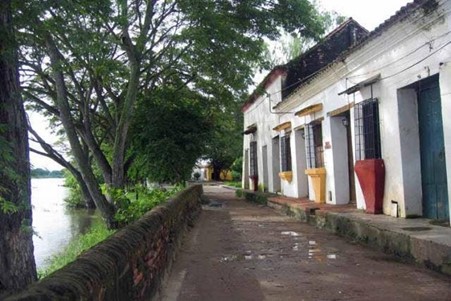
Indeed, by the early 17th century, the pueblo’s wealth was perhaps best exemplified by its Calle de la Albarrada, a riverside street adorned with glorious colonial architecture. By 1810, Mompox had become the first Colombian pueblo to declare independence from Spain. Times were good, and Mompox was second only to Cartagena in strategic importance within Colombia.
By the mid to late 19th century, the surrounding Magdalena River had all but silted up. Traders began to go elsewhere along the river. The pueblo’s prosperity came to an abrupt end. Mompox’s location on an island in low-lying wetlands meant that it was effectively marooned.
However, the pueblo’s fall from grace was a hard one. The river, now silted up, so the large boats were forced to seek other routes. Thus, Mompox was gradually left behind. While the pueblo slumbered on its isolated island, the magnificent historic centre and colonial architecture remained preserved and largely unaltered.
Thus, Mompox became an isolated and forgotten backwater for over a hundred years.
Yet it is also for this reason that Mompox arouses the curiosity to explore the island and surrender to its charms.
Mompox is a real off-the-beaten-track destination, as it is only visited by people in the know. Picturesque plazas, brightly painted churches, pastel-coloured houses, beautiful facades and interior gardens with endless flowers. The centre of the pueblo is just beautiful.
 Begin organizing your dream Colombian getaway right away by using our Plan My Trip page!
Instead of a central plaza, typical of most Spanish settlements, Mompox has three plazas lined up along the river, each with its own church and each corresponding to a former Indian settlement. Most of the buildings in the historic centre are in a remarkable state of conservation and still used for their original purposes, thus preserving an exceptional illustration of a Spanish riverine settlement.
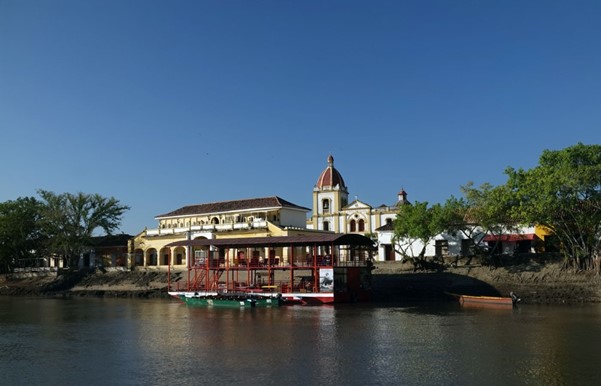
Essentially consisting of just three streets with rows of connecting streets in between, Mompox can be explored twice in a day.
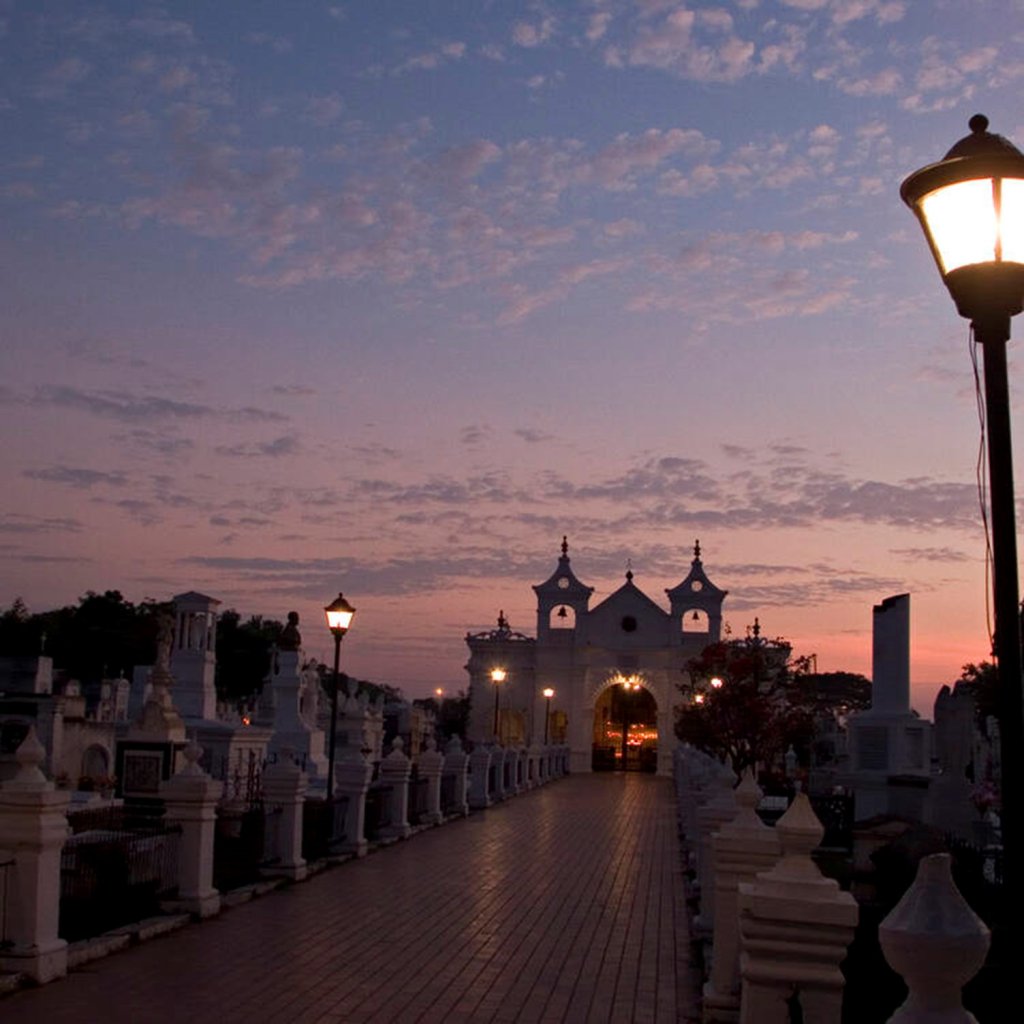
Once, first thing in the morning, as the pueblo and its inhabitants come to life, before the blazing heat takes hold. Then again in the evening, as the subtly lit streets and buildings give the place a celestial feel.
Unlike the majority of colonial Spanish settlements, which were organized around a pueblo plaza, Mompox was laid out along the river instead. The city contains three plazas: Plaza Central/Plaza de la Concepción, Plaza de San Francisco to the north and Plaza de Santa Bárbara to the south.
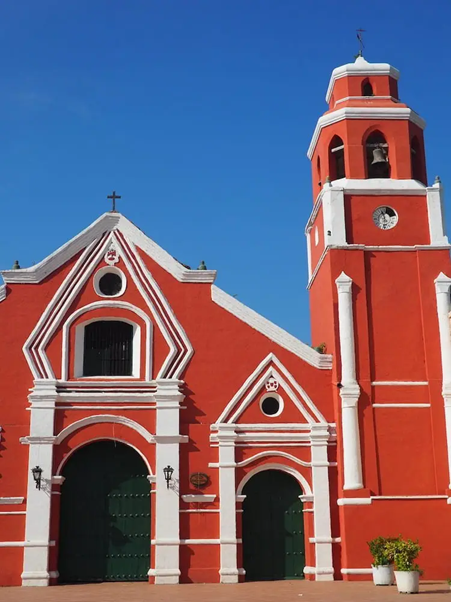
Perhaps the pueblo’s most noticeable buildings are its seven churches. Painted in striking colours, they are within easy walking distance of each other.
Most dramatic of all is arguably the Church of Santa Barbara, with its yellow facade and baroque bell tower.
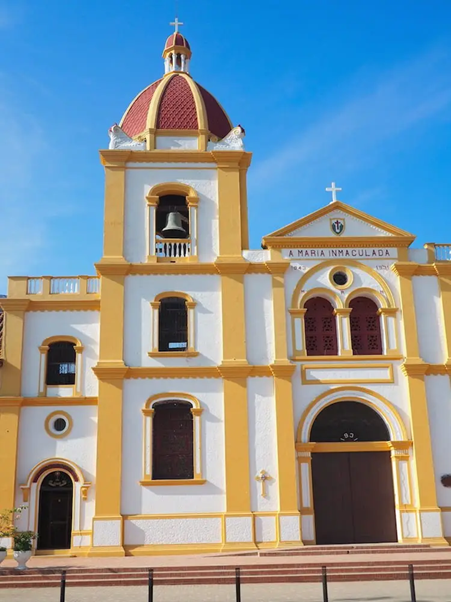 Church of the Immaculate Conception
The rusty red-painted Church of San Francisco and the Church of the Immaculate Conception are both head turners in their own right, too.
 Make your Colombian dreams a reality with our Plan My Trip page—begin your journey now!
For most of its history, Mompox has been associated with the production of fine gold and silver filigree jewellery. It is a process whereby the metal is melted down and made into a thread before being delicately transformed into detailed pieces of jewellery.
The tradition no doubt grew out of Mompox’s cache of gold and silver, accumulated during the good times. Indeed, at one time, a royal mint was established here.
As a result, it attracted goldsmiths and silversmiths from Spain who settled in the pueblo and combined their own skills with those of existing Colombian artisans to create this very unique type of art. It is worth mentioning that it is possible to visit a filigree workshop, which is a perfect place to buy a set of delicate gold or silver filigree earrings, rings or bracelets.
CLIMATE AND WEATHER
In Mompox, the summers are short, sweltering and dry, while the winters are warm and wet. It is oppressive and overcast year-round and over the course of the year, the temperature typically varies from 24°C/75°F to 37°C/99°F and is rarely below 22°C/72°F or above 40°C/104°F.
The wet season lasts 7 months, from mid-April to late November, with a greater than 25% chance of a given day being wet. The month with the most rain in Mompox is October, with an average of half the days with at least 1 millimetre of precipitation.
The dry season lasts 5 months, from late November to mid-April. The month with the fewest wet days in Mompox is January.
Humidity is constantly high.
It is strongly advisable to wear lightweight cotton clothing with a wide-brimmed hat and good, solid footwear. High factor sunscreen and plenty of water.
GASTRONOMY
You can sample a wide variety of cuisines in Mompox, from authentic pizzerias to stylish cafés serving Spanish-style tapas. For a unique, traditional meal, dine at one of the restaurants in the Plaza de la Concepcion.
There is also a special one located in the old market building that is run by students of the Escuela de Taller, a school that teaches life skills to children of low-income families. The menu is seasonal and often contains items that will not be found anywhere else in the city. Allied with a beautiful view of the Magdalena and the Plaza below it is a stunning experience.
Be sure to try the unique local cheese of Mompox, queso de cappa, sold by street vendors. This layered cheese made from cow milk is mild and just slightly sweet. The recipe has been passed down from generation to generation and cannot be found anywhere else in the world.
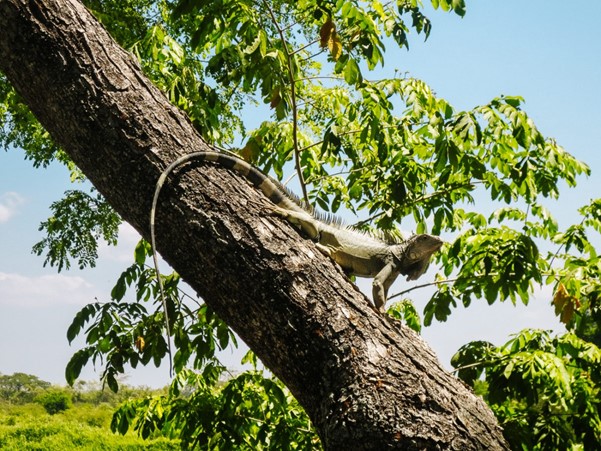
A sunset canoe tour of the Magdalena River is one of the best ways to experience Mompox. Depart at 3 pm and witness the beauty of the river and its inhabitants as the day transitions to evening. As you make your way past villages and into the swamps, you will see many birds, including herons, as well as iguanas, among other wildlife.
Return to Mompox by sunset, just as the streetlights illuminate the old town.
Simon Bolívar, the Caracas-born liberator of much of South America, came to Mompox to recruit warriors in the effort to gain independence from Spain for western Venezuela. This prompted him to famously remark, “If to Caracas I owe my life, it is to Mompós I owe my glory”.
Mompox is highly regarded for its annual jazz festival. Rather like its melange of architecture, the jazz festival is highly anticipated each year and features a mix of styles, with porro, bachata, merengue and others helping to always create an impressive line-up.
Semana Santa (Holy Week) is one of Mompox’s most emblematic celebrations. During this week, the city is transformed into a place of religious fervour and age-old traditions. Solemn processions wind through the cobbled streets, recreating scenes from the Passion of Christ.
The locals participate with devotion, carrying ornate statues and singing ancient hymns. This period is marked by a mystical atmosphere and a deep respect for religious customs, attracting visitors eager to enjoy this unique spiritual experience.
Like to create or customize a fantastico package tour of Colombia? Use our Plan My Trip page to start planning your dream Colombian vacation now!