
PUEBOS PATRIMONIO SANTA CRUZ DE LORICA
(Colombian Heritage Towns: Santa Cruz de Lorica)
In the vibrant heart of the department of Córdoba, on the banks of the imposing Sinú River, lies Santa Cruz de Lorica, a pueblo that has been declared a Pueblo Patrimonio (Heritage Town).
Santa Cruz de Lorica
We work with and recommend booking flights with www.kiwi.com
This charming pueblo, located just three hours from Cartagena, holds within it a wealth of history and culture that makes it a true hidden treasure, waiting to be discovered by travellers from the world over.
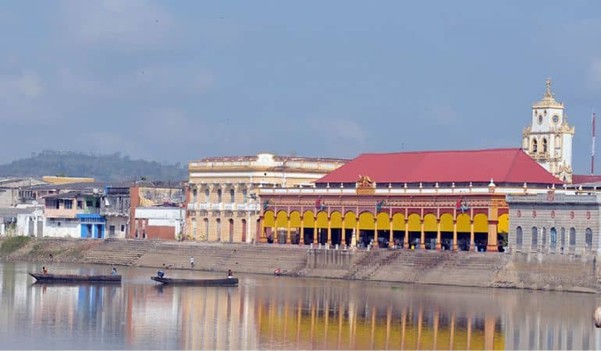
Santa Cruz de Lorica is one of only eighteen Pueblos Patrimonio and walking through its streets is totally charming. It has a unique architecture with Republican and Lebanese influences.
The Sinú River is key to understanding the spirit of Lorica. The waterway has given the pueblo life and imbued it with a joyous, open nature. Being the only municipality near the Caribbean coast selected as a Pueblo Patrimonio, this honour further highlights Lorica’s unique heritage and contributions to Colombia’s cultural tapestry.
Santa Cruz de Lorica is the kind of hidden treasure that you would like to keep jealously to yourself. It is not well known, but it was, back in the day, one of the major hubs for river trade. From this glorious past, it has preserved its colonial architecture and its traditions with influences that are often Arab or European.
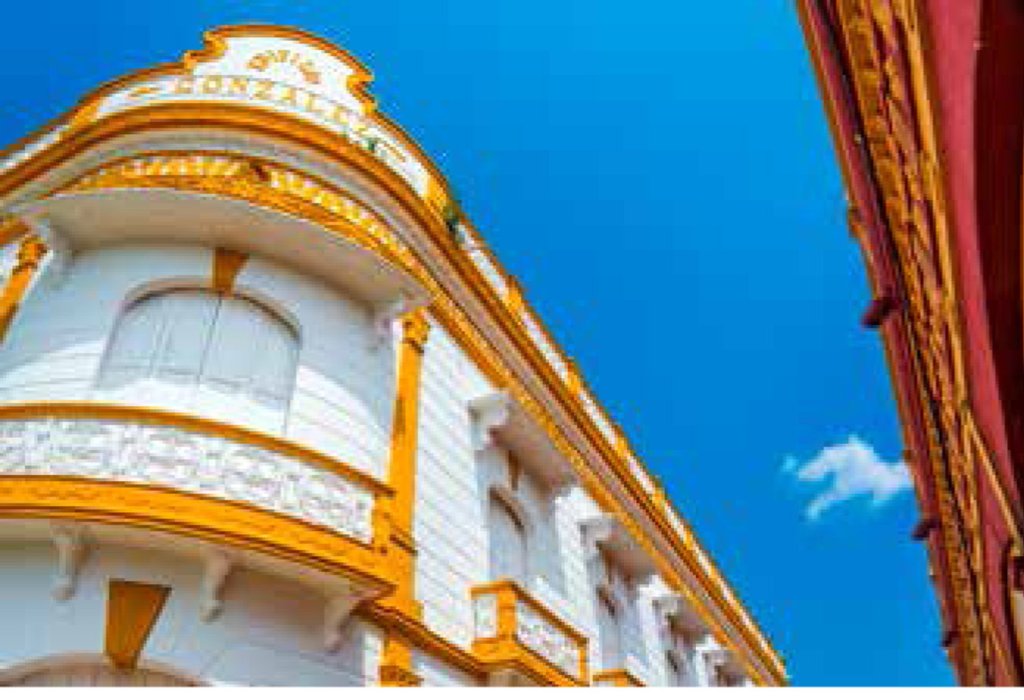 Gonzalez Building
Still little known to tourists, the pueblo is nevertheless a true gem of colonial architecture, cradled by diverse influences. To better understand the aura that the pueblo of Santa Cruz de Lorica (Lorica, for short) enjoys, one must go back a few centuries.
Lorica was founded in the 18th century by the governor of Cartagena, the conquistador Juan de Torrezar Diaz Pimienta, who initially named it Santa Cruz de Gaita, after Isla Gaita, the island on which the pueblo was founded.
The site was then home to the indigenous Zenues tribe, led by Cacique Orica, a good and peaceful man, who also earned the respect of the conquistadors. In his honour, it was decided to rename the pueblo Santa Cruz de Lorica.
 Begin organizing your dream Colombian getaway right away by using our Plan My Trip page!
Lorica was an important economic centre and a melting pot of local and foreign cultures from the mid-19th through early 20th centuries. The architecture was heavily influenced by Syrian and Lebanese immigrants and the rich natural resources also attracted people from France, Belgium, England, Italy and elsewhere.
If the city of Lorica was so popular at the time, it was without doubt all thanks to the Sinú River, which gradually became one of the most important strategic locations in the region during colonization. Linking the Caribbean Coast to the interior of the country, its success was such that the city was named capital of the department of Córdoba at the time. Lorica quickly enjoyed international influence, attracting not only great merchants but also many European poets and artists.
However, this commercial boom did not last indefinitely. In the middle of the 20th century, the city of Montería, about sixty kilometres/37 miles from Lorica, was named capital of the department, thus leading to the commercial decline of the pueblo.
Fortunately, the buildings and traditions remain and bear witness to this glorious past, rich with diverse influences.
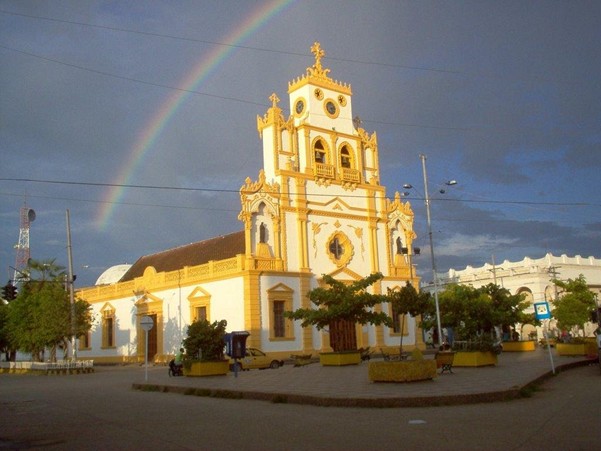
The main attraction of Lorica is, of course, to wander through the picturesque and colourful alleys of the pueblo. Among the most interesting sites is the Cathedral of Santa Cruz de Lorica, located on the Plaza de la Independencia. Built in 1700, the Church is a perfect example of this mix of cultures found in the pueblo.
Also too the Casa Rural and the Club de Lorica, two particularly beautiful colonial buildings.
The Edificio Gonzalez is a magnificent colonial building with golden hues and the Afife Matuk building, which, as its name suggests, is directly influenced by an Arab design.
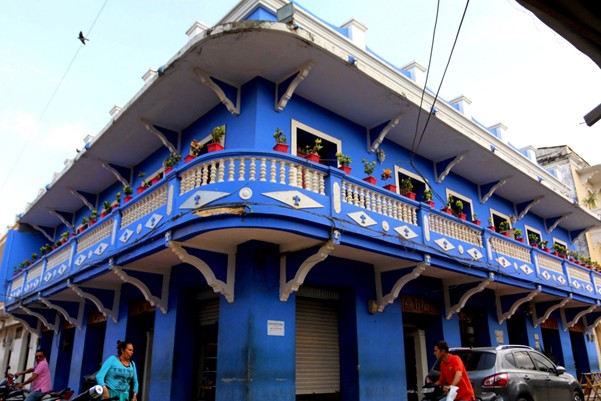 Josefina Jattin de Manzur Building
One of the emblematic places of Lorica remains Mercado Publico (Public Market), built on the banks of the Sinú River. Known by the locals as Ranchen, it was formed in 1926 and it was declared a National Monument of Colombia in 1996.
An amazing number of handcrafted pieces are sold here. Among the local specialities are the sombrero vueltiao, a typical handmade hat of the region, wooden kitchen utensils and hand-rolled cigars.
The mural El Mural was created by the artist Andriano Rios Sossa and illustrates the history and life in Lorica.
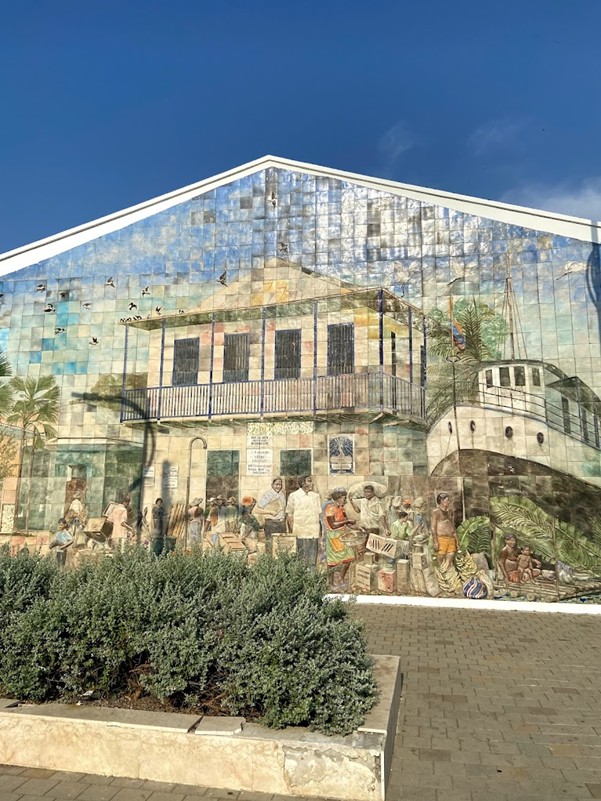 Mural
Mural
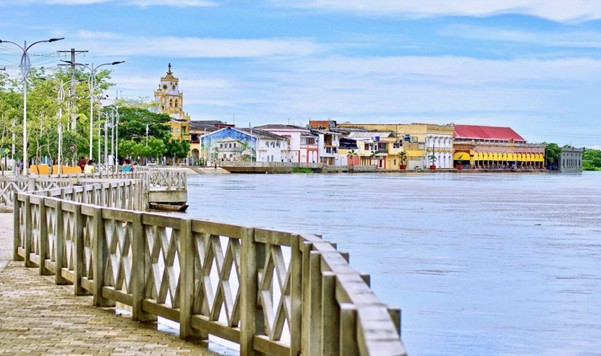
A walk along the malecon of the Rio Sinú makes the perfect opportunity to enjoy a magnificent sunset. Simply magical.
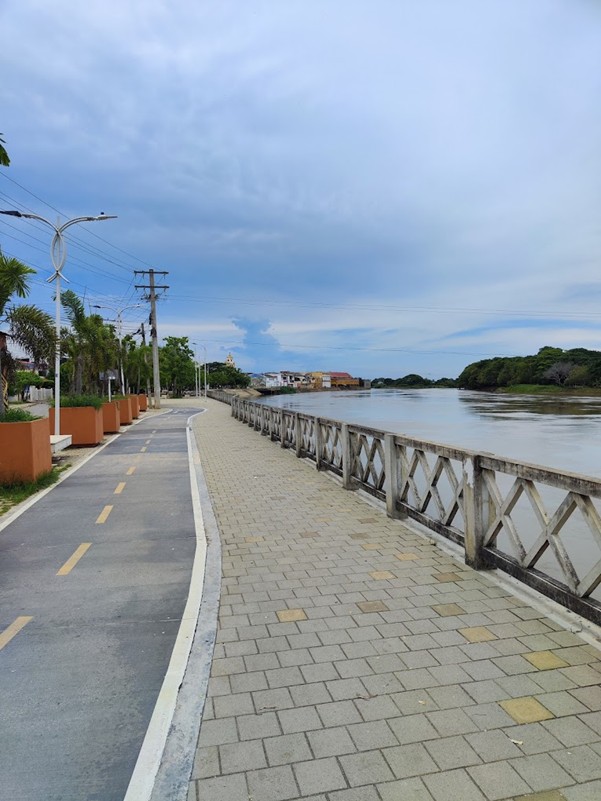 Malecon
CLIMATE AND WEATHER
In Lorica, the wet season is very overcast, while the dry season is partly cloudy and it is hot and oppressive year-round. Over the course of the year, the temperature typically varies from 23°C/73°F to 33°C/91°F and is rarely below 22°C/72°F or above 35°C/95°F.
The wet season lasts 8 months, from mid-April to December, with the month with the most wet days being September. The dry season lasts nearly 5 months, from December to mid-April. The month with the fewest wet days in Lorica is February. Lorica is at an elevation of 7 meters/23 feet above sea level and the humidity is always high. Tropical cotton clothing is advised with a wide-brimmed hat and high-factor sunscreen. Good quality open shoes are best.
As of the 2020 estimate, the population of the municipality and pueblo is 115,461.
GASTRONOMY
Immigrants played an important role in Lorica’s gastronomy and at the Mercado Publico, there is the opportunity to make some culinary discoveries. Naturally, as a Caribbean pueblo, the centrepiece of Lorica’s gastronomy is fresh fish. Not just any fish, but bocachico, native to the Magdalena River basin.
Bocachico is often served in soups, accompanied by coconut juice, plantain, lemon and yuca. A complete delight. Alongside this flagship dish, you will find other specialities such as mote de queso, guiso de gallina and revoltillo de pescado.
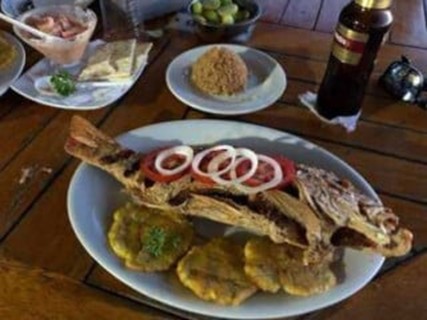
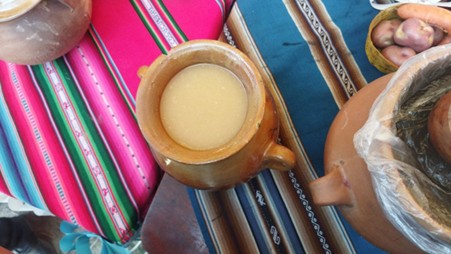
As for beverages, the famous Chicha Colombiana (a fermented drink, prepared with corn, cassava, rice and fruit) is particularly popular here. Indeed, every year between 13 and 15 December, the pueblo even organizes its Chicha festival.
THINGS TO DO OUTSIDE THE PUEBLO
In addition to its cultural wealth, Lorica offers natural landscapes that invite you to rest and connect with nature. The Sinú River, with its calm waters and surrounded by lush green banks, is an ideal setting for relaxation. The hiking and bird-watching routes around the town allow visitors to enjoy the biodiversity of the region, creating an unforgettable experience.
Birdwatching
Bañó Marsh alone has recorded a total of 142 species of birds, however, the number may be even higher, as many other marshes remain untouched. There are large flocks of Fulvous whistling duck (Dendrocygna bicolour), Black-bellied whistling duck (D. autumnalis), White-faced whistling duck (D. viduata) and a large number of waterfowl in general.
The area is potentially important for reproduction and long-term maintenance of the Northern screamer (Chauna chavaria) population, as well as five other species of ducks. More than 20,000 waterbirds congregate there.
Other Fauna
Besides birds, it is possible to find some threatened fauna species such as Neotropical otter (Lontra longicaudis), Grey-bellied night monkey (Aotus lemurinus griseimembra), Dahl’s toad-headed turtle (Phrynops dahli), Magdalena River turtle (Podocnemis lewyana), and Hicotea (Trachemys scripta callirostris). Two endemic species of flora are Pithecellobium lanceolatum and Thalia angustifolia.
Lorica is famous for its festivities and celebrations, which attract thousands of visitors throughout the year. One of the highlights is the Sinú River Festival, a celebration that honours the river that has witnessed the pueblo’s evolution. During this event, the streets are filled with music, dance and gaiety, offering attendees a vibrant display of local culture.
Festival of the donkey
At the Festival of the Donkey, which takes place in San Antero, north of Lorica, the donkey stands front and centre as the festival’s guest of honour. The festival takes place during Holy Week and is a great example of the exuberance of the Caribbean people, who make elaborate masks for the donkeys to wear and participate in dances and parades.
Visitors can attend competitions for the best donkeys, as well as the coronation of the donkey king and queen.
How to reach Lorica
No matter the city from which you come, to get to Lorica, you must first arrive in Montería. There are air links from most Colombian cities directly to Montería.
Once there, from the Transportation Terminal, take a direct bus from Montería to Lorica, which is about an hour.
While tourist guides will continue to promote Cartagena and Mompóx as top destinations of the coast, Lorica can claim its place as the country’s last hidden colonial pueblo. Instantly, one is captivated by its brilliantly colourful buildings, lively central market, elaborate arts and crafts and unique gastronomy.
Lorica is not only a feast for the eyes, but also for the soul. The local culture is alive and well in every corner, from the markets filled with colourful crafts to the festivities that fill the streets with music and dance. Without a doubt, Lorica is a treasure that must be experienced in all its splendour.
Like to create or customize a fantastico package tour of Colombia? Use our Plan My Trip page to start planning your dream Colombian vacation now!