
PUEBLOS PATRIMONIO SALAMINA, CALDAS
(Colombian Heritage Towns: Salamina Caldas)
Tourists from all over Colombia and the world flock to the traditional coffee towns of Salento and Filandia. Thanks to their proximity to the major cities of Pereira and Armenia. These pueblos are wonderful to visit, but both have become crowded with tourists and lost much of their original charm.
Salamina, Caldas
We work with and recommend booking flights with www.kiwi.com
Step forward Salamina. Unknown and seemingly tucked away in the remote Andes, it takes effort and time to reach this hidden place. However, it is well worth both the time and resolution. This small, peaceful pueblo, part of the Pueblos Patrimonio network, attracts few tourists and is one of the most colorful and beautiful in the Eje Cafetero.
Known as the City of Light in Colombia, it has a rich history of producing famous artists and poets, making it a vital part of the country’s cultural heritage. Salamina is a very authentic coffee pueblo with friendly people and fabulously colourful colonial architecture.
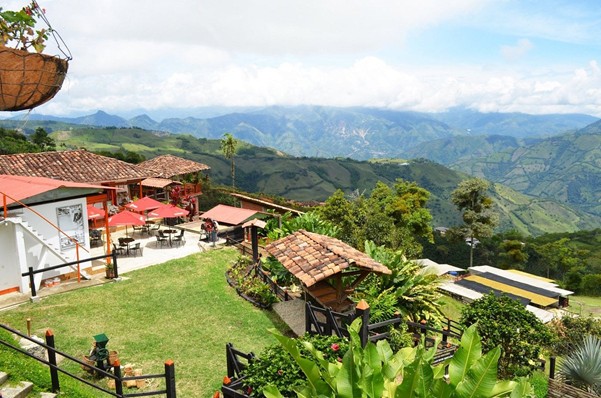
Salamina is one of the more exclusive and now fashionable pueblos in the Eje Cafetero.
Visitors will find unique gastronomy, stunning mountains, carefully preserved colonial architecture, orchids and so much more.
Salamina, in northern Caldas, lies 73 km (45 miles) from Manizales and 168 km (104 miles) from Medellín. In addition to being a Pueblo Patrimonio, it is part of the Coffee Cultural Landscape, a UNESCO World Heritage Site since 2011.
CLIMATE AND WEATHER
Located at an elevation of 1,822m/5,978 feet above sea level, Salamina has relatively stable weather with warm temperatures. It is also known for its large amounts of rainfall. Salamina has a marine west coast climate with warm summers. Daytime temperatures average 25°C (77°F) year-round, with little variation throughout the year.
It rarely gets below 14c/57f or above 27f/80f. There is significant rainfall throughout the year, averaging 5,398mm/213 inches of precipitation annually. Rainfall varies significantly throughout the year. May is the wettest month, with an average of 623 mm (25 inches) of rain over 22 days.
It is a good idea to have light tropical clothing with a jacket or sweater for the cooler evenings. Bring rain gear and keep an umbrella handy. Good hiking boots are a necessity.
 Begin organizing your dream Colombian getaway right away by using our Plan My Trip page!
Salamina is the perfect alternative to Salento. Amid northern Caldas’ mountains, the City of Light, a Pueblo Patrimonio, showcases colonial houses and rich traditions. Founded in 1825, this municipality, with 20,000+ people, is the birthplace of Mother María Berenice Duque.
Salamina was founded by settlers from Antioquia seeking silver and gold. These founders of Salamina were not your average agricultural colonist. They were educated people who valued art and culture, earning the title Ciudad de Luz, the City of Light. The search for abandoned gold mines and fertile land fueled colonial expansion, leaving haciendas, churches, and plazas.
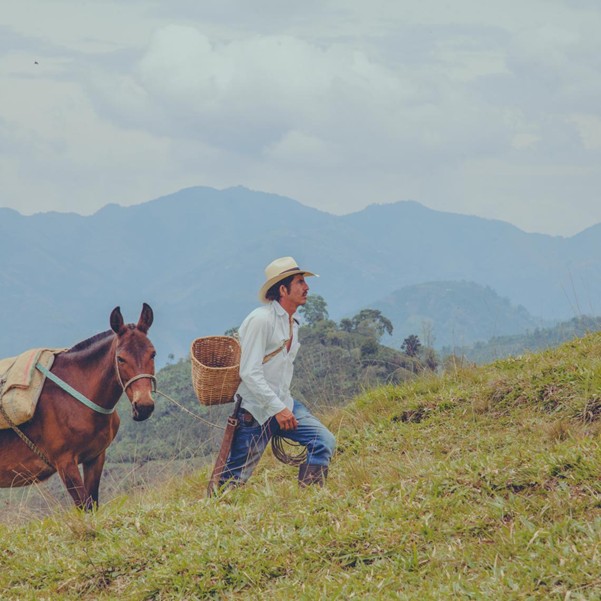
Salamina is the center of La Ruta del Arriero, where mules and oxen transported goods in pre-industrial Colombia. Today, you can still see mule teams come in from remote areas of the mountains, which still largely remain unreachable even by Jeep Willys. The rugged terrain has preserved many colonial crafts and traditions, which are actively conserved for posterity.
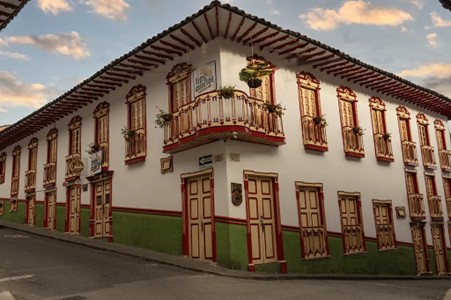
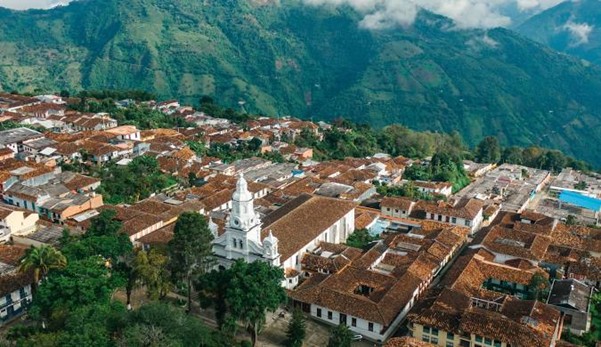
The imprint of Antioquian architecture has stopped time in Salamina, hence its captivating appeal. A beautiful group of bahareque houses, adorned with clay tiles, eaves that shade the uneven cobblestones, creates an extraordinary and unique atmosphere.
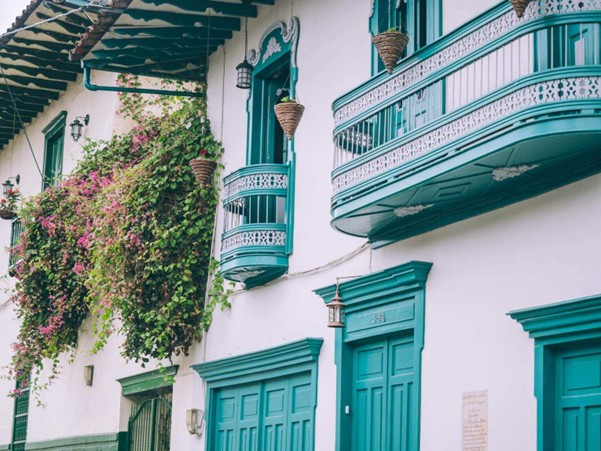
Brightly painted balconies are decorated with attractive flowers. The doors, embellished with baroque inlays, give an idea of the perfection to which the Salamineño artisans worked with wood in times past.
When coffee arrived in the region in the middle of the 19th century, Salamina’s ideal geological and climatic conditions offered an abundance of beans of excellent quality. Trade brought prosperity to locals, forging close economic and cultural ties with Europe. In addition to exploring its architecture and culture, visitors can enjoy hiking along the fabulous nature trails surrounding the pueblo.
Salamina Attractions and Activities
One main attraction is the San Esteban Cemetery, which was divided by a wall for nearly 35 years. There is a chapel with Gothic architecture, beautiful gardens and a fabulous view of the Andes.
Walking through the cemetery, one notices the socio-economic differences between tombs. Initially, the dead were buried in specific cemetery areas based on their economic status. The cemetery for the poor on one hand and the cemetery for the rich on the other. In 1976, the cemetery was unified by order of Monsignor Luis Enrique Hoyos.
The Church of the Immaculate Conception, which holds the title of Minor Basilica of Salamina, was constructed in 1856 and completed in 1874. It is particularly notable for its masonry facade. There is also excellent woodwork in the pulpit and on the ceiling. An original pipe organ still works. The structure has a nave with three towers.
 Start creating your dream Colombian adventure by using our Plan My Trip page now!
Rodrigo Jiménez Mejía House of Culture is widely considered to be the most important architectural jewel of Salamina, thanks to the wooden finishes, beautiful balconies, majestic doors, lintels carved with figurines and lanterns that complete a wonderful spectacle.
A feature that marks the importance of the pueblo in the early twentieth century is the bronze fountain in Parque de Bolívar. Found in the central plaza of the pueblo and is an imitation of one that can be found in the Place de la Concorde in Paris. Many consider it the most beautiful fountain in Colombia.
They made it in Paris, shipped it to Barranquilla, then transported it by canoe and mule to Salamina. Installed in 1900, the fountain has since become an important symbol of the region.
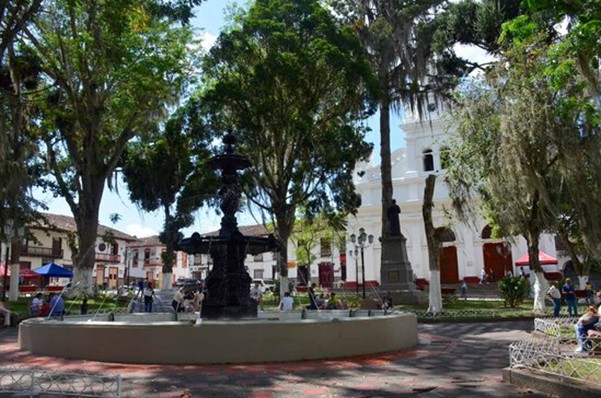 Parque Bolívar
In Salamina and in nearby pueblos, travellers have the opportunity to learn about the coffee culture when visiting fincas (farms). You can learn to cultivate, thresh, and roast the beans, all harvested manually.
For nature lovers, a visit to the Corpocaldas Botanical Garden will be a delight. This garden is an oasis of biodiversity, promoting a tremendous variety of flora species native to the Eje Cafetero. Well-maintained pathways take you through lush vegetation, to observe endemic plants, exotic flowers and age-old trees. The garden is not only a place for recreation and contemplation, but also an educational space.
They promote biodiversity conservation and offer valuable information about the region’s flora and fauna. The garden is an ideal place to relax, inhale fresh air and appreciate the incredible natural diversity that characterizes this region of Colombia.
A visit to the Mirador de la Samaria will enable a fabulous time birdwatching. A rare woodpecker and one of the most beautiful birds of South America and the yellow-eared parrot, inhabit this area.
The Natural Forest of Wax Palm La Samaria is located just 30kms/19 miles from Salamina. This forest is one of the most amazing and best preserved areas of the department of Caldas. Unlike the Cocora Valley in Salento, Quindio, there is little noise pollution or commercial activity. Thus, it is a peaceful place with more emphasis on nature. Besides, the forest is also the habitat of one of the most beautiful birds in South America, the yellow-eared parrot. These parrots live in the canopy of these immensely tall palms.
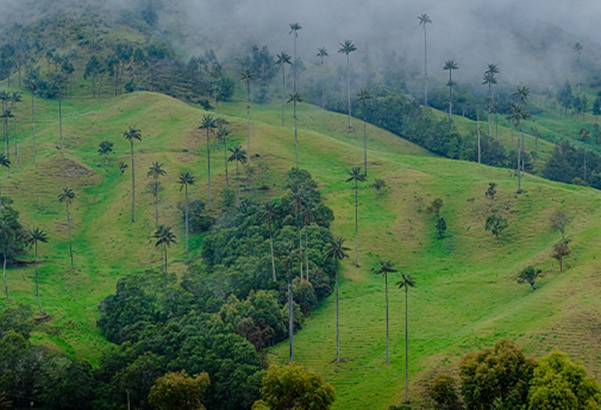 Wax Palms
GASTRONOMY
Salamina’s gastronomy is another of its great attractions. The local cuisine reflects the cultural richness and diversity of the Eje Cafetero. Dishes combine fresh and traditional ingredients, including delicious sancocho, a typical Colombian meal served with generous portions of meat, yuca, plantain, potato and corn. They slow-cook it over low heat to highlight its wonderful flavors.
The local empanadas, with their crunchy corn dough filled with meat or chicken, are perfect at any time of day. The artisans make arequipe, a dulce de leche with a traditional recipe, to perfectly accompany a cup of fresh coffee.
Chefs make la macana, an unusual dessert using soda crackers, butter, sugar, and milk, then steam it and top it with cinnamon. It sounds like a strange combination, but when put together, it really works.
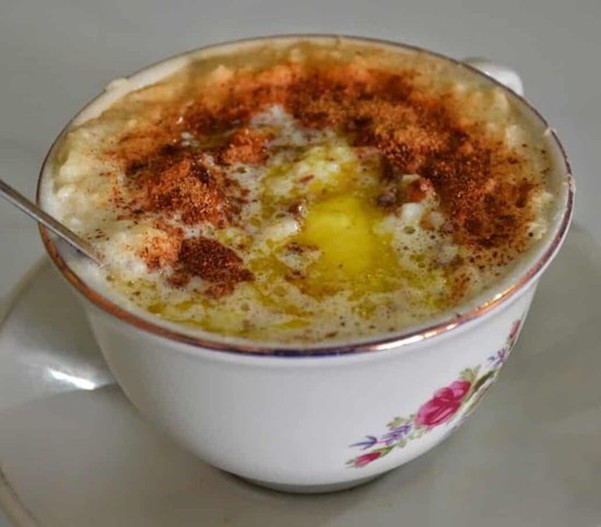 La Macana
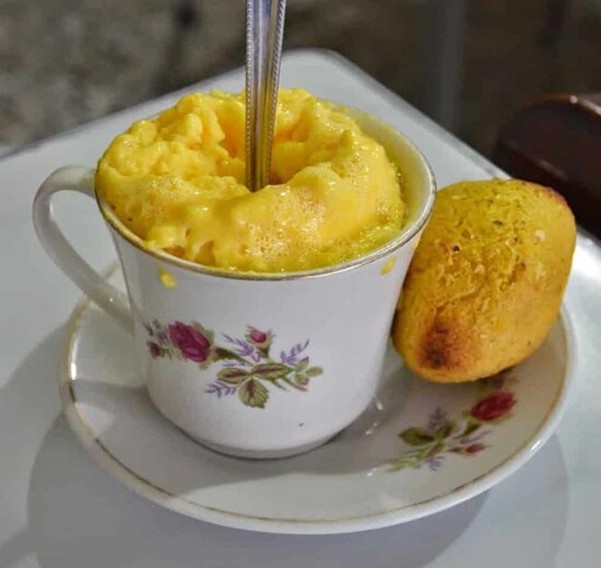
Huevos al vapor are eggs, sausage and butter cooked with steam. They use a steam machine to create these simple ingredients, making them totally delicious.
 Huevos al Vapor
Festivals
One of the most important events of the year is the Feast of the Virgin of the Immaculate Conception, celebrated every December with great devotion. During this festival, processions, traditional music, folk dances, and a celebratory atmosphere fill the streets and attendees.
Residents decorate houses and streets with lights and flowers, creating a festive atmosphere that invites the community and visitors to celebrate. Another important event is Semana Santa/Holy Week, a manifestation of faith that is celebrated with special passion in Salamina.
The religious processions, which travel along the steep streets of the pueblo, are an impressive spectacle of devotion and tradition. People carry religious images and relics on floats decorated with flowers and candles.
HOW TO REACH SALAMINA
Salamina is approximately 75kms/47 miles from Manizales, the capital of Caldas, making the town readily accessible for those who wish to explore this heritage gem. To get to Salamina, you can take a bus from Manizales, which will take you on a journey of around three hours. This is a wonderful experience, with spectacular views of the mountains, rivers and valleys of the Eje Cafetero.
For those who like to drive, the good highway offers a scenic route that winds through the mountainous landscapes, passing small coffee fincas (farms) amid amazing cloud forests.
Salamina, with its unique fusion of history, culture, architecture and nature, is a destination that beguiles and fascinates all those who visit it. This Colombian Pueblo Patrimonio persuades you to elicit its secrets and absorb yourself in an authentic encounter in the depths of the Eje Cafetero, where every event tells a tale and every moment becomes a reflection of history
Like to create or customize a fantastico package tour of Colombia? Use our Plan My Trip page to start planning your dream Colombian vacation now!