
ORINOCO CULTURAL TOUR
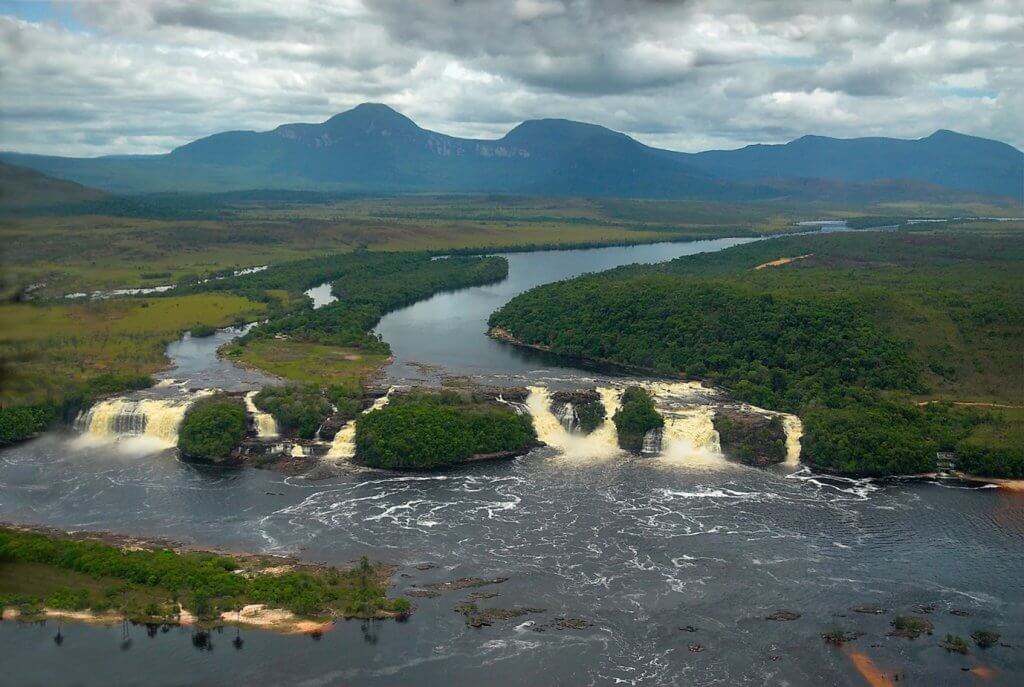 The mighty Orinoco
We work with and recommend booking flights with www.kiwi.com
To the east of the Andes is a vast plain crossed by countless rivers that flow into the mighty Orinoco River. The Orinoquía region is known as the eastern plains from the Spanish llanos orientales and includes the departments of Arauca, Casanare, Meta, and Vichada.
One of the world’s richest tropical grasslands and geographically and culturally unique, the Llanos or Orinoquía region continue to be a lesser known area of Latin America, despite their immense size of about 375,790 square kilometres, spanning Colombian as well as Venezuelan territory. This encompasses nearly twenty percent of the total territory of Colombia.
Here, infinite prairies, mountain ranges, rivers, wildlife, and cowboys define Los Llanos, Colombia’s eastern plains, still undiscovered by mainstream tourism and a true off-the-beaten-path destination.
The climate is hot and dry, resulting in savannah vegetation, natural grasses, and a rich and varied fauna. Los Llanos contains great cultural and ecosystemic diversity, including foothills, transitional forests, savannahs, floodplains, mighty rivers, and a large variety of flora and fauna, some of which is in danger of extinction. In general, the dominant ecosystems are intertropical savannas and riparian forests.
Jesuit missionaries arrived in Los Llanos in the sixteenth century, organizing vast territories as hatos (large-scale cattle farms) that have since been tightly linked to the region’s cowboy lifestyle, music, and traditions. Over the centuries, Spanish influences were adapted and transformed into the distinct Llanero culture, iconic on both sides of the Colombia-Venezuela border.
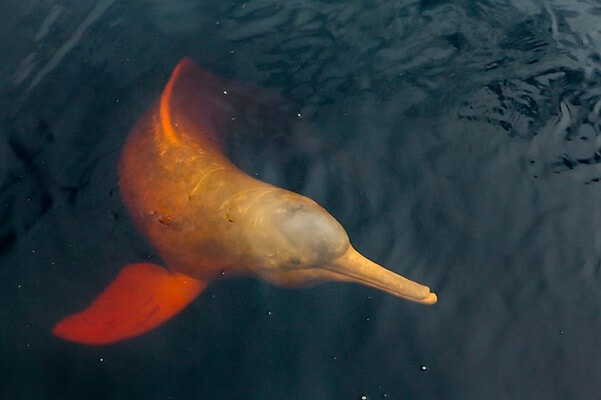 A pink dolphin or boto in the Orinoco River
This region is home to a diaspora of nomadic indigenous peoples who have ancestrally inhabited the area. Today, these people are either confined to established indigenous reserves or live in settlements.
The Orinoquía region has been inhabited by several different indigenous communities over the years, including the Piaroa, Curripaco, Amorua, Sikuani, and Puinave, among others.
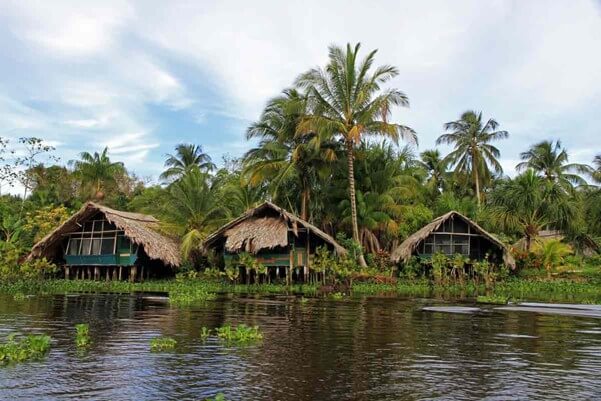
Historically, clans or smaller groups from these communities moved through the land and water in search of resources that would sustain them. Such free exploration was possible as no one owned the territory, so they had complete freedom of movement.
With time, the establishment of the territory ownership model, many of these nomadic groups had to settle in specific areas and form communities, which brought significant changes to their relationship with the inland ecosystems. Essentially, they established conucos (cultivation areas) to grow key food products (cassava, plantain, chili) and adapted their fishing methods.
The sedentary lifestyle required the identification of stable extraction zones and a recognition of the temporality of fishing resources due to the high hydroclimatic variability of the region. It also meant they were now facing territorial barriers and segregation that limited their access to resources.
Over the years, fishing has become one of the main subsistence and economic drivers for these local communities, with fish representing a primary source of protein and income. Today, selling fish takes place during the subienda season (when fish migrate to reproduce in specific sections of the river) that occurs in the Tomo, Tuparro and Orinoco rivers, especially between May to August.
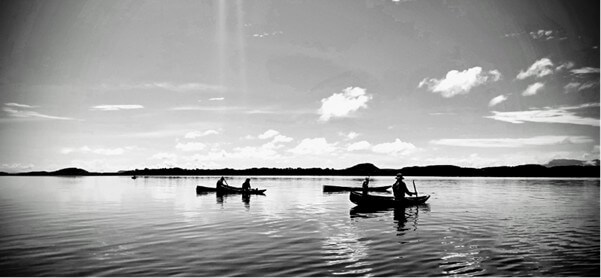 Tuparro in the Orinoquía region
The Orinoco has been home to three large indigenous families, grouped by language. The sedentary and peace-loving Arawaks, the Caribs, former nomadic warriors and the Chibchan, who are now endangered.
Since there are limits to ethnology, some ethnic groups do not belong to these families, including, for example, the Yanomami and the Warao. Each community considers itself politically and economically autonomous. Yet this does not prevent them from maintaining strong social ties with each other, thanks in part to their languages, which, despite their differences, are mutually intelligible.
In this wonderful natural network, the Warao people, known as the masters of canoes, are seen as the guardians of the river, a status that comes from their founding myth. They consider themselves to be the descendants of a man who arrived on the banks of the Orinoco River thousands of years ago in a small boat carved from an entire tree trunk.
The Warao people inherited the art of canoeing from this legend and have made canoes in the same way for centuries. They hollow out a single trunk before burning the inside to strengthen it. On the Orinoco River, known as Guirinoko (“where we paddle” in Warao), they paddle silently on boats seemingly balanced on a single line.
Orinoco culture has its origins before colonization in the 16th century. Like many indigenous communities, the ethnic groups of this region subsisted on the resources provided by the environment. According to historical records, the first indigenous communities to have initial contact with the settlers were the Piaroa, Guahibos and Achagua.
The European influence of that time brought forth new cultural aspects that would eventually reflect new traits of Orinoco culture to this day. Orinoco culture dates back to the time of Spanish colonization, when Europeans brought African slaves and conquered many lands of the indigenous tribes who inhabited the region in the 19th century. The customs and traditions of Orinoquía culture began to develop based on economic and geographic factors.
With the arrival of the Spanish conquistadors, many of these religious beliefs and practices mixed with Christianity, resulting in several multicultural combinations that can be seen in the religious beliefs of that culture today. Spirituality in Orinoquían culture is characterized by a close relationship with nature, particularly ecosystems. Many of these spiritual practices relate to the land, rivers, animals and plants. Christianity has had a huge influence, which is why there are elements today that connect pre-Hispanic religious beliefs and practices with Christianity.
The plains and savannah provide the perfect setting for a range of traditional economic activities, such as livestock farming, which has supported the populations of the Meta, Vichada, Arauca and Casanare departments for hundreds of years. The Llanero way of life is strongly linked to cattle ranching, which is, of course, reflected in aspects such as clothing, music, dance, and gastronomy, which equally reflect cattle ranch activities.
The cuisine of the Orinoquía region dates back to the indigenous traditions that were practised in the area before the Spanish arrived. Indigenous peoples such as the Guahibos, Achagua and Piaroa had a close relationship with the ecosystems.
Initially, they depended heavily on activities such as fishing and animal hunting, and they also produced crops such as corn, bananas, cassava, and rice. With the arrival of the Spaniards, new techniques and traditions were introduced, such as cattle breeding, which had a significant impact on the region’s culinary culture.
ROCK ART
The Orinoco Basin is home to one of the world’s largest collections of monumental petroglyphs, including snakes over forty metres in length. The rock art displays an extraordinary diversity of animal life. While the most prevalent are unidentified quadrupeds, likely deer or similar creatures, the range extends from highly detailed fish, some identifiable down to genus level, to more exotic species such as the Orinoco River Dolphin, black Caymans, and turtles. Invertebrates, including scorpions and centipedes, are also frequently depicted, while snakes are particularly common, appearing on numerous monumental rock surfaces.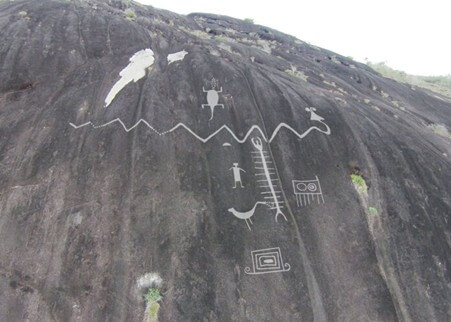
In 2024 British and Colombian archaeologists discovered monumental rock art along the Orinoco River that separates Colombia from Venezuela, in a region the Prussian explorer Alexander von Humboldt (1769 – 1859) once called the Eighth Wonder of the World.
Covering 14 sites in the remote Orinoco Basin, the researchers unveiled engravings, some over 40 meters/131 feet long, which are believed to mark the territorial boundaries of prehistoric indigenous peoples. These engravings are believed to have been created at least 2,000 years ago and possibly even earlier.
Among the largest engravings is a 42-meter/138-foot-long snake, believed to be a boa constrictor or anaconda. This species also appears in ancient rock engravings along the Apaporis and Caquetá rivers in Western Colombia.
Anacondas and boas are linked not only to the creator deity of some Indigenous groups but are also seen as lethal beings. It is believed these engravings served to mark territory, signalling local presence and expected behaviour.
The monumental scale of these sites indicates they were meant to be seen from a distance, asserting dominance and control over the landscape.
Like to create or customize a fantastico package tour of Colombia? Use our Plan My Trip page to start planning your dream Colombian vacation now!