
COLOMBIAN HANDCRAFTS – PART ONE
Colombia is an amazingly beautiful country in South America, which has a rich and diverse culture. Steeped in this culture is the vibrant arts and crafts scene for which Colombia is renowned. Colombia’s diverse craft traditions and highly skilled artisans offer a fascinating window into the country’s cultural history.
With a rich heritage of Indigenous crafts, access to beautiful raw materials and an exciting contemporary design scene, Colombia is truly a paradise for shoppers. One of the highlights of travelling in Colombia is exploring the country’s colourful markets and gift boutiques. You can learn a lot about the regions through the different handicraft traditions, and of course, pick up some special mementos along the way.
It is reassuring to know that, roving around Colombia, you can stop in any pueblo and buy arts and crafts made by local artisans. While pueblos and rural communities may be close together on a map, they can be worlds apart when it comes to the materials, patterns and ingredients used in the elaboration of accessories and edible delights. Colombia is a melting pot of creativity, a country where craftsmanship is not just a skill but a form of local identity. A technique will develop in one pueblo and take over an entire community.
Originally, the items produced were purely functional, enabling locals to perform their daily tasks. However, over time, their commercial value emerged. Handicrafts are more than mere objects; they connect the present to the past by ancestral techniques handed down over generations, often in one family or indigenous group. Such as the colourful mochila knitted by the Wayúu women in their rancherías (townships) scattered across the arid La Guajira peninsular.
Each mochila has a unique imprint; however, as artisans interpret nature in a different way, freely choosing colours that connect them with their cosmogony and culture. As an iconic expression of a specific tribe and region, many of Colombia’s arts and crafts are now protected with the Designation of Origin status (PDO), including the emblematic hat of coffee farmers, the Aguadeño, intricately woven from the dry fibres of the Iraca palm or painted clay chivas elaborated by potters in Pitalito, Huila. The designation not only rewards location-specific items but also unique foods, laboriously prepared by confectioners and bakers in kitchens across the country.
SOME OF THE BEST SOUVENIRS AND GIFTS TO BUY IN COLOMBIA
Coffee
 We work with and recommend booking flights with www.kiwi.com
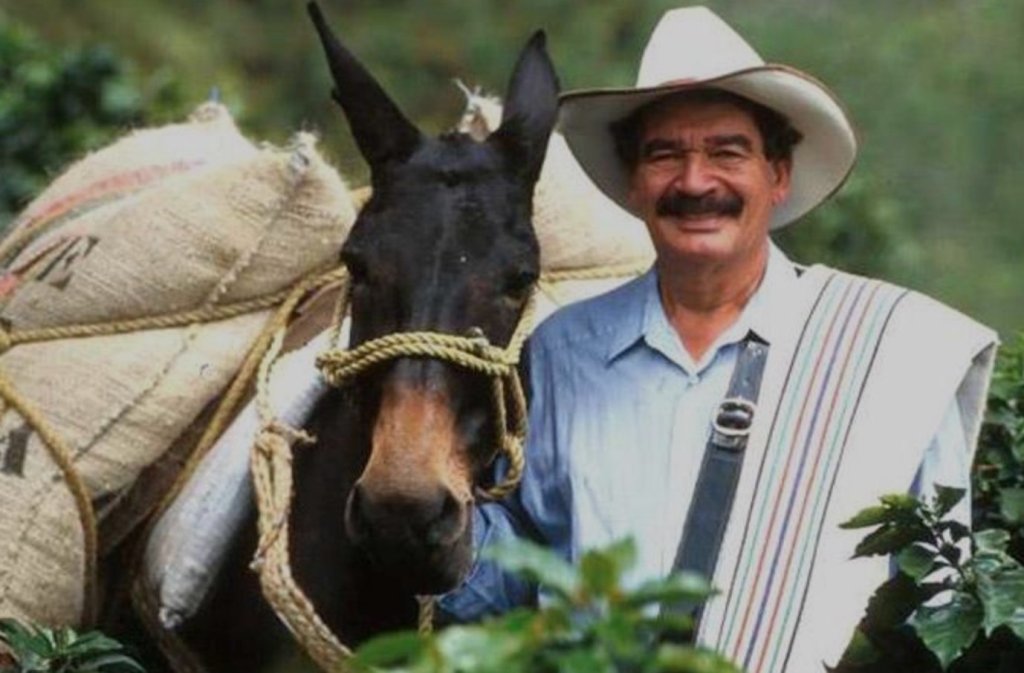
Colombian coffee is a low-hanging fruit when looking for souvenirs. World famous for having exceptional quality and flavour, you know this gift is going to be much appreciated and will actually get used.
How to get the best Colombian coffee
- The best coffee beans to buy in Colombia may vary by preference, but the country is known for its Arabica beans, which have smooth, nuanced flavour.
- Look for coffee labelled as single-origin, which means it is sourced from a specific region or, even better, a single farm.
- Buying whole coffee beans helps retain freshness until you are ready to grind and brew.
- Look for labels Colombian Coffee Origin Denomination or Café de Colombia.
Where to buy Colombian coffee
- Visit the Coofee Axis/Eje Cafetero, including towns like Armenia, Manizales and Pereira, which is known for its lush coffee farms and scenic landscapes.
- You can visit coffee farms such as Hacienda Venecia or El Ocaso and others to purchase coffee directly from the source.
Wayuu Mochila bag
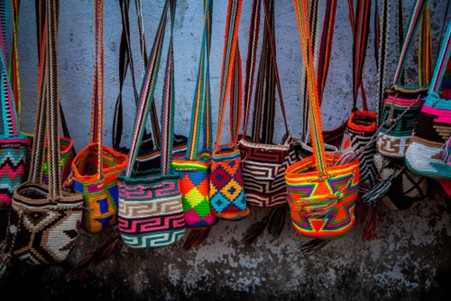
These bags are arguably the most famous of all Colombian souvenirs. Almost every visitor is enticed by these bright and cheerful handmade shoulder bags. Mochila bags are made by women from the Wayúu ethnic indigenous group, whose traditional lands are in the northernmost part of Colombia and in Venezuela. Members of the Kogui, Kankuamo and Arhuaco groups also make Mochilas.
The cylindrical bags are crocheted by hand and finished with thick woven straps and oversized tassels. These days, most artisans work with acrylic threads, which makes the bags durable and machine-washable. Vibrant pinks, greens and maroons are the norm, but there are also Mochila bags woven from natural fibres in more subtle, earthy hues.
There are a few different ways of making a Mochila bag, and the technique used influences the price point. Single-thread bags are delicate with finer designs and take a longer time to make, while double-thread bags have bolder motifs and can be made in much less time.
One of the best places to buy a handmade Mochila is in the north of Colombia, where the Wayúu live, around Santa Marta and the coast. However, you can find these bags absolutely everywhere, at markets and shops all around the country.
Ruana Colombian poncho
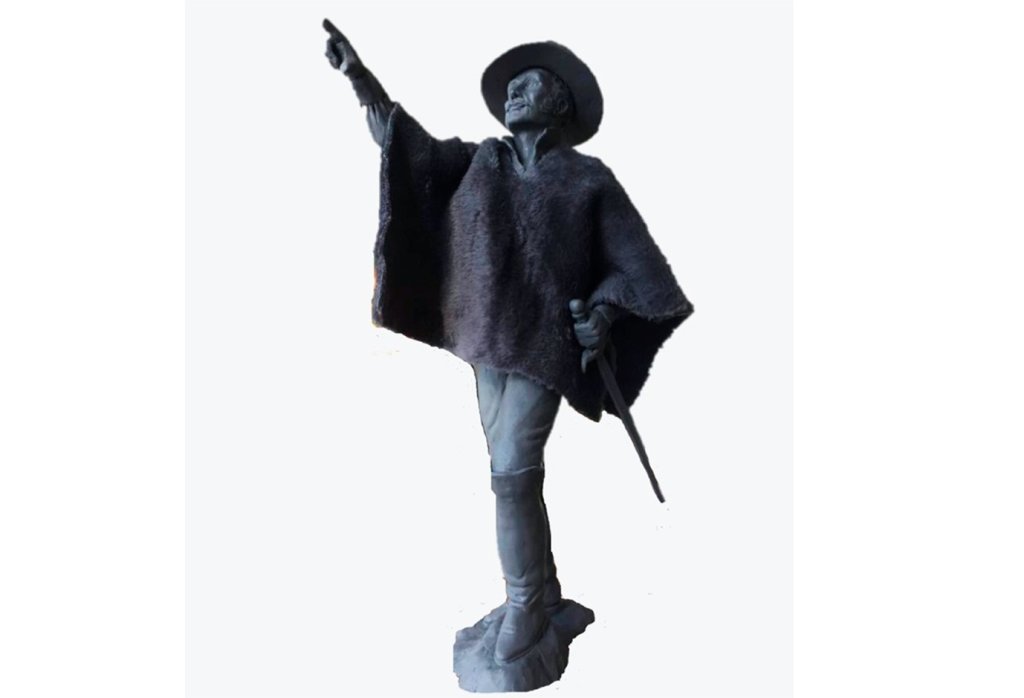
Ponchos are a ubiquitous garment in South America, embraced by almost every culture for their practical design and beautiful silhouette. The Ruana is Colombia’s answer to a poncho, and it has a couple of special characteristics that set it apart.
Traditionally made from thick wool, ruanas have a rectangular shape and sleeveless design. Unlike ponchos, the front is often left completely open so that the wearer can wrap the two halves around their body. This makes it extra cozy and snug. Ruanas are worn and sold all over Colombia, including in the Antioquia Department. In the past, designs often came with thick red and yellow stripes, but today most ruanas are simplified and come in solid colours. Dark tones are most popular, grey, black and deep blue.
Sombrero Vueltiao Hat
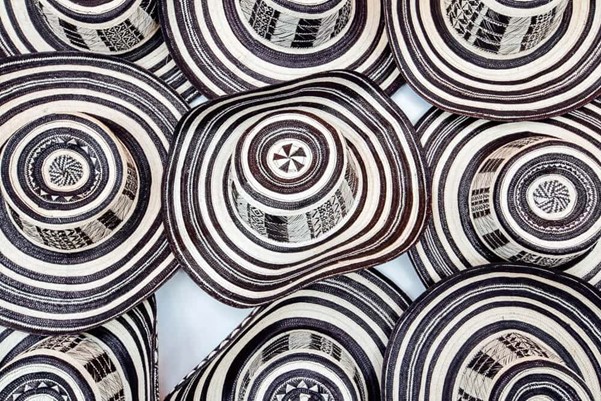
The Sombrero Vueltiao is perhaps Colombia’s most iconic piece of headwear. The loud and proud black and white design has its origins with the pre-Columbian Zenú tribe. Their descendants in Cordoba and Sucre continue to make the hats according to traditional methods today.
The hats are made from caña flecha, an endemic cane. Darker fibres are soaked in mud and boiled with plant dyes to give them a black tone, while lighter fibres are kept white. The two colours are then braided together to form the body of the hat and its wide brim.
The hallmark of a good Vueltiao is its flexibility. The more dense, soft and supple the hat is, the higher its quality and thus the higher the price tag. Every hat is labelled with the number of laps, which denotes the number of caña strips the artisan used to make it.
The quality varies from 15 pairs of cane, a loosely woven hat called a Quinciano, all the way up to the Veintisiete, which uses 27 pairs of cane and takes up to a month to make. As a general rule, 19 – 23 pairs make for a good quality hat that is adequate for daily use.
Filigree Jewellery from Mompox
 Begin organizing your dream Colombian getaway right away by using our Plan My Trip page!
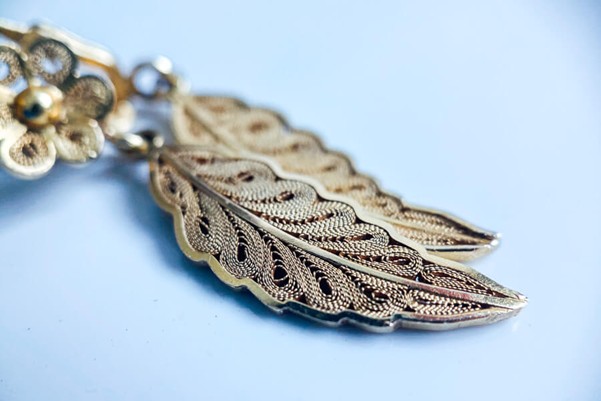
Santa Cruz de Mompox is a small pueblo in northern Colombia’s Bolívar Department, around 275 km/171 miles inland from Cartagena. Recognized as a UNESCO World Heritage Site since 1995, Mompox is known for two things in particular. First and foremost, it’s well-preserved colonial architecture and secondly, its traditions of filigree.
Filigree is a metalwork technique whereby minuscule pieces of gold and silver wire are worked into ornate designs. It is hard to overstate just how much attention to detail and precision it requires. Mompox’s filigree workshops date back to the 16th century when artisan guilds were first established in the port town, and gold became more readily available.
Artisans drew on the skills of local goldsmiths, Arabic techniques learned from the Spanish conquistadors and ancestral methods introduced by African slaves to create their own kind of filigree. Ultra-fine and full of spiralling shapes, it is famed throughout Colombia and the world. There are all sorts of delicate and beautiful filigree jewellery from Mompox, including pendants, earrings and brooches. Silver is much more common than gold these days.
Emeralds
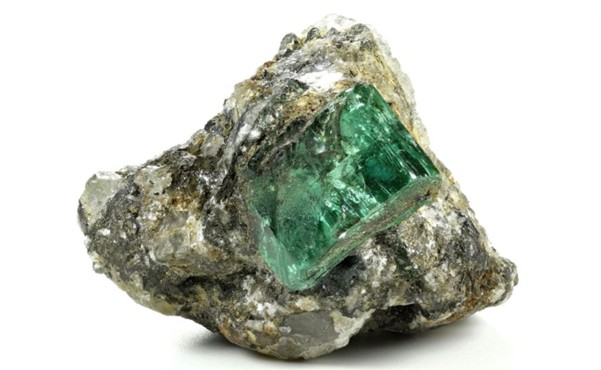
Colombian emerald jewellery is internationally acclaimed for being some of the world’s finest, with stunning green hues, considered the most desirable shade in the gemstone world.
Emeralds also hold cultural significance in Colombia, with a history dating back to pre-Columbian indigenous civilisations. Much like the modern era, these rocks were treasured by indigenous tribes for their beauty and mystical properties.
Best places to buy emeralds in Colombia:
Bogotá’s Emerald District is a hub for emerald trading and has some very reputable jewellery stores. Start your search in La Candelaria. Cartagena too has authorised jewellery shops that specialise in Colombian emeralds. Be cautious about buying emeralds in the street.
Is it cheaper to buy emeralds in Colombia? Not necessarily. Colombian emeralds are some of the highest quality in the world, and it is a global market, so you will not necessarily pay less in Colombia for the same quality emeralds you would find in the States or Europe. That being said, you do have the advantage of direct sourcing, which means you can cut the cost of the distributors.
Clay Pottery from Raquira
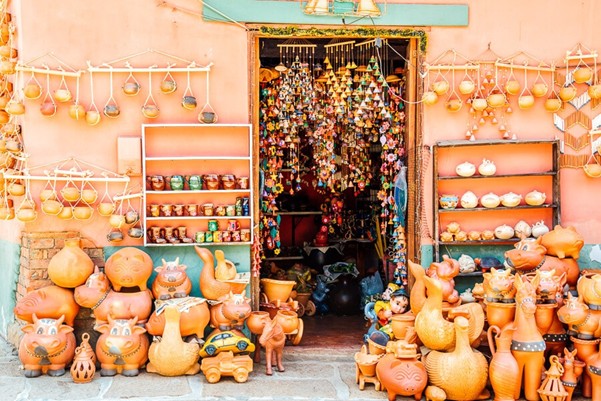
Just over 3 hours by road from Colombia’s capital city, Bogotá, the town of Raquira is a popular day trip destination. Plan to visit on a Sunday when the town’s biggest market takes place. The one thing to buy in Raquira on any day of the week is clay pottery. Raquira literally means City of Pots in the native Chibcha language, and that is all you really need to know.
Workshops and pottery wheels line every street in Raquira. Red clay pottery done in the northern Andean style is the speciality here. Visitors can shop a huge range of homewares, decorative ceramics and clay wind chimes that sing a beautiful dulcet tune. Raquira’s brightly coloured houses and overflowing pottery shops give it an absolutely charming vibe.
Mini Chiva Bus
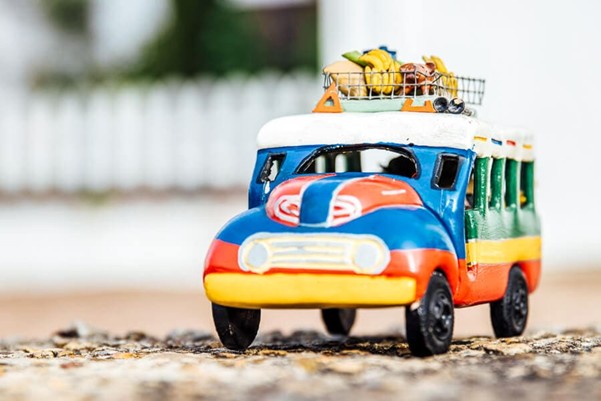 Riding a chiva bus is one of the must-do things while in Colombia. These exuberantly decorated trucks ply country roads in the Coffee Region and beyond, bringing joy to passengers and passers-by alike.
Each chiva is a work of art, painted with the colours of the Colombian flag (red, blue and yellow) and festooned with imaginative patterns and designs. A mini chiva bus is the perfect take-home with which to remember Colombia. The model toys with baskets of fruit and coffee on the roof racks are real Colombian style and make tremendous memorabilia.
Cumbia Record
Music oozes from every bar, restaurant and public plaza in Colombia, especially in Cali, the rhythmic heartland of Colombia which overflows with music shops and bars. Since hearing is one of our most powerful senses, there is no better way to remember your time in the country than with a piece of music that reminds you of the good old days. However, you can still find musical souvenirs all over the country. Cumbia is Colombia’s signature rhythm, and a Cumbia record or old-fashioned CD is the perfect take me home for the musically inclined.
Colombian Confectionary
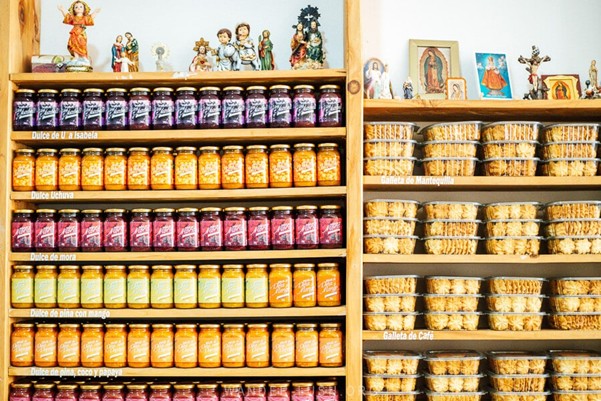
Tempting as it may be to try and bring home a basket of delicious tropical Colombian fruit, it is just not practical for most people. The next best thing is a box of Bocadillo de Guayaba, a fruity jelly made from guava pulp and panela sugar.
Other popular Colombian confectionaries also have fruity flavours, including dulce (sweet) preserves that are widely available and come in sealed jars that are very easy to transport home. Dulce de Uchuvas made with gooseberries, is a great choice. Galleta (biscuits) and obleas con arequipe, wafer sandwiches with caramel, are popular sweets you can easily find in any supermarket.
Guaro – Aguardiente
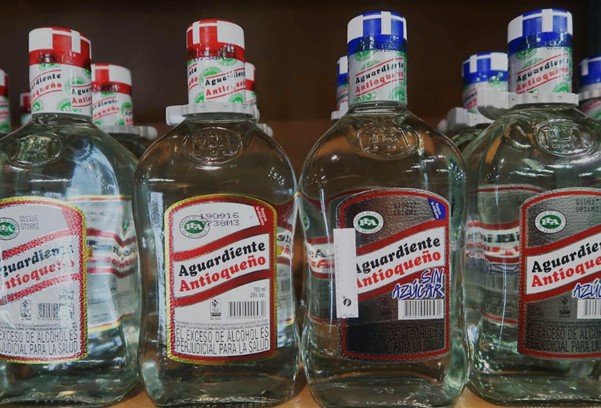
Aguardiente, often referred to as guaro and meaning firewater, is the country’s most beloved liquor. This clear spirit holds a special place in Colombian culture and is a key component of many celebrations and gatherings.
Aguardiente is flavoured with anise, which gives it that distinct liquorice-like taste. Guaro is distilled from sugarcane juice or molasses and seasoned with herbs and spices, including anise. The result is a spirit ranging from 30% to 60%.
Some well-known brands are Antioqueño, Cristal and Nectar, but they are all the same. The only difference is that the blue cap is sugar-free, and whether that is a good or a bad thing is up for heated debate amongst Colombians.
Like to create or customize a fantastico package tour of Colombia? Use our Plan My Trip page to start planning your dream Colombian vacation now!