
CHOCÓ/PACIFIC COAST NATURE TOURS
Everyone has a little adventure inside of them, whatever they may say. A desire to do something completely different from their normal life, to venture somewhere they have never been before, a personal El Dorado if you wish, and to experience whatever they may find fully.
As most of our world has now laid bare its secrets to us, finally discovered, explored, and repeatedly charted and mapped, there are still some places that retain a certain mystery, a touch of magic about them, and a hidden secret or two.
For the more adventurous, El Dorado-seeking traveller, there simply are not many places like Chocó to be found in this world anymore. Nestled in the far northwest of Colombia, one of the most stunningly biodiverse countries on the planet, you will find the department of Chocó sharing coastlines with both the Pacific and Caribbean oceans.
Chocó is a unique department for multiple reasons. No other department shares a border with Panama, has as much African heritage, or touches two oceans, both the Pacific and the Caribbean. These unique factors make Chocó a blend of rich forests, beautiful rivers, and incredibly magnificent beaches, which are a resounding success with both Colombian and foreign visitors.
The untouched purity and beauty of the natural world in Colombia’s Chocó department is, without a doubt, the perfect destination for all those endeavouring to experience nature at its finest. Here, inviting sandy beaches are surrounded by vibrant, lush jungles bursting with unique ecosystems fed by the highest rainfall for a lowland anywhere in the world.
1,300 km/808 miles long, the Colombian Pacific coast is very rich. A destination that is perfect for nature and ecotourism lovers, with its preserved natural parks and reserves. The Chocó is the ideal starting point to enjoy wild beaches and hike in the heart of the jungle whilst observing untouched tropical fauna and flora.
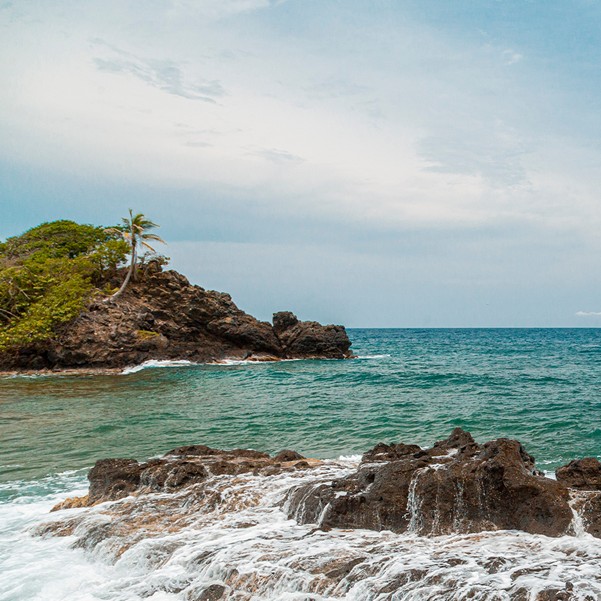 Pacific Coast
Most of the inland region consists of dense jungle crisscrossed by rivers, including the Atrato and the Baudó. The coastal landscape consists of rocky promontories, black sand beaches, and a handful of urban settlements.
In this realm of extremes, Colombia’s Pacific region is also known for being one of the wettest regions on the planet, measuring a rainfall of around 4,000 mm/157 inches a year.
There, the warm waters of Nuquí and Bahia Solano attract sumptuous humpback whales who come to reproduce every year between June and October. Birding is also a popular activity in the region, and the area around Utría National Park is especially well known for its avian diversity. Endemic bird species of the region include the Baudó Oropendola and Sooty-capped Puffbird, as well as colourful tanager and hummingbird species like the Scarlet and white Tanager and Humboldt’s Sapphire.
Diving lovers cannot miss an excursion to explore the seabed of Gorgona and Malpelo, which features corals, colourful tropical fish, and sea turtles. This region is also great for surfing, sport fishing, or bird watching.
The most reliable way of reaching the wildest areas of this region is by air. The Chocó towns of Nuquí and Bahía Solano can be reached with a small plane from Medellín. Oftentimes, however, there are delays due to weather conditions on the coast. Tumaco has flights from Bogotá and Cali, while Buenaventura airport also has connections with the Colombian capital. The Cauca town of Guapi has flights from Cali.
So what can the adventurous traveller see and do in Chocó? Put simply, plenty and so much more. From swimming under waterfalls, to whale watching from the beach, to exploring the mighty rainforests, it is all here for you, waiting.
HUMPBACK WHALE-WATCHING
 We work with and recommend booking flights with www.kiwi.com
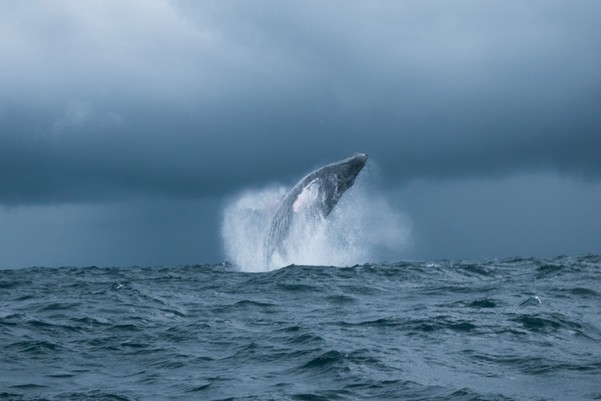
All along the Chocó Pacific coastline, between July and November, there is one natural spectacle you should not miss. The ocean waters become home to huge numbers of migrating humpback whales, who have travelled some 8,000 kilometres/4,971 miles north to these warmer depths to mate and then give birth.
Weighing around 40 tonnes/80,000 pounds and 30 metres/98 feet in length, these huge, majestic mammals cut through the ocean with their enormous back fins, occasionally jumping through the surface in graceful, slow-motion leaps, ocean spray arcing beneath them.
The best places to witness this awesome natural spectacle are the towns of Nuquí, Bahia Solano and to the south, Bahia Malaga, near Buenaventura. They can either be viewed from the gorgeous, windswept sandy beaches or aboard one of the many tourist boats.
LEATHERBACK SEA TURTLES ON ACANDÍ BEACH, NEAR CAPURGANÁ
During April and May, there is one natural phenomenon you do not want to miss. The hatching and short journey across the sands to the ocean of newborn leatherback sea turtles (tortugas cana) on Acandí Beach, which can be reached from Capurganá with a short boat ride. These wonderful creatures are protected by law by the Colombian government, and their welfare is a welcome part of life for the local people.
AGUACATE NATURAL RESERVE, CAPURGANÁ
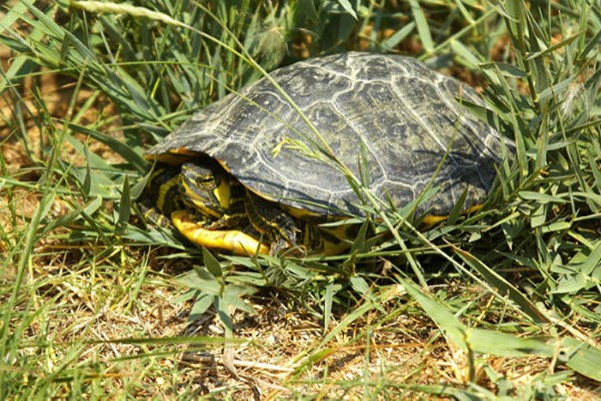
Just to the south of Capurganá is the Aguacate Nature Reserve, with its paradise bay, full of colourful coral formations teeming with marine life. This small strip of beautiful coastline extends into the nearby rainforest, around 200 hectares/494 acres of which is likewise classified as a nature reserve.
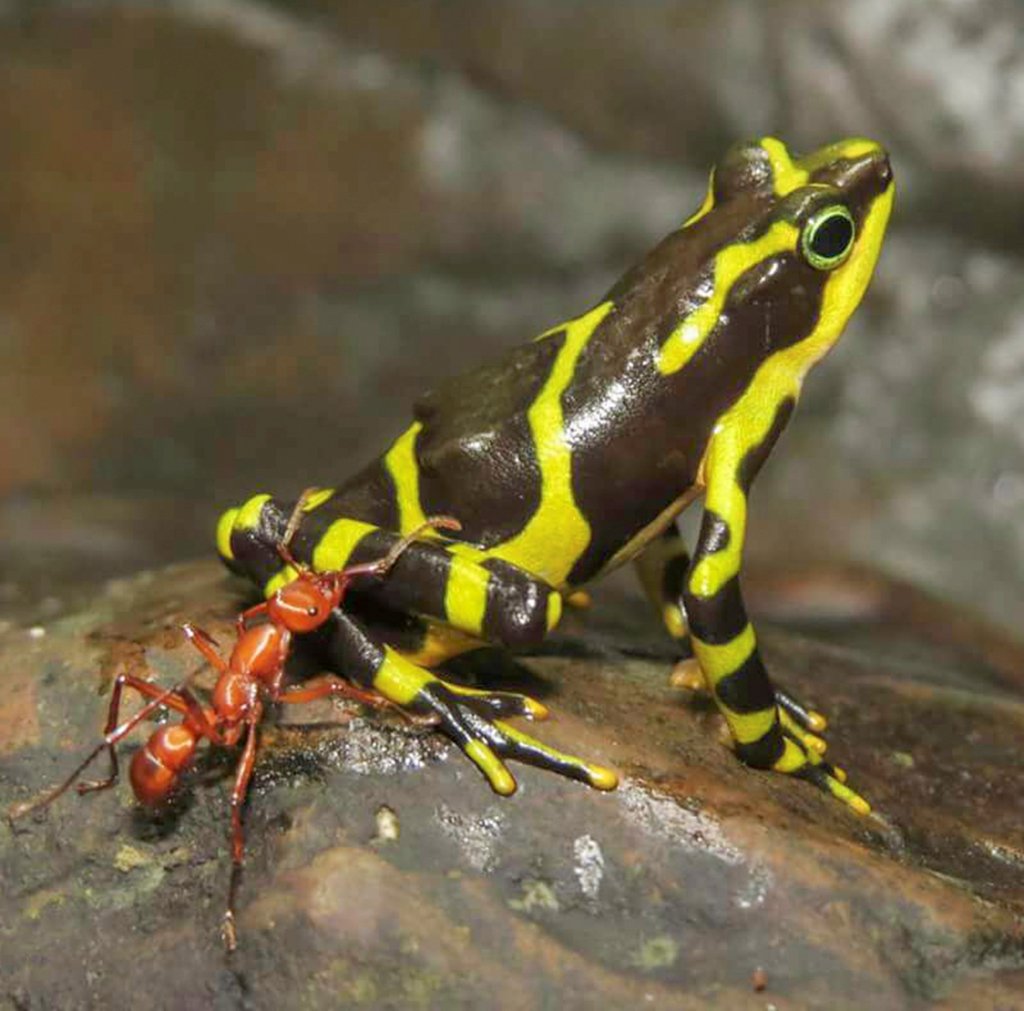 Atelopus limosus – poison frog
Howler monkeys, capuchins, tamarins and the earless aotus monkey, as well as poison dart frogs, common lancehead vipers, lowland pacas, agoutis and armadillos are in abundance.
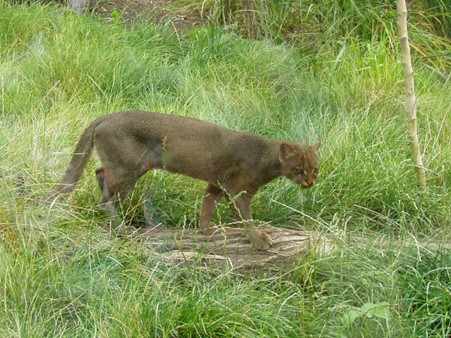 Puma
Puma
THE POOL OF THE GODS
(La Piscina de los Dioses)
Here, a stunning vista awaits you at the nearby Pool of the Gods, also to the south of Capurganá. Its rocky coastline is repeatedly hit by large and fast ocean waves, creating vast natural wells in the geology. Because of the precarious nature of the area, it is best simply to sit and marvel at this natural wonder.
JOVÍ RIVER
To fully immerse yourself, not in the ocean waters this time, but in the magical, biodiverse beauty around you, take a tour along the Joví River, deep into the very heart of the rainforest. From your dugout canoe, known as a chingo, witness a whole host of natural wonders, from scurrying monkeys weaving through the tree canopy above, to the lush green floor of the jungle.
Eventually, your chingo won’t be able to make it any further, so with a short hike, arrive at the awe-inspiring natural beauty of Chontadura waterfall. At its base, there is a natural pool to swim in the refreshing waters.
After an invigorating swim, you can return to your chingo, or for the more adventurous, scramble up the side of the waterfall and continue the hike on to the more impressive Antaral waterfall. Here, a larger natural pool with wonderful views back downstream to the Pacific is found.
HOT THERMAL SPRINGS
Near Nuquí lies La Cascada de Cuatro Encantos (The Waterfall of the Four Charms), where wonderfully invigorating hot springs (termales) await. True to its name, the waterfall cascades down through the jungle in four distinct tiers.
COQUÍ MANGROVE SWAMPS
A mere 15 minutes by boat from Nuquí is the delightful coastal village of Coquí, with its miles and miles of some of the most well-preserved mangrove swamps you can hope to find in Colombia. Locals offer various mangrove tours, again in a chingo, for visitors keen to marvel at yet another defining aspect of Colombian biodiversity.
The Afro-Colombian community of Coquí also holds a food festival every January and July for visitors to sample their delicious cultural cuisine. The beach here is stunning.
UTRÍA NATIONAL NATURE PARK
(Parque Nacional Natural Ensenada de Utría)
One of the jewels in Chocó’s crown of biodiversity has to be the Utría National Natural Park/Parque Nacional Natural Ensenada de Utría. Created in 1987 and benefiting from one of the largest volumes of annual rainfall in the world, the nature park is teeming with life, both on land and out into the Pacific. The park also protects the adjacent coastal marine environment.
Located to the north of the Gulf of Tribugá, it is named after the Utría Cove (Ensenada de Utría), a massive coastal lagoon surrounded by lush mangroves and dark sand beaches and often visited by migrating humpbacks and sea turtles. In fact, it is quite common for the humpbacks to use the lagoon as their maternity ward from August to October.
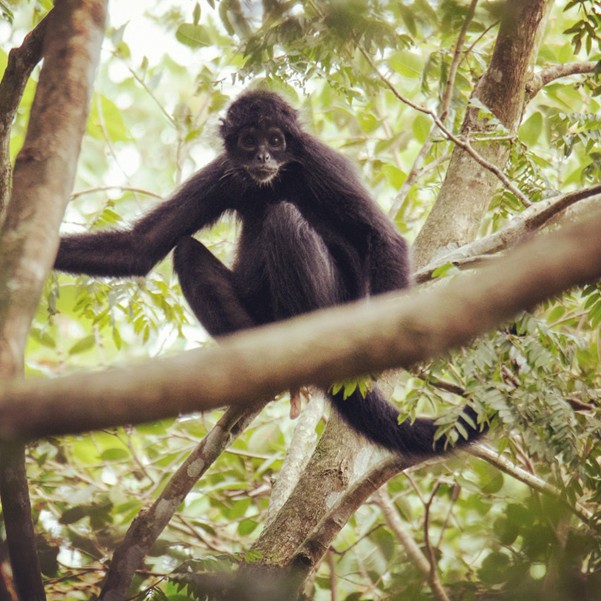
On land, there is even more to see and wonder at in the nature park. Jaguars, peccaries (hog-like mammals), cougars, brocket deer, howler and spider monkeys, giant anteaters and brown throated sloths, along with numerous species of amphibians and reptiles.
 Begin organizing your dream Colombian getaway right away by using our Plan My Trip page!
Many of these wonderful creatures can be witnessed from the nature trails that run throughout the park and visitors are genuinely welcomed by the local community.
OLIVE RIDLEY SEA TURTLES IN UTRÍA COVE
Cuevita beach is the perfect setting to witness the olive ridley sea turtle nesting in the sand. For the smallest of the turtle species, the olive ridley is the most common turtle nesting here, but other marine mammals, such as the leatherback sea turtle, the green sea turtle, the hawksbill turtle, bottlenose dolphins, sperm whales, killer whales and the humpbacks, are all known to frequent the Utría Cove.
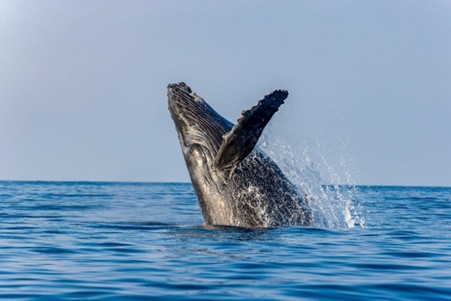 Hump Back Whale
LOS KATÍOS NATIONAL NATURAL PARK
Right up in the far northeast edge of Chocó, on the border with Panama, a veritable feast of nature can be found for the more adventurous travellers in the form of Los Katíos National Natural Park. Now a World Heritage Site due to the amazing diversity of plant and animal species, the park is a part of the Darién Gap, a densely forested area shared by Colombia and Panama.
An example of this can be found with the bird life here. Over 25% of Colombia’s reported species inhabit an area comprising only 1% of Colombian territory. A true birdwatcher’s paradise.
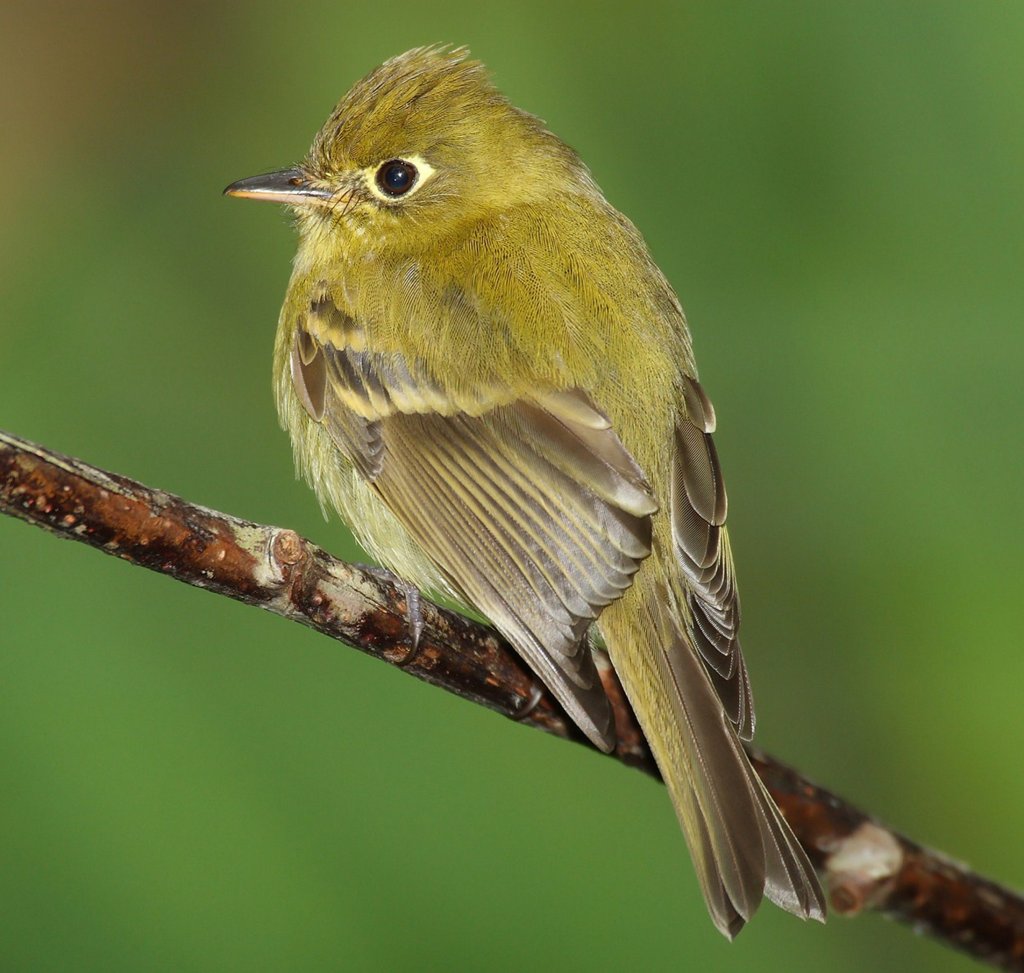 Yellow flycatcher
The park is named after the indigenous tribes people of the region, the Embera Katíos and notably features a rainforest that rises up from sea level into the dominant Serranía del Darién mountains to the west and floodplains around the Atrato River to the east.
TATAMÁ NATIONAL NATURE PARK
(El Páramo Tatamá)
El Páramo Tatamá is probably one of the most inaccessible nature reserves of all. The park is known for its rugged geography and steep slopes, earning it the reputation as one of the only areas of virgin wilderness left in the world and also for its excellent record in conservation. Just another of Chocó’s hidden gems.
Colombia is a magical land, a natural paradise where hidden gems shine. Chocó is one of the most magnificent places in the country. This is where nature is unspoiled, the rainforest touches the ocean, and life is simple.
Like to create or customize a fantastico package tour of Colombia? Use our Plan My Trip page to start planning your dream Colombian vacation now!