
COFFEE AXIS NATURE TOUR
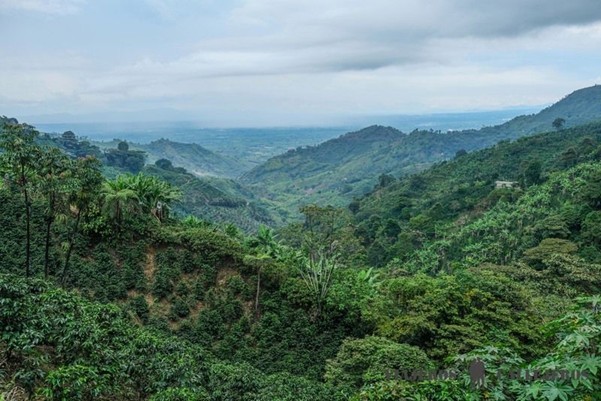 Coffee Axis
We work with and recommend booking flights with www.kiwi.com
Located in the Andean Region of Colombia, the Coffee Axis or Eje Cafetero is a geographic, cultural, and economic region of great importance. It includes the departments of Caldas, Risaralda, and Quindío, as well as parts of Tolima, Antioquía, and Valle del Cauca. Its name comes from being the country’s largest coffee producer and economic engine.
With its rugged beauty, indigenous history, and independent spirit, there is more to Colombia’s Coffee Axis than the nation’s hallowed red beans. The fabled coffee country combines scenic majesty with exhilarating outdoor recreation and fascinating cultural touchstones. Andean peaks and volcanoes rise over green valleys, where coffee farms border old fincas and parks teem with wildlife.
This magical, tradition-rich place includes Filandia and Salento, with narrow streets of bahareque, bamboo, and clay homes leading to quiet plazas. Though not main attractions, Pereira, Manizales, and Armenia are gateways to hot springs, alpine lakes, nature reserves, and traditional coffee haciendas.
Colombia’s Coffee Axis is now one of the most visited areas of the country, thanks to its movie-like landscapes, charming towns, delicious coffee, and warm, welcoming people.
SALENTO
The most visited small pueblo in Quindío is Salento. Full of colour, traditional Colombian architecture, and excellent restaurants, it’s also one of the best places for a coffee farm tour in Colombia. Salento is known for retaining much of its Spanish colonial charm. The tricky access roads slowed the pace of development compared to the rest of the region. Consequently, the people of Salento enjoy a more relaxed lifestyle.
Stroll along the main street, Calle Real, to appreciate the beauty of the place. Bars, restaurants, and craft shops abound. At the far end of the street, ascend an imposing staircase to the Alto de La Cruz Viewpoint to behold the mesmerising Cocora Valley.
Salento is also renowned for its Willys Jeeps, known locally as Yipao. These US Army surplus Jeeps were introduced to Colombia after the Second World War. In the Coffee Axis, they transport many people, goods, or livestock on steep mountain roads, often acting as hop-on, hop-off taxis for visitors.
From Salento, it is possible to reach the heart of the Coffee Region in a Willys jeep. They leave frequently from the main plaza for the wonderful surroundings of the majestic Cocora Valley, a natural oasis that lifts you to the clouds, where misty landscapes feature wax palms reaching 60 meters tall. There are endless trails to explore on foot, by bike, or horseback. For those with a penchant for adventure, you can paraglide across the valley.
One of the best times to visit Quindío is during the National Coffee Festival, which is always held in either June or July. You can expect to see a lively Yipao parade, and you can join the celebrations and coffee-themed pageantry.
Beyond Salento, the National Coffee Park in Montenegro, just outside Armenia, is a themed site dedicated to exploring the history and production of coffee. Here, there are dozens of amusement rides and cultural attractions, as well as entertaining shows, while on the outskirts of Armenia lies one of the most beautiful parks, the Quindío Botanical Garden. It opened in 2000 and has since developed one of the most extensive butterfly collections in all of Colombia.
COCORA VALLEY
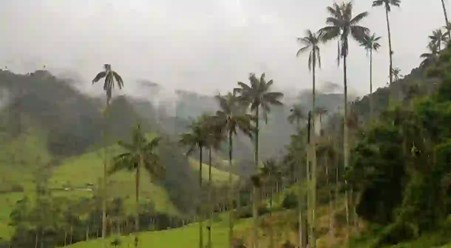
The Cocora Valley is among the most beautiful places to visit, not only in Quindío, but all of Colombia. There is a trail over the mountains which passes through coffee farms and arrives in an amazing valley with the world’s tallest wax-palm trees, some soaring to heights of 60 metres/197 feet.
However, precisely because of its numerous hiking trails, visitors are easily lost within the mountain ranges if they take a wrong turn, and the area is known for wild pumas, bears, and other intriguing creatures, so for a truly serene way to view the valley, consider a horse riding excursion.
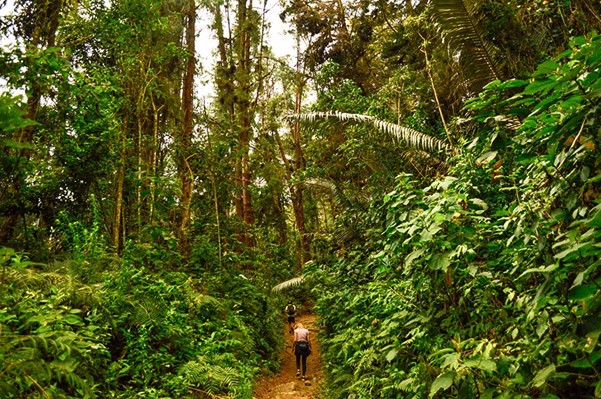 A trail in the Cocora Valley
Begin organizing your dream Colombian getaway right away by using our Plan My Trip page!
FILANDIA
For a smaller, quieter pueblo in Quindío, Filandia is the answer. Here, amidst the pueblo’s colourfully painted balconies, murals, and magnificent church, it is the true Colombian Paisa life.
Filandia is a spectacular pueblo characterized by the mythical architecture of the colonization period, without excessive tourist crowds. The Mirador Colina Iluminada del Quindío is an amazing experience. With a 360° panoramic view, on clear days, it is possible to see some of the other pueblos in the Coffee Axis and given its proximity to the Barbas-Bemen Nature Reserve, it is the perfect place for some howler monkey viewing or bird watching.
With its distinctive, biodiverse landscape, Quindío is the perfect base for the eco-minded traveller.
CALDAS
On the northern end of the Coffee Axis lies the capital of the department of Caldas, Manizales, known as The City of Open Doors. The city offers stunning sunsets and historic sites, including its grand Gothic basilica with a 113-meter steeple and the 1922 San Esteban Cemetery. You can also ride the city’s cable-car system, which delivers breathtaking bird-eye views of Manizales and its surroundings.
Whilst visiting, you will be totally immersed in the background of Colombian coffee bean production too.
One of the best coffee farms in Caldas is Hacienda Venecia. A rarity in the Coffee Triangle, it offers you the chance to stay on a working coffee farm, residing in one of the onsite guesthouses. The surrounding landscapes of this farm are truly magnificent, with nearby hot springs and a multitude of Colombia’s native trees.
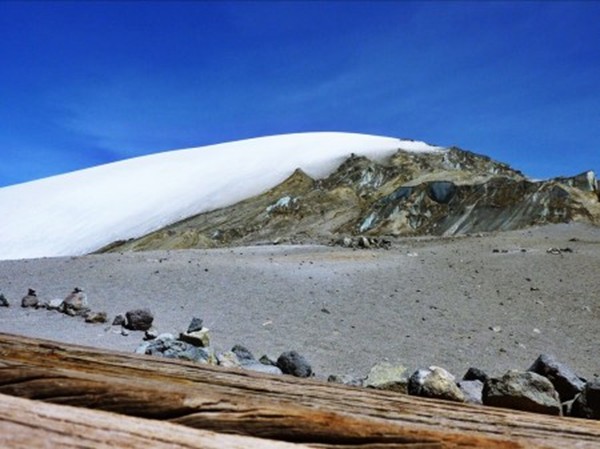 Los Nevados National Natural Park
More importantly, there is easy access to Los Nevados National Natural Park, with mountain views that extend up into the volcanic complex, Andean forests, and rivers that descend from the snow-capped peaks.
Los Nevados National Park lies in the heart of the country at the apex of the central Andes in Colombia’s Coffee Region. Within its borders, there are eight principal volcanoes, some extinct and collapsed, others very active, such as the historically deadly Nevado del Ruiz, or known as Kumanday by the indigenous, the Sleeping Lion. Three have rapidly disappearing glaciers due to climate change. The highest peak, El Ruiz, rises some 5,321 metres/17,162 feet into the heavens. Volcanic giants have shaped this rugged Andes region, creating lush foliage and fertile soils in the warm coffee valleys below.
It is only possible to enter with a guide approved by the park, and this must be arranged in advance.
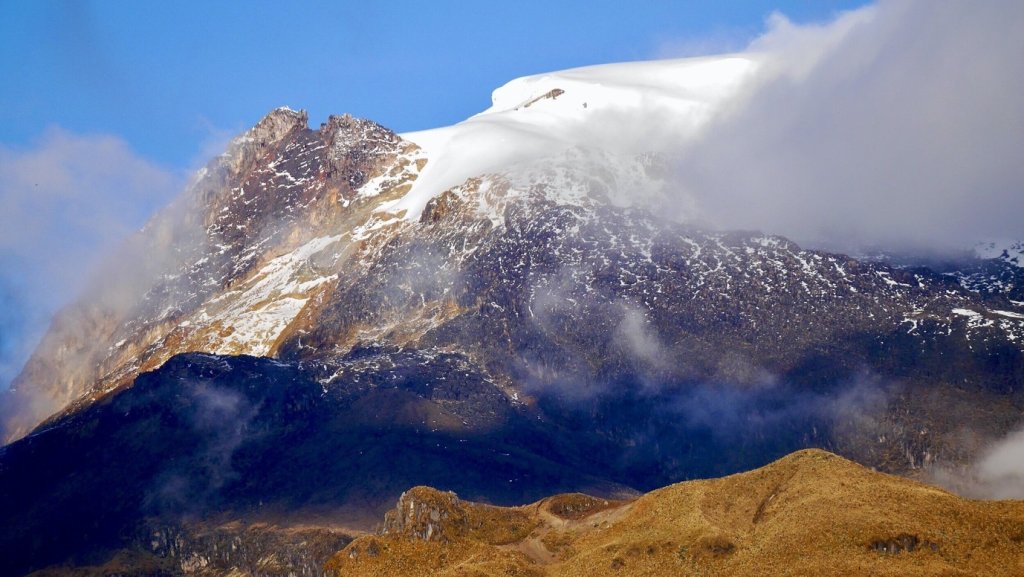 Nevado del Tolima
RISARALDA
The pueblos of Risaralda are identified by the diversity of their landscapes, their natural, cultural, and ethnic riches, and high population density.
Places attractive to visit near Pereira are Nevado Santa Isabel, Finca del Café, Parque Regional Natural Ucumarí, the Chorros de Don Lolo, and the waterfalls and hot springs of Santa Rosa de Cabal.
One of the most delightful pueblos of Risaralda is Belén de Umbría, which is relatively close to the city of Pereira.
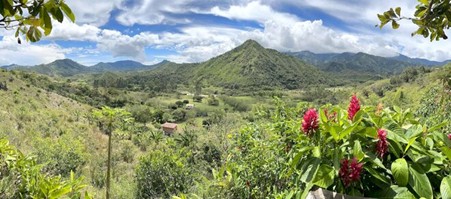 The Valley of Umbría
This charming pueblo has a lot of natural wealth and immense surrounding mountains, and owes its name to the Umbra, indigenous natives related to the legendary Quimbaya.
The Umbría Valley is located within the UNESCO World Heritage Cultural Landscape of Colombia. Festivities in Belén de Umbría during December are very popular.
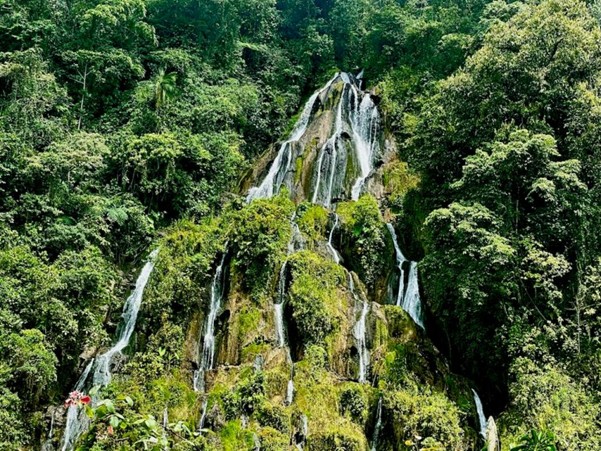 Cascada Santa Helena
Colombia is a highly active area for volcanic and geothermal activity, and as a result, there are numerous hot springs, known as termales and balnearios, throughout the central Andes region.
One of them is the Termales Santa Rosa de Cabal, highlighted by the backdrop of La Cascada St. Helena, a magical five-stream waterfall. This amazing place is the largest balneario in the area. First discovered by local farmers more than 80 years ago, it consists of four thermal pools, restaurants, a bathhouse, a spa, and covered seating areas. Visitors can stroll around the beautifully landscaped grounds, swim under the refreshingly cold waterfall, or join guided hikes to the springs’ jungle source.
Nearby, with natural mountainous landscapes declared a UNESCO World Heritage Site, the Coffee Region impresses with its coffee plantations on gently sloping hillsides and colorful pueblos like Salento and Filandia.
Here, in addition to learning about coffee production and tasting world-class coffee, you can trek through the Cocora Valley, one of South America’s great natural wonders.
Like to create or customize a fantastico package tour of Colombia? Use our Plan My Trip page to start planning your dream Colombian vacation now