
BOTANICAL GARDEN – BOGOTÁ
 We work with and recommend booking flights with www.kiwi.com
Thanks to its tremendously wide-ranging topography and its proximity to the equator, Colombia is host to many different climates, and these are reflected in the different sections of the Botanical Garden in Bogotá. These demonstrate the vast variety and diversity of flora that can be found in this beautiful country.
The garden benefits from the favourable climate for plant growth that defines the Colombian floral market. It is not solely a botanical garden, but also a research station focusing on the Andes and Páramo ecosystems. Plants from every Colombian ecosystem can be found in its parks and glasshouses. Named after the Spanish botanist José Celestino Bruno Mutis, a mathematician and priest who led a 25-year expedition in 1783 to study Colombian flora.
The Bogotá Botanical Garden is home to plants from across Colombia’s various ecosystems, with a particular focus on Andean and páramo species. Also found is iconic Colombian flora, including the national flower and tree.
The Jardín Botánico de Bogotá José Celestino Mutis was founded by the Colombian botanist and priest Dr. Enrique Pérez Arbeláez in 1955. Doctor Arbeláez was one of the most important Colombian scientists of the 20th century. Arbeláez, along with his assistant Teresa Arango Bueno, had worked long and hard to open a botanical garden in Bogotá, a dream finally realized when the city agreed to loan them land for the project in 1955.
With the land secured and the name decided, Arbeláez and his assistant then undertook lengthy expeditions throughout Colombia, collecting seeds for the new botanical garden. They had a particular interest in Andean flora, an interest clearly reflected in the botanical garden today.
The garden is currently a public entity and is managed by the Mayor’s Office of Bogotá.
Covering an area of 20 hectares/50 acres, thousands of plants comprising 1,168 species, more than 30 live collections, about 18 species of bees, and nearly 40 species of registered birds, the Bogotá Botanical Garden is worth a visit. In total, there are about 19,000 plants at the Bogotá Botanical Garden, representing the range of ecosystems found across the country.
The site is home to moorlands, Andean and cloud forests, a rose garden with 73 kinds of roses, and glass houses with warm, dry, and rainy climates. There are areas dedicated to cacti, palms, medicinal plants, aquatics, orchids, and many more. Large glass houses are climatized to different temperatures to recreate the conditions of different regions of Colombia.
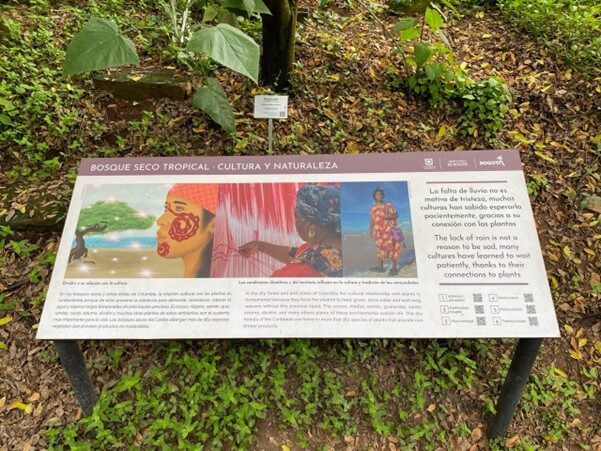
It is also home to over 5,000 indigenous orchids, the national flower. Among the various themed sections of the garden are five Special Collections for Conservation (CEPAC) areas dedicated to endangered Andean plants, including páramo species (Andean woodland plants). Among them are Colombia’s most emblematic plant species, the wax palm tree, an Andean palm recognised as the national tree of Colombia. Amid the many orchids at the botanical garden is Cattleya trianae, Colombia’s national flower.
The Botanic Garden is also Bogotá’s research and scientific centre with emphasis on Andean and páramo ecosystems. This institution contributes to plant conservation in Bogotá and its surrounding area. This institution generates environmental sustainability inside the garden by using scientific research, technological transfer, and environmental education. As well as protecting various endangered local species, the Bogotá Botanical Garden is heavily involved in international research, whether it be sustainability, biotechnology or environmental education. So, as well as being a fine place for an interesting outing, the botanical garden is also an important academic centre with connections to many universities in Bogotá and beyond.
The large area of the garden is divided into various segments organised around more or less defined themes. Unlike many organised and perfect-to-the-eye gardens, there seems to be a certain haphazardness about the Bogotá Botanical Garden. If it were not for the paths and landscape design with mechanical waterfalls, artificial rock formations and so on, it would create the impression that the flora growing here was not planted by man.
The entrance to the garden, as to be expected, is lavishly decorated with plants that look exotic but are actually very familiar to the Colombian landscape. Huge monstera deliciosa (Swiss cheese plant) climb lazily up the enormous ficus trees. This is a fantastic advantage of travelling to the tropics, as it is amazing to see them in their natural state rather than indoors.
INTRODUCTORY GARDEN
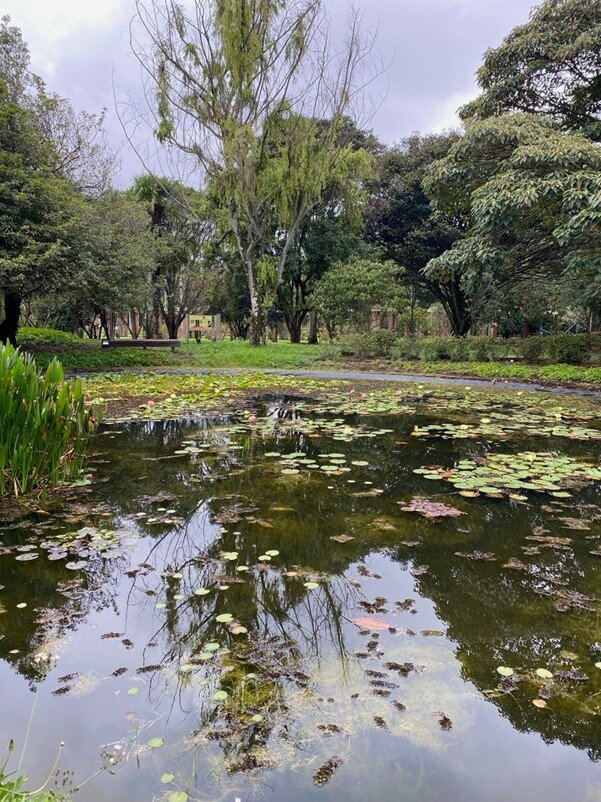
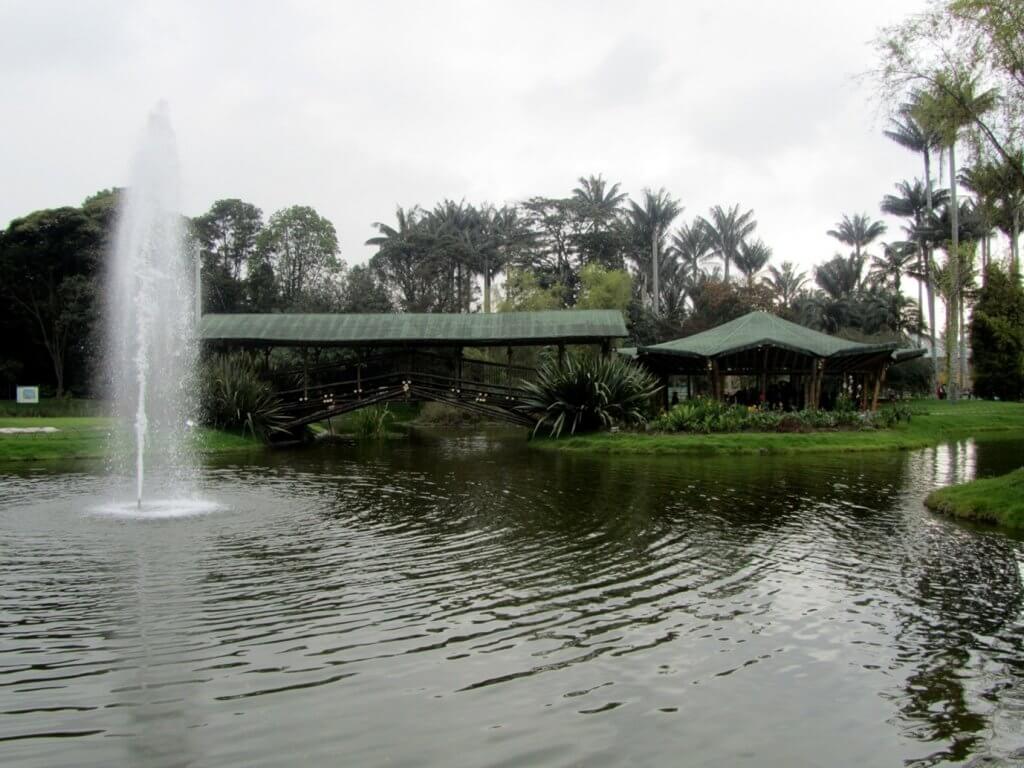
The first garden you visit after passing through the turnstiles at the entrance surrounds a stretch of water topped by a pontoon, in the centre of which sits the very romantic gazebo, the perfect place for a romantic ceremony. There is a large collection of exotic aquatic plants, making the garden very amorous and restful. This introductory garden sets the bar high for others.
Fern Garden
On the left as you enter is a very tropical garden, dotted with ferns and other Araceae. This is a particularly dense garden, where the narrow paths allow you to admire the interplay between the vegetation and the various waterfalls. This seems to be the garden left most to its own devices, which is what makes it so charming.
 Begin organizing your dream Colombian getaway right away by using our Plan My Trip page!
Landscape Garden
The landscaped garden (área de paisajismo) is a much more orderly garden where exotic ornamental plants line up along a wide asphalt path, so straight it looks regal. Although the wilder gardens are very interesting, this landscaped garden is particularly beautiful, as it features colourful alliances made from the intertwining of bright foliage and flowers that continually follow one another in this profitable climate. The landscape garden is a perfect place for a picnic!
Roseraie
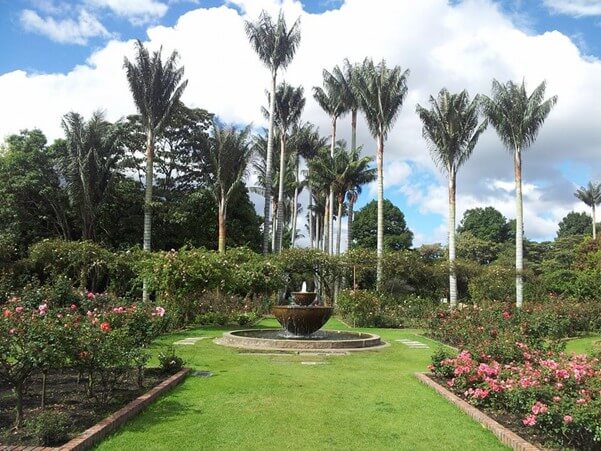
The small rose garden and further on are the greenhouses. Admire the palm arboretum, an impressive place where the palms, since they are not confined to greenhouses as they are in other places, can reach up to the sky and are breathtaking in size.
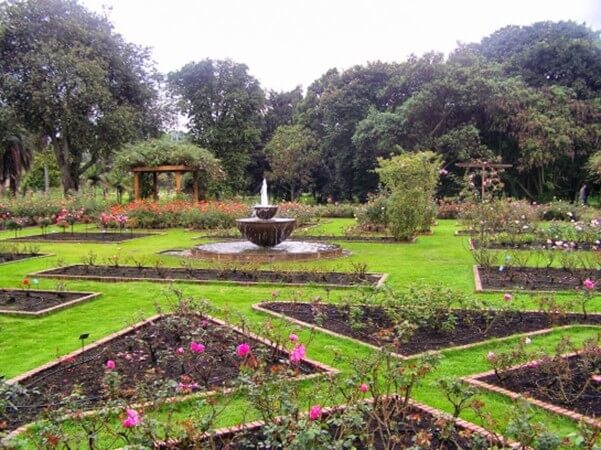
Since rose production is an important part of the Colombian economy, the rose garden is a colourful and popular place, where tea hybrids and floribundas line up around a small fountain.
Although the space allotted to them is limited, the roses are planted so densely that it is difficult to give each one the admiration it deserves. The fountain makes it all very pastoral.
Jardín des Andes et du Páramo
Less dense than the other gardens, it is made up of sunny walkways crossing a mixture of undergrowth in varying degrees of height. Indeed, vegetation at altitude is so much shorter than in the tropics. These long pathways are more reminiscent of a hike than a visit to a garden, a change of pace that is not unpleasant. Around one of the bends in the paths is an observatory, where you can admire the incredible landscape.
Other gardens and areas of interest include various arboretums of Colombian pines, oaks, Lauraceae, Rubiaceae, magnolias, Melastomaceae and other exotic trees. The circular medicinal herb garden contains an array of herbal plants along with the agroecological garden. The cold climate fruit garden and bromeliad, as well as the orchid greenhouses for hot and cold climates are all interesting.
Greenhouses float on a simulated wetland inside El Tropicario
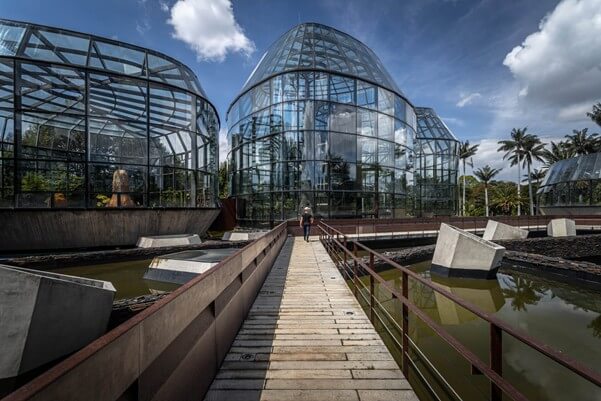
El Tropicario is a cluster of six irregular glass houses hosting various ecosystems that co-exist with lush landscaping inside Colombia’s largest botanical garden.
They have been ambiguously arranged in a cluster of individual steel and glass modules that seem to float between lush vegetation and lofty palm trees. These six glass houses form El Tropicario, each hosting six varied eco-systems, linked via pathways and bridges that encourage visitors to experience and discover the spaces on foot.
These routes snake between bright green landscaping and a gradually sloping concrete base. The architecture becomes an unstinting mediator between the visitor and the generous flora it camouflages within, emerging as a visual and sensorial space that uniquely emulates a Colombian wetland.
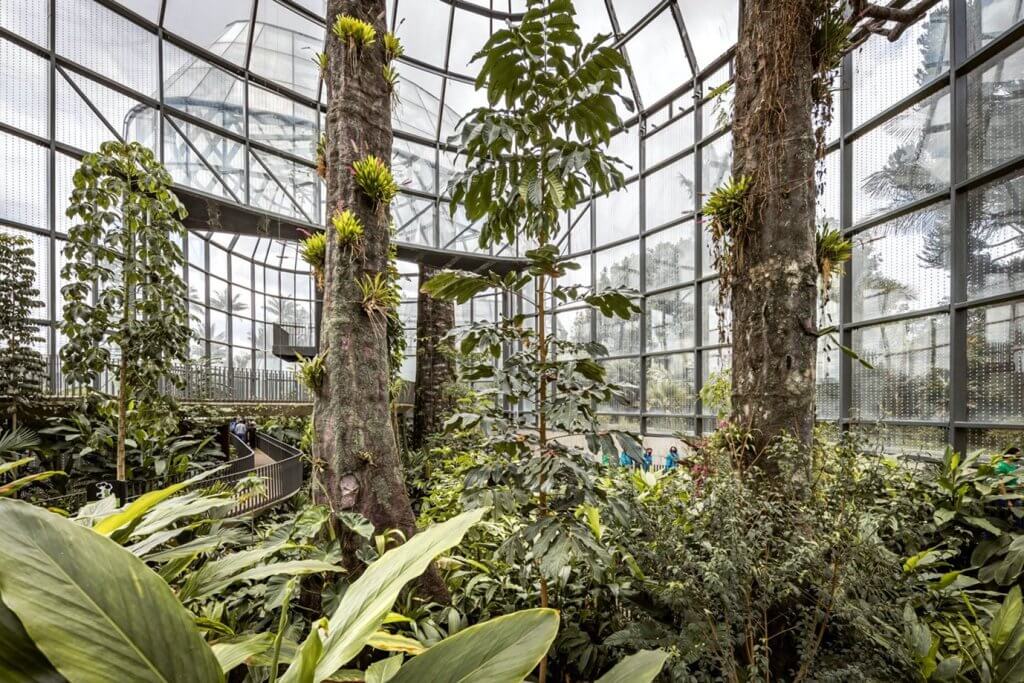
The six glass modules contain six ecosystems: wetland, humid forest, dry forest, special collections, useful plants and super páramo, an ecosystem that occurs 4,500 meters/14,764 feet above sea level. Each module has its own specific height, temperature and humidity requirements.
They have a varied clear height between 12 and 25 meters/39 and 82 feet, temperatures ranging between 6-32°C/43-90°F, with humidity between 30-80%, to recreate the diverse conditions of the ecosystems.
Address
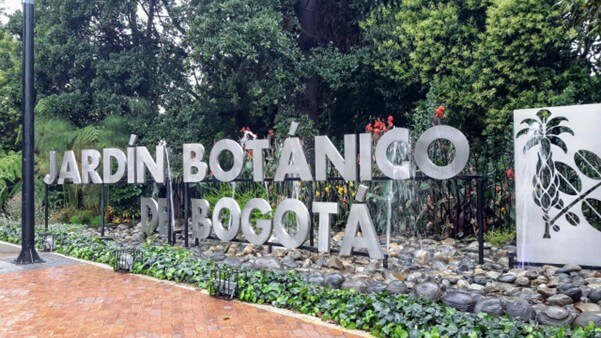
Jardín Botánico de Bogotá José Celestino Mutis
Av. Calle 63 # 68 95
Bogotá D.C. 111071
Telephone +57 6014377060
Opening hours
Closed Mondays
Tuesday – Sunday 9AM – 5PM
Website www.jbb.gov.co
Email Contactenos@jbb.gov.co
This Bogotá paradise will allow you to enjoy the fauna and flora without leaving the city. Relax along the water path, the amazing wetland garden, the stunning lake and the delightful waterfall.
Visiting it will give you the opportunity to appreciate the vast diverse nature of Colombia, second only in world biodiversity. Connect with nature in this wonderful place, give yourself the opportunity to enjoy one of the highlights of Bogotá through fauna and flora. In addition to being such a charming place with delightful landscapes, breathe the fresh air not often found in a large city.
And if you have the opportunity to visit Bogotá in December, know that the Botanical Garden opens its doors at night to give way to a spectacular lights show.
Like to create or customize a fantastico package tour of Colombia? Use our Plan My Trip page to start planning your dream Colombian vacation now!