
AMAZONAS CULTURAL TOUR
The Colombian Amazon is a melting pot of ethnic and cultural diversity. Many of the most biologically diverse ecosystems in Colombia are located within indigenous territories. The indigenous population of Colombia represents only 2% of the total population of the nation. However, the indigenous territories combine to almost one-third of the total nation’s area. Although inhabiting vast territories, most of the indigenous peoples did not hold legal rights to their territories during the past several centuries.
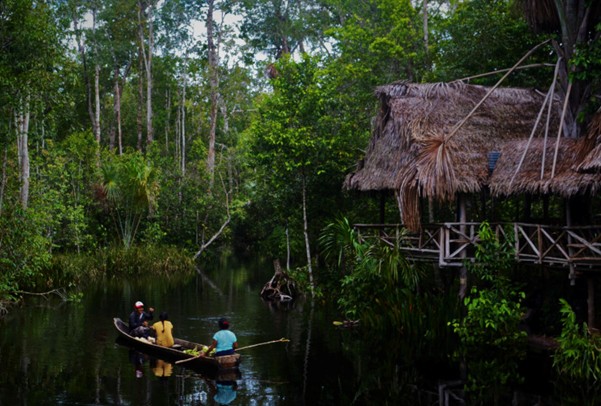 Paddling down a waterway in the Rincon Vitina community in a traditional boat made from a single tree trunk.
Well known for its biodiversity in flora and fauna, the natural bounty provided by the topography of the different regions that make up Colombia and the Amazon region is one of the great wonders of the world. The climatic and environmental condition makes this region rich in fauna and flora, different from those found in the Andes region.
The rainforest stretches along the Amazon River basin and covers more than a third of the entire country. The copious rain and high average temperature and humidity contribute to the growth of dense and exuberant vegetation.
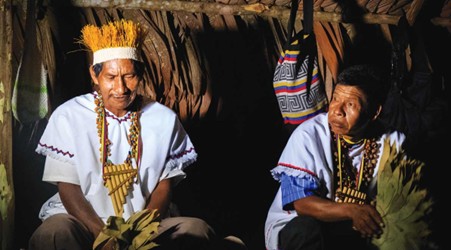 Natives of Colombia’s Caquetá department
Some estimates put the first human settlements in the Amazon at 32,000 to 39,000 years ago. Since that time, Amazon people have developed lifestyles that are well integrated with the benefits and constraints of rainforests.
There are a number of ways to learn about the past. Ancient texts, documents, maps and photographs, for instance, are traditionally considered the staple sustenance of history. However, in the Amazon, the geographic and temporal scope of such sources is restricted to places visited or occupied by Europeans and their descendants. In contrast, the oral histories of Indigenous peoples and local communities, based on collective human memory, counteract Eurocentric perspectives.
The Amazon region is very rich in ethnic groups, with most of its population preserving their customs, language, culture and traditions. They have always lived in harmony with their environment, working hard in the preserve of the Amazon.
Typically, local game includes wildlife found close to rivers, such as fish, turtles, capybara and crocodiles. Until recently, blowguns, arrows tipped with poison and spears were commonplace to hunt down game, but these primitive weapons have increasingly been replaced by guns, when they can be afforded.
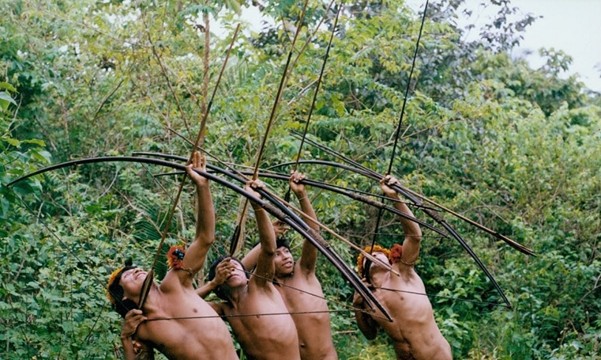
Hunter-gatherer groups were once generally nomadic, living in small temporary settlements for 4 – 5 years until all natural resources were exhausted, then they moved on.
Groups such as the Matapí, Yukuna, Nonuya, Tanimuca, Uitoto, Andoque and Muinane, among others, thrive due to their extensive knowledge of the rainforest and its challenges.
However, because of land colonization by non-indigenous people, many local groups were forced into sedentary lifestyles and became peasants.
Such changes not only destroy traditional lifestyles but also cause local people to lose control over their territory. Those who stand to benefit from this are loggers, gold miners and other colonists.
AMAZON PEOPLE AND RELIGIOUS BELIEFS
The spiritual world is extremely important to the indigenous people of South America, a world they claim to get closer to by utilizing plants that contain certain hallucinogens. One of the most important persons to many indigenous groups is the shaman, who holds the knowledge of local plants and animals and who is believed to communicate with the spirit world.
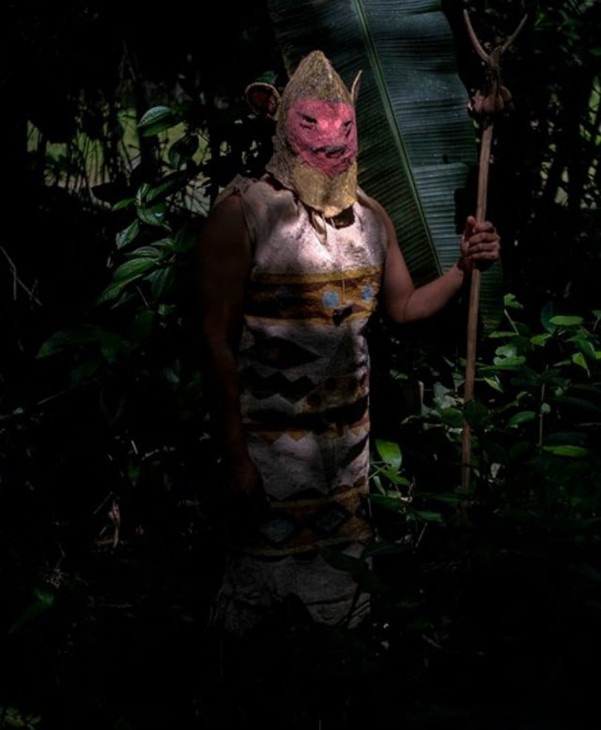 Rituals are important to protect the territory
They continue with their highly symbolic ritual celebrations, such as the Feast of the Chontaduro (also known as the Dance of the Doll).
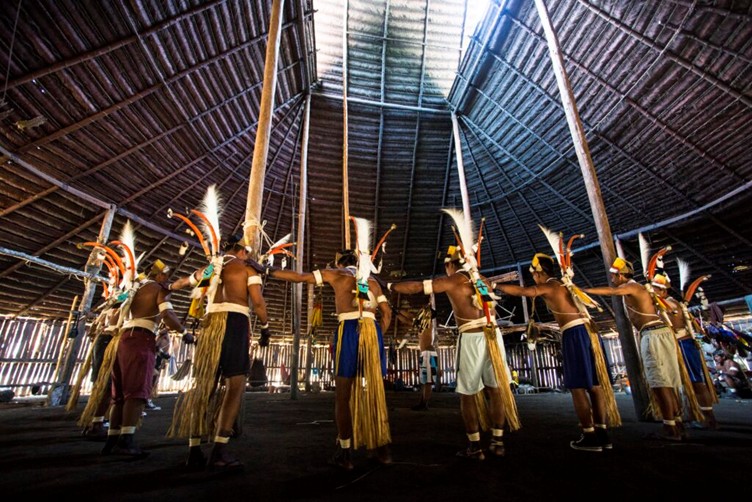
Sacred and secular practices are interwoven and reflect each community’s knowledge and relationship to the rainforest.
The human impact of European colonists in South America.
When Europeans first arrived in South America, there were about 6.8 million indigenous people. However, colonists brought persecution, slavery and diseases that local people were not immune to.
Communities living close to the rivers were the first to be affected, as colonists used the waterways as routes of incursion. Indigenous people living inside the forests were initially spared much of the worst aspects of this European onslaught.
Most of the population here is indigenous, a large percentage was killed and displaced when tracts of land were exploited, first for rubber extraction and later for agriculture, ranching and illegal crops. Presently, there are fifty-two different ethnic groups who speak thirteen different languages, living in riverine, agricultural and urban areas.
THE SITUATION TODAY
Today, most Amerindian tribes live in indigenous reserves called resguardos, where they practice a lifestyle that integrates both traditional and modern elements. Many now live in communal buildings and share resources with their community.
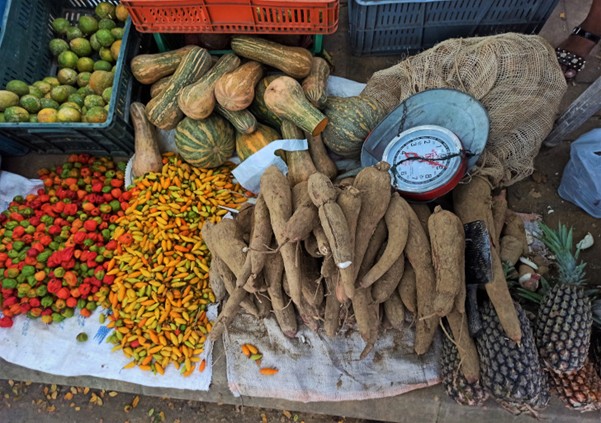
Indigenous communities in the Amazon rely on agriculture for their livelihoods, cultivating crops like chillies, cassava and pineapple. Few live in complete seclusion from the modern world. For example, some make a living from tourism and visit the local markets to supplement what they grow in their plant gardens.
Conservation of the Amazon tropical forest signifies maintaining an important diversity of cultures. The region has been inhabited for at least 10,000 years and local indigenous cultures have developed ways of living in the rainforest that are based on centuries of experimenting with the balance between the needs of human communities and the needs of local ecosystems.
Their environmental management has preserved the vast ecological diversity and until now, the tropical forest in this region remains relatively intact. Amazon indigenous cultures are also important because they are reservoirs of traditional ecological knowledge, which has provided modern medicine with some of the most widely used pharmaceutical agents.
MUSIC
This is the least populated and least developed region of Colombia. There are no roads, railroads or electricity cables connecting it with the rest of the country and almost all the movement is done by airplane or boats on the rivers. It is a region made of vast extensions of jungle, dotted with a few settlements. This is the only region in Colombia where native Colombians are found in almost perfect isolation and because of this, their way of living has remained unchanged for centuries.
The music that you can find in this region is a music that speaks of times past, of times when the sole inhabitants of Colombia were the natives. One can hear simple melodic patterns repeated again and again and in some one can hear one of the instruments that greatly represents the contribution of the native Colombians to Colombian music: The flute.
Amazonian tribes are a diverse group of indigenous people living along the banks and in the forests surrounding the Amazon River. Most indigenous people who live near the Amazon make music that finds inspiration from the nature around them and resonates a healing atmosphere.
Shamans or religious/mystical experts of the Amazon use chants that are sung or whistled. Each culture has its own kind of music that serves a role in spiritual rituals and ceremonies.
Amazonian Instruments
Amazonian Instruments include locally made flutes, rattles made of seeds, bells, xylophones, mouth bows and a long hollowed log drum called a maguaré.
Some settlements also use the maguaré to communicate with each other up to 20 km/12 miles away.
Like to create or customize a fantastico package tour of Colombia? Use our Plan My Trip page to start planning your dream Colombian vacation now!