
ARTISANS OF COLOMBIA
Colombia has many very talented artisans from different communities across the land. They preserve the diverse ancestral craft cultures and techniques of long ago for generations to come.
As many of these workers are based in remote, rural communities, it is often difficult for their incredible craftwork to reach wider communities. As a consequence, they face the modern-day issue of being undercut by cheaper, mass-produced competitors who often focus on profit over quality.
Many artisans work from home, thus allowing them to balance the challenges of work and family life. Each one of their products is made by hand with the traditional crafting skills being passed down from generation to generation; this allows their communities across Colombia to preserve their ancient crafting techniques.
With each and every purchase visitors make, they are helping to sustain a steady income for hundreds of artisan families and preserve the ancestral crafts of rural communities throughout Colombia. An incredible two-thirds of artisans are female, giving independence and authority to an often marginalised group of society.
From remote, rural villages and indigenous communities to family-run workshops and evolving entrepreneurs, the artisan family is a wonderful blend of talent, creativity and passion for artisanal craftsmanship.
FOURTEEN DISTINCT ARTISAN GROUPS
WAYÚU – LA GUAJIRA
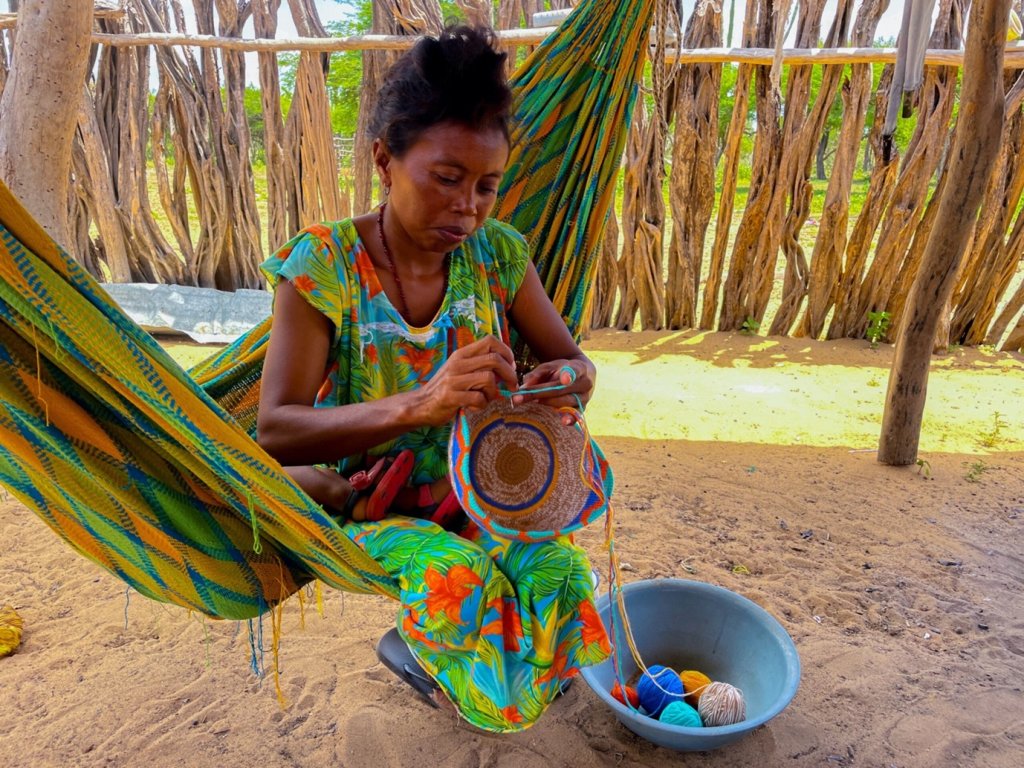
The Wayúu tribe occupies the harsh desert lands in the north of Colombia and into Venezuela. It is said that the art of weaving was taught to their ancestors by a mythical spider called Waleker. To this day, the art remains a sacred part of their culture and identity. Each Wayuu piece is beautifully handwoven by just one woman and can take three to four weeks to complete.
WÉRRENGUE – CHOCÓ
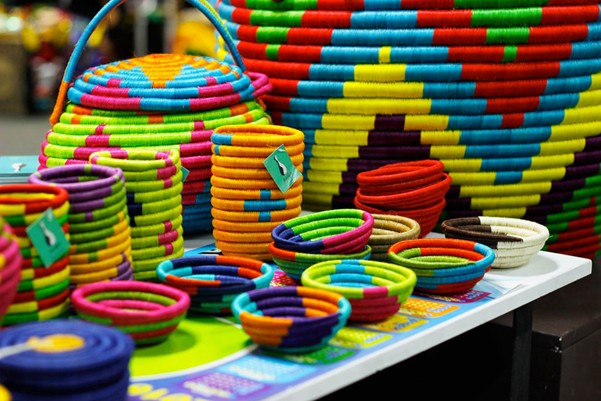
Wérregue is the name of a rare kind of craft made by the indigenous Wounaan or Noanamá tribe from the jungles of the Chocó department on the Pacific coast.
Plates, bowls, baskets, and pots are fabricated exclusively by women using a combined technique of knitting and sewing of the Wérregue palm leaves – Astrocaryum standleyanum. The weave is so tight that it can hold water without any leaks. Influenced by missionary nuns who came to this region in previous centuries, the native women started to add figures and colours to their crafts, developing a unique aesthetic that stands out for its originality.
ZENÚ – CORDOBA
The ancient Zenú tribe are spread across the vast northern lands of Córdoba and Sucre. They are well known for their intricate goldwork, pottery and the emblematic sombrero vueltiao (woven hat). The women weave caña flecha, the leaf of a cane that grows around the wetlands of the indigenous reserves. Plants and mud from the land are then used as natural dyes, creating some of the most beautiful colours.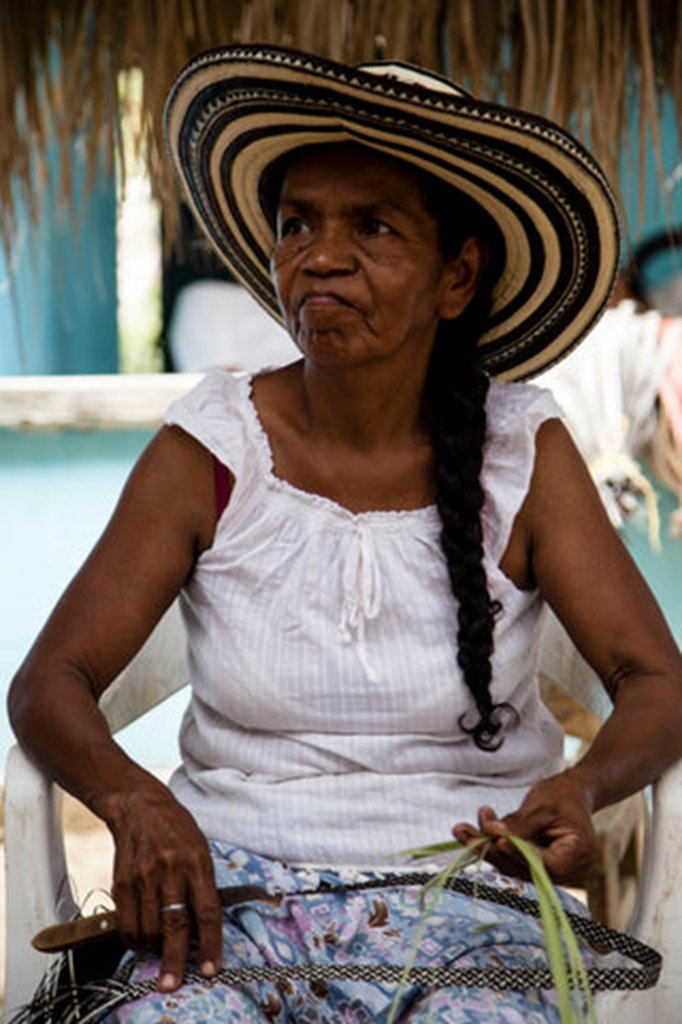
SANDONA – NARIÑO
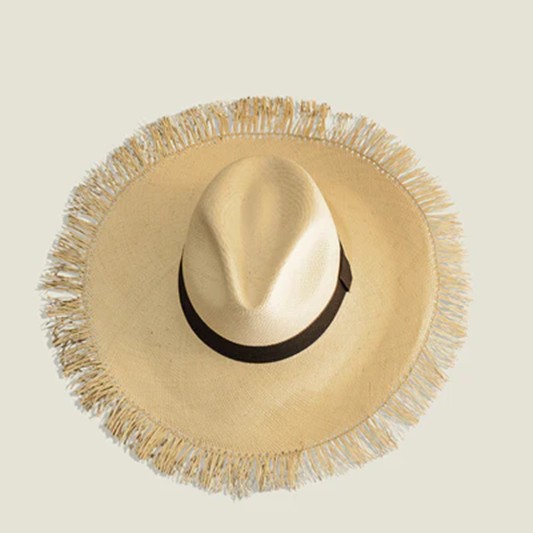
In Sandona, weaving is the main form of income for many women. During the week, they will grind away on the creations, juggling working on a farm or looking after family. Come the weekend, they will travel to a workshop to practice and evolve these designs. This involves converting the native iraca palm into thin or thicker threads to create the unique pieces you see today.
USIACURÍ – ATLÁNTICO
Blending into the hills near Barranquilla, Usiacurí is one of the most peaceful pueblos in the country. Both men and women have been working with the iraca palm for generations, and if you peer through the windows, daughters, mothers, and grandmothers can be seen weaving through the heat of the day. Originally, the palm was sourced from the local grasslands, but due to changes in climate, it is now brought in from Bolívar to be washed, dyed, dried, and cut to size.
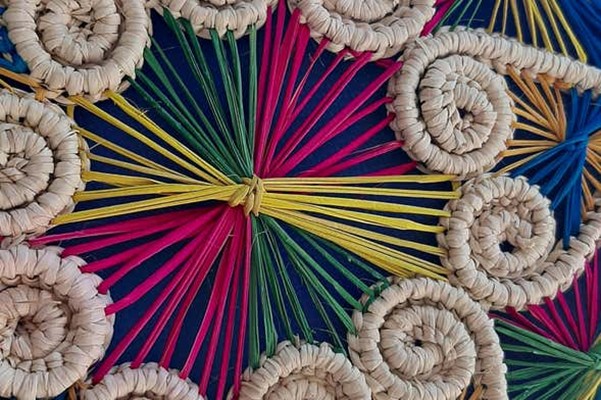
SANTA CRUZ DE MOMPOX – BOLÍVAR
Mompox is a pueblo frozen in time. Located on an island in the midst of the River Magdalena, it was previously completely cut off from the outside world, other than by boat. The goldsmith tradition dates back to the Colonial era, over 350 years ago. Then, the pueblo was an important commercial port through which gold and Spanish crafts passed regularly on merchant ships. The gold and silver are sourced from the Santa Rosa mines in Bolívar, and each stunningly intricate piece takes up to several days to craft and years of training to master.
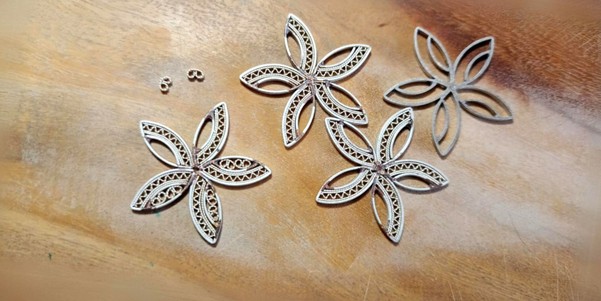
EPERAARA SIAPIDAAR – EL CAUCA
The Eperaara Siapidaara are an indigenous community originally from El Cauca, who relocated to Bogotá in 2008, due to violence. Weaving in paja tetera is a tradition that has been passed down for generations. The baskets were originally used to store food and household items and have now become their main source of income.
Traditionally, it is the women who weave and the men who trek up to three hours into the jungle to harvest the materials. Plants are then carried back and left to dry for three days before the women begin work.
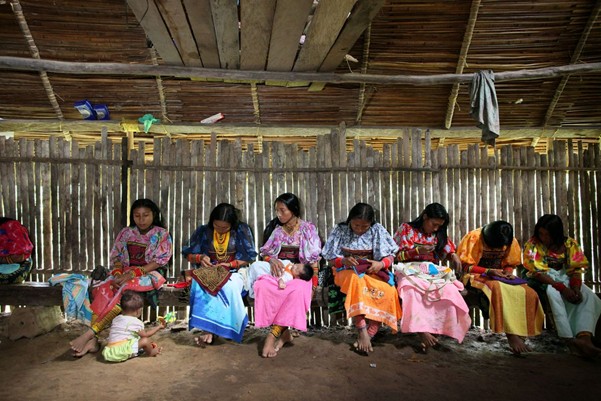
SAN JACINTO – BOLÍVAR
In Northern Colombia, the municipality of San Jacinto has made its name as a craft centre. Famously known for colourful hammocks, handbags, and pillows which are woven, amongst other products, on a vertical loom.
Girls inherit the craft at the tender age of twelve, and as a result, many follow the path of their artisan mother and grandmother. However, weaving is more than an income; it is a way of life for them, a symbol of cultural wealth and tradition. This time-honoured material is then reinvigorated into vibrant tablecloths, tablemats, and cushions.
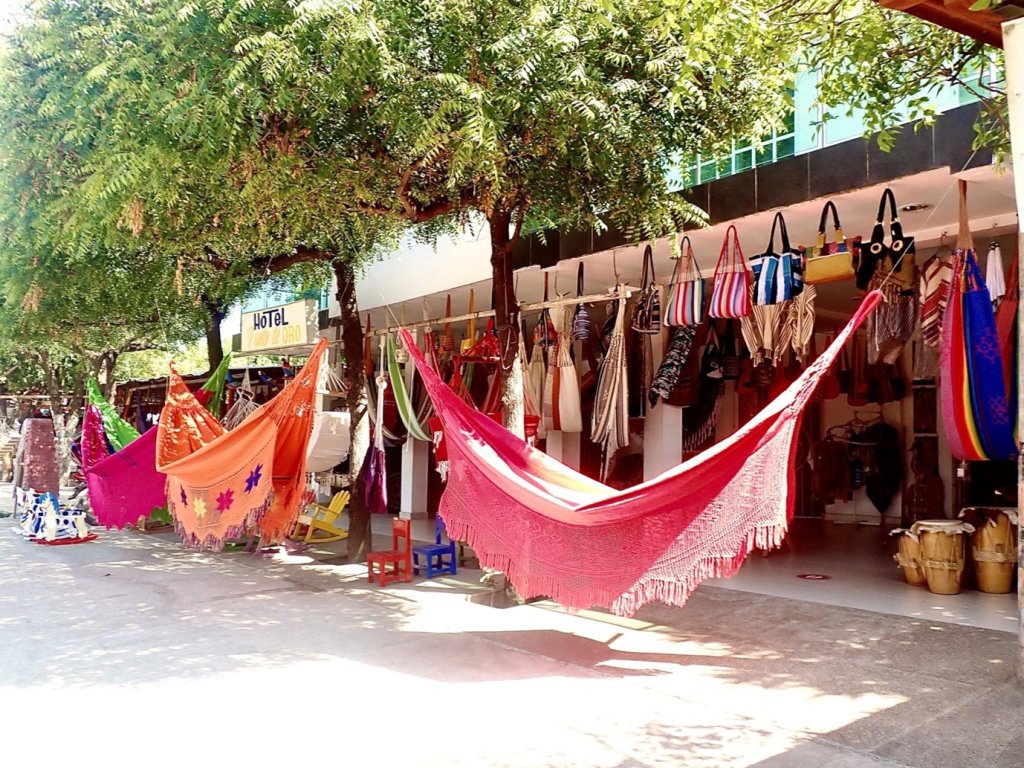
PRE-COLUMBIAN – BOGOTÁ
Pre-Columbian cultures have been hugely important throughout the cultural development of Colombia. Cultures such as the Tayrona and Sinú on the Caribbean coast and the Muiscas in the heart of the country laid the foundations for many of the craft trades that we can appreciate today.
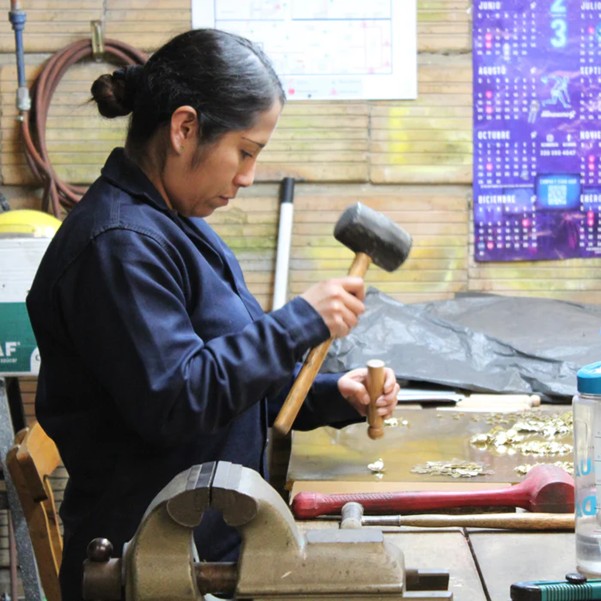
Made of pewter, an alloy of various metals, before being dipped in gold, these pieces of jewellery represent the most symbolic figures of these three pre-Columbian cultures, such as pectorals, nose rings, and the nature that surrounded them.
SATIVANORTE – BOYACÁ
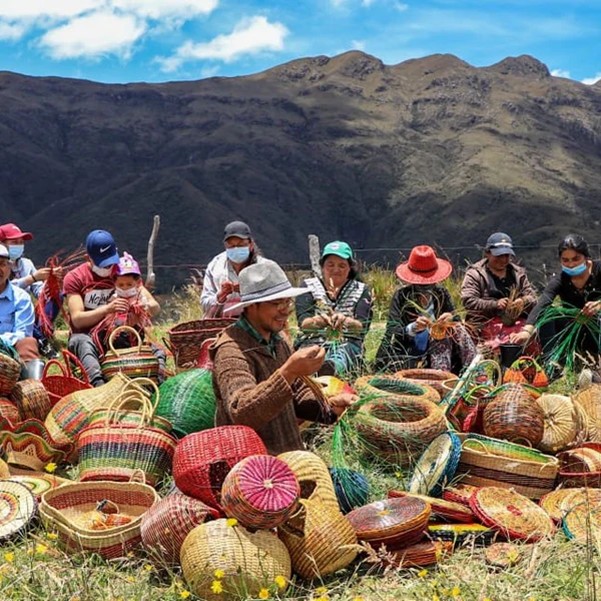
Handcrafts are produced using natural esparto fibres found in the plateau and the high Andean forest. Many farmers in this region are transitioning from traditional agricultural and livestock farming to more sustainable activities within a protected area, in order to safeguard incomes and the environment for future generations.
The Artesanías del Páramo de Guina (Guina Plateau) are aiming to conserve the natural area through the restoration of nature and the planting of new esparto crops, allowing for permanent supplies of the natural fibre. The crafting process of esparto involves cooking and air drying the raw material, before dying with natural colours and finally hand weaving into the beautiful products that we see today.
 Begin organizing your dream Colombian getaway right away by using our Plan My Trip page!
GUANES – FIQUE
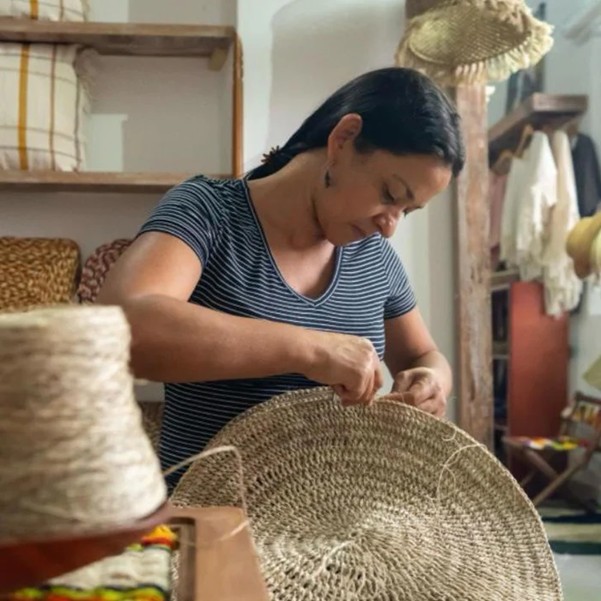
The fique plant measures between two and seven meters/six and a half to twenty feet tall, with long, narrow, pointed green leaves. The fibre has gradually replaced the cotton that was previously used by the Guanes indigenous people. The growers are in charge of extracting, shredding, washing and drying the material. They deliver the fique to the artisans, who delicately prepare the fibre ready for use.
From combing, dyeing, spinning to weaving, artisans are so grateful for the use of this fibre that even the residues left by some processes are used to make new pieces, making this an environmentally sustainable trade.
CARMEN DE VIBORAL – ANTIOQUIA
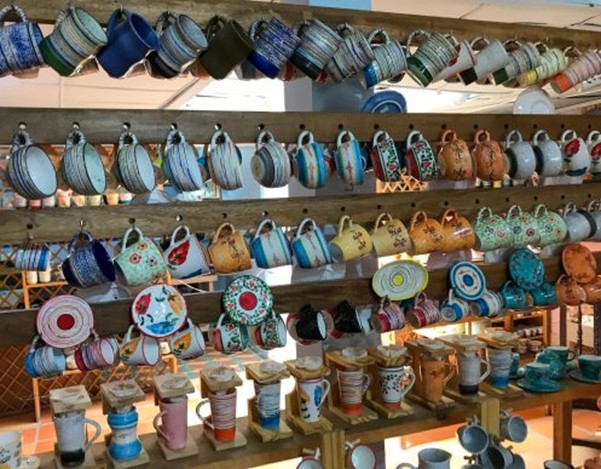
Ceramics crafted and hand-painted in the town of Carmen de Viboral in Antioquia, known as the cradle of artisan ceramics. Carmen de Viboral is home to a bounty of family-owned workshops in which intricately crafted ceramics are sculpted, hand-painted and double-baked to create high-quality ceramic pieces.
The trade in this area has a denomination of origin declaration certifying that the items are made in this specific region, which has been famed for its ceramic making since 1898. These handmade, painted designs are often inspired by the local landscapes and flora, which offer an insight into the culture of the Carmen de Viboral region.
DUITAMA – BOYACÁ
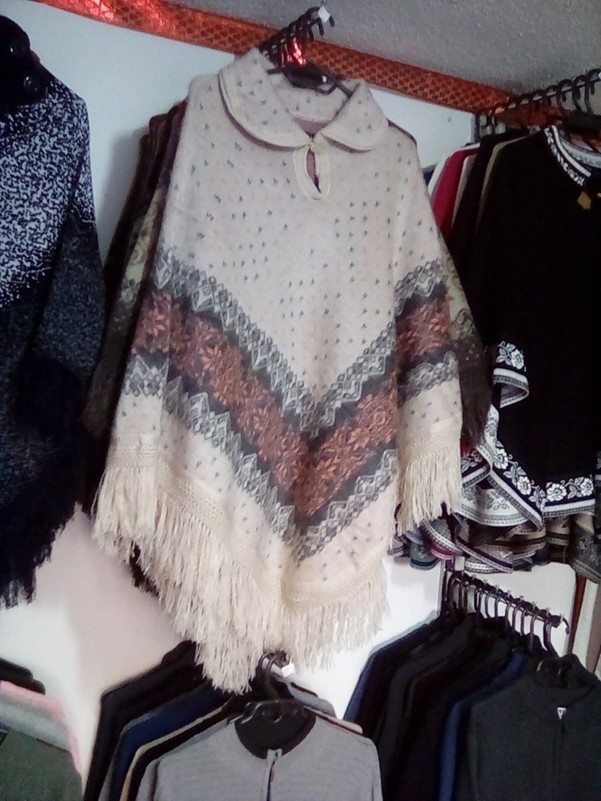
The wool from Boyacá was also originally used to make ruanas, the capes the farmers wear to protect against the bitter mountain air. Now the artisans have combined it with their traditional horizontal weave to make a completely unique and stylish blanket that also proves to be amazingly practical.
HANDCRAFTED GLASS – BOGOTÁ
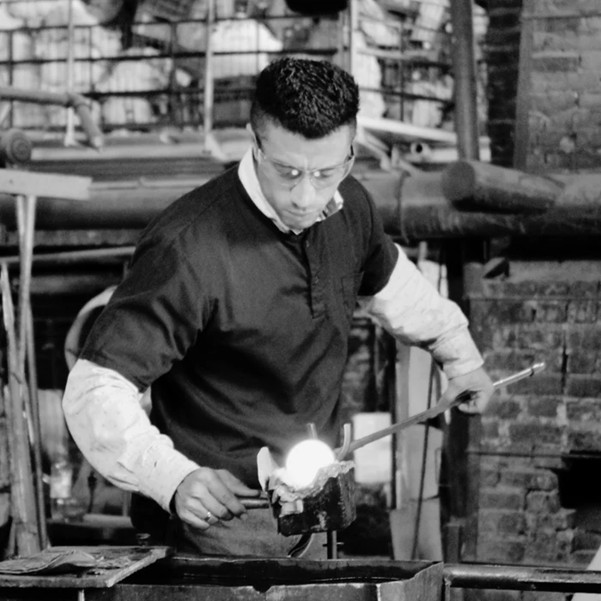
This glass-blowing technique is based on recycling the remains of glass bottles and jars that are about to be discarded. After a washing process, the glass is crushed and taken to large furnaces to be melted at 2,000c/3,632f and once in the oven, the distinctive colour is given. The melted glass is then put into hollow moulds with a special cane for blowing, a technique with which the unique shapes and characteristics of these pieces are obtained.
EL CEDRO – AYAPEL
Crossing the Cienaga de Ayapel by boat for fifteen minutes, you arrive at El Cedro, a small pueblo filled with houses decorated with murals painted by the local youths. Deep in the jungle of this area, a special palm tree grows, better known as the seje palm.
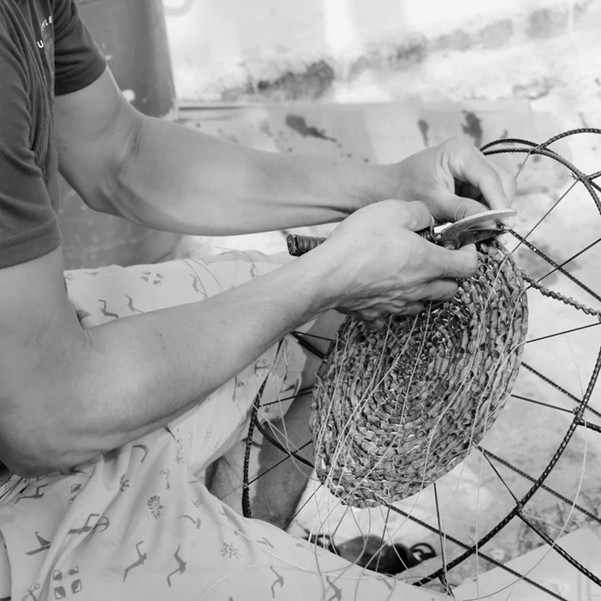
This palm fibre is used by local artisans to create beautiful structures. The fibre is used to cover a metal frame, weaving and tying the fibres with hemp knots. This form of weaving started only around ten years ago, making it a relatively new craft.
By choosing to support these artisans, we as consumers can help to sustain this unique artisanal industry.
Like to create or customize a fantastico package tour of Colombia? Use our Plan My Trip page to start planning your dream Colombian vacation now!