
CARNAVAL DE BARRANQUILLA
(BARRANQUILLA CARNAVAL)
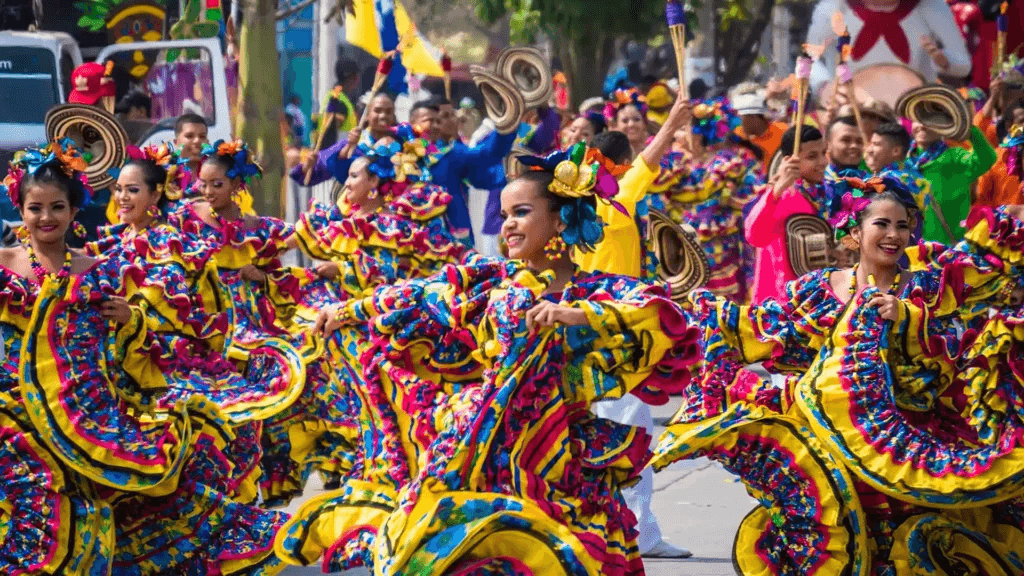
In the coastal Colombian city of Barranquilla, one of the world’s largest spectacles of dance and cultural pageantry gives all others a run for their money. No city in Colombia has a cultural and folkloric event as majestic as the Barranquilla Carnival. The fact that Barranquilla has a multitude of events starting a month before the official start date of the festival is a clear indication of how passionate people are when it comes to celebrating this deep-rooted Colombian tradition.
The weeks leading up to the carnival’s grand opening are filled with a wealth of outdoor activities that appeal to all ages and create great excitement throughout the coastal city as the highly-anticipated four-day-long spectacle approaches.
Barranquilla Carnival
Carnaval de Barranquilla is a spectacular display of Colombian customs and colours, with a Caribbean twist.
The four day celebration, which runs over the four days prior to Lent, rivals the headline grabbing festivities of the world’s largest party in Rio de Janeiro, Brazil. Organizers in Barranquilla work hard all year to prepare for what they claim is the world’s second-largest carnival celebration.
The first day of the carnival, known as the Batalla de Flores, is led by the newly crowned carnival queen who throws flowers to the spectators. The procession is an unforgettable spectacle of ostentatiously decorated floats, accompanied by incredibly gifted dancers and musicians. This parade often sees a six-hundred-thousand-strong crowd, which is the largest and most diverse of the festivities, incorporating costumes, music and dances that portray the 220 years of the carnival’s history. Indigenous and African cultures are emphasized, similar to those of the carnival in Rio.
What makes Barranquilla’s carnival distinct are its thirteen different musical expressions that, even if from African or other roots, are imbued with Colombian colours and flair.
People from all walks of society perform in the parades, which is what makes Colombia such a beautiful place.

Barranquilla Carnival is the biggest Colombian celebration of the year with parades filling the streets, showcasing dances ranging from champeta to cumbia.
Vallenato music booms across the town and colourfully clad visitors spray one another with kaleidoscopic foam sipping aguardiente. This is truly a celebration like no other and one of the very best in Colombia.
Recognized as one of Colombia’s foremost cultural events, the Barranquilla Carnival draws a diverse audience. It attracts both local enthusiasts and Colombians from other regions, as well as international travellers seeking an immersive cultural experience.
The Barranquilla Carnival stands as a lively celebration of Colombia’s rich and diverse heritage, extending a cordial invitation to global travellers to join in the revelry. Originating in the 19th century. century, Carnaval is a unique fusion of Indigenous, African and European influences. In 2003, it earned the prestigious designation of a UNESCO Masterpiece of Oral and Intangible Heritage of Humanity. Serving as a testament to the region’s profound cultural diversity and artistic legacy, the Barranquilla Carnival has become a cornerstone of Colombia’s cultural calendar.
Barranquilla Carnival officially starts with the Batalla de las Flores (Battle of the Flowers) followed by the King Momo Parade.
That evening, the city celebrates a plethora of musical traditions with cumbias, chandés and fandangos with comedic performances via two competing events, the Noche de Orquestas (Night of Orchestras) and the Encuentro de Comedias (Gathering of Comedies).
The Encuentro de Comedias is a repeating event, taking place three days in a row, centred around comedy and magic.
Over thirty different groups bring to life some of the region’s most curious and hilarious stories through skits, music, dance and performing arts.
This event is often geared towards families and lovers of the oral tradition.
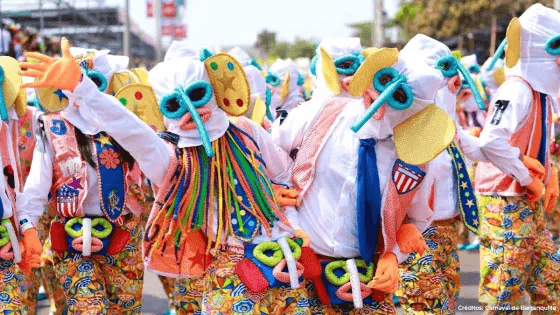
Sunday’s premier event is the Gran Parada de Tradición y Folclore (Great Tradition and Folklore Parade). This event features dance groups, folkloric musicians and traditional cumbia bands exclusively.
It was first celebrated in 1967. In contrast to the ornate floats that one might see in the Batalla de las Flores, this parade features non-amplified orchestras providing the music to which exciting groups of dancers follow closely behind, performing beautifully choreographed dances.
Carnival spectators will be especially impressed by the costumes on display during the Desfile de la Gran Parada. With a greater emphasis on Colombian folkloric traditions, the Gran Desfile (Grand Parade) takes special pride in its cumbia dance and music performances.
A blend of Spanish and African styles, cumbia is a courtship dance usually accompanied by pounding drum beats and harmonious flute rhythms.
Aware of the watchful eyes of the jury, the cumbia dance groups of the Grand Parade of Barranquilla impress the crowd with their choreographies, doing their best to win the praise of the competition judges.
While the Great Tradition and Folklore Parade takes place in the early afternoon, it is followed by more partying in the streets and the Festival de Orquestas (Orchestra Festival), which continues to celebrate the incredibly rich music and dance traditions of the region.
Again, attendees of the Carnival of Barranquilla can split their time between this event and another Gathering of Comedies, which takes place at one of the city’s many parks.
The evening’s festivities centre around the Festival de Letanías (Festival of Litanies), which celebrates the region’s daily life in all its tedium, modesty and grandiosity through astute linguistic humour.
This is an event that really spotlights the rich traditions of the region, through ingenious writing and theatrical delivery. Over twenty five groups of orators participate in this highly entertaining event.
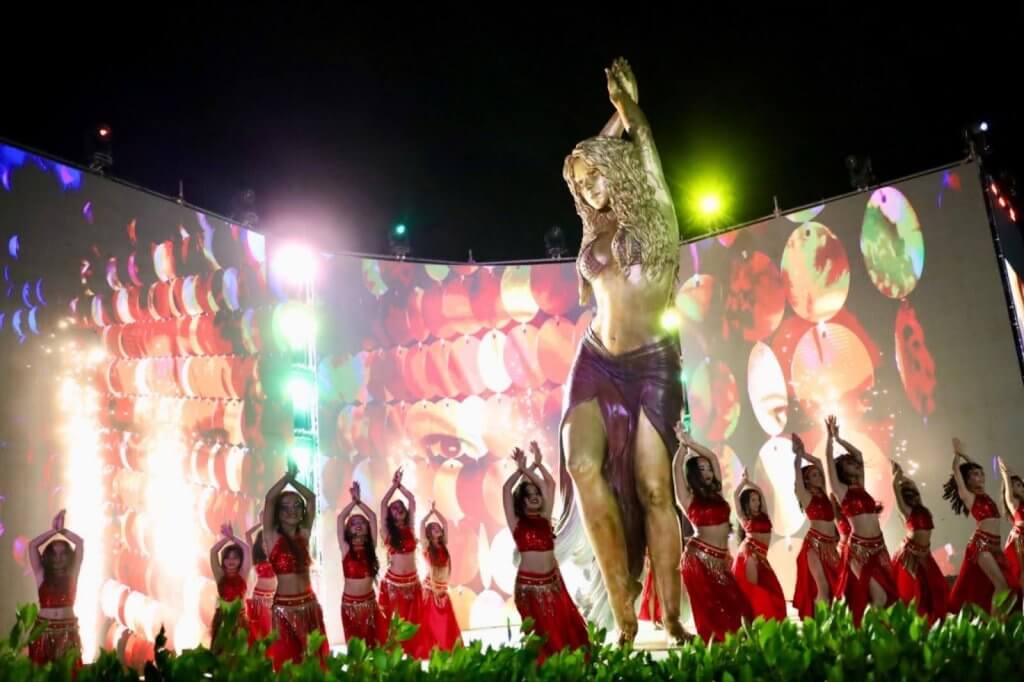
Barranquilla’s most famous export – Shakira
From one competition to the next, Carnival Monday is the highlight for music lovers. With their eyes set on the highly esteemed Congo de Oro award, an array of bands from the Caribbean and Latin America compete in the Festival. With a total of almost forty bands performing their numbers, from reggaetón and hip hop to African influenced champeta, the festival not only caters for all musical tastes, but also highlights the undeniable talent of Colombian artists.
The arrival of the Gran Parada de Comparsas, Fantasía y Tradición (Grand Fantasy Parade), as you can imagine, is a visual conglomeration of fantastic costumes, vibrant dance performances and pulsating music.
Finally, as Carnaval de Barranquilla winds down, Tuesday arrives with one of the most peculiar celebrations of all, the Entierro de Josélito Carnaval (Funeral of Josélito Carnaval).
Josélito was supposedly a city bus driver whose only day off from work fell on a Tuesday. However, on this very special Tuesday, he drank himself to death.
Josélito represents the joy of carnival which, unfortunately, like Josélito’s life, must come to an end.
Although dressed in black mourning, the widows in the parade are not really dejected, but rather focus on the privilege of having participated in a long, uninterrupted four day party.
This mock funeral procession symbolizes the end of the festivities and features men dressed as women in histrionic mourning.
It is the manifest hangover from all the previous days’ parties and celebrations, resembling the ashes of a great bonfire. Party goers say goodbye to the wonderful comparsas (traditional dancers) for another year.
Throughout the four-day event, expect to hear driving, rhythmic and pulsing genres, including cumbia, vallenato, salsa, champeta and of course, reggaetón.
Many big names perform in concert throughout Carnival, having previously featured popular singers like Rafa Pérez, Omar Enrique, Álvaro Ricardo and more.
Gastronomy:
It is impossible to party for four days straight without exotic sustenance. This is where the festival’s culinary delights shine. Some typical and traditional offerings include:
Sancocho de guandú, a traditional coastal Colombian stew prepared with a type of bamboo called guandú, alongside meat, pork, plantain, yucca (cassava), onion, garlic, pepper and cilantro. Mojarra frita con patacones y arroz con coco is a scrumptious saltwater fish (red snapper) which is a true delicacy.
The whole fish is prepped with lime juice, garlic, salt and pepper, then fried.
It is crispy and flavourful, going very well with patacones (fried plantain) and coconut rice.
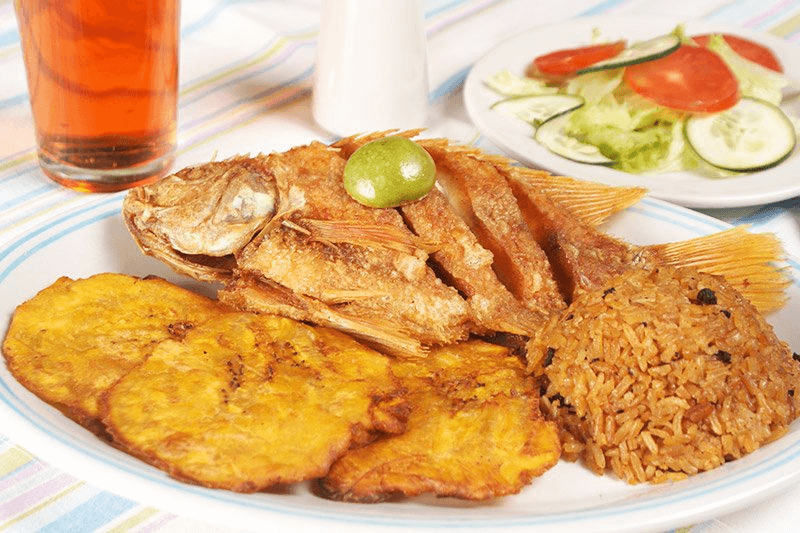
Mojarra frita
Butifarra, a very popular sausage, is prepared from seasoned ground beef and pork, tied off at smaller intervals and typically boiled and served with yuca and freshly squeezed lime.
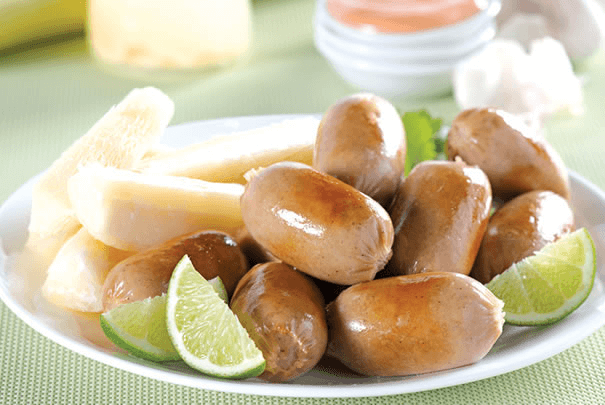
Butifarra
Casabe is a delicious type of flatbread made from ground cassava root (yuca) in a slightly oiled skillet, served with fresh guacamole. Arepuelas are a type of sweet and crunchy arepa, often served with hot chocolate.
For visitors looking to understand the importance of Colombia’s coexistence and blending of cultures and the sheer enthusiasm of the country’s inhabitants in celebrating that cultural diversity, a visit to the spectacular Barranquilla Carnival will not disappoint.
Like to create or customize a fantastico package tour of Colombia? Use our Plan My Trip page to start planning your dream Colombian vacation now!