
COFFEE AXIS CULTURAL TOUR
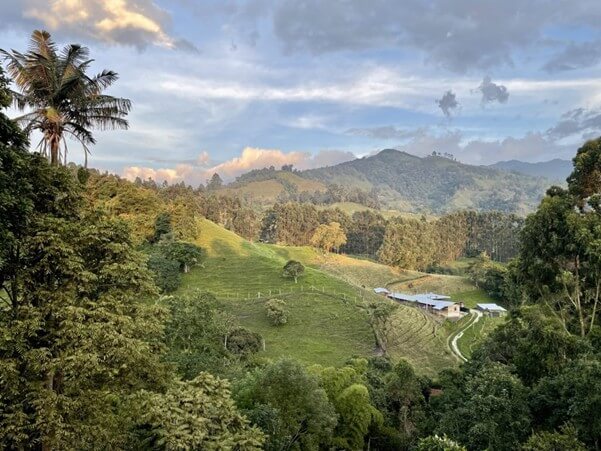
Coffee culture in Colombia’s Coffee Region is a treasure that goes beyond simple coffee production. Coffee here is not just a beverage; it is at the heart of everyday life and cultural identity. The Coffee Zone, consisting of the departments of Caldas, Quindío and Risaralda, is a region famous for its mountainous landscapes and rich coffee heritage.
This region is not only crucial to the country’s economy but also symbolizes a culture deeply rooted in the tradition of coffee cultivation and consumption. Lush green hills and mysterious cloud forests await you here. The mild highland climate, fertile soils, and sun-kissed slopes, combined with regular rainfall, create the ideal conditions for producing world-class coffee. After all, not only is the Eje Cafetero’s Arabica coffee very popular, but Colombia is also the world’s third-largest coffee producer. A great way to understand Colombia is to understand coffee, with a visit to the Colombian Coffee Zone.
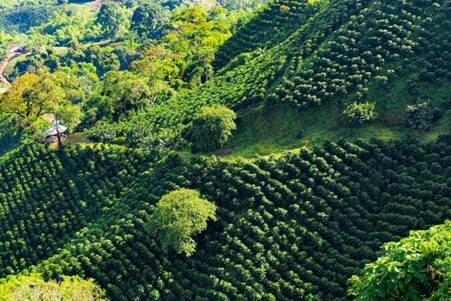 Coffee finca near Manizales
A more recent term used to describe some of the major coffee-producing areas in Colombia is the Coffee Cultural Landscape. Encompassing many of the same cities and coffee farms as the triangle, it is a more exact collection of locations recognised for their consistency in cultural practices, history and coffee growing traditions. Located in the central and western foothills of the Andes mountain range, it includes 47 municipalities and 411 veredas (pueblos) within Caldas, Quindío, Risaralda and Valle del Cauca.
The Origins of the Coffee Zone
Centuries before the Spanish colonization of Colombia, the Coffee Zone was home to the skilled Quimbaya people, renowned for crafting intricate gold objects that grace Colombian museums today. Unfortunately, the arrival of the Spanish in the 16th century marked a dark chapter. The Spanish lust for wealth led to the enslavement of indigenous peoples in gold mines, which in turn wreaked ecological havoc.
This led to the plundering of Quimbaya graves and ultimately the decimation of the region. It was not until almost three hundred years later, in the 19th century, that the region underwent Colonización Antioqueña, Antioquian Colonization, transforming it from a desolate mining backwater into the Coffee Zone it is today.
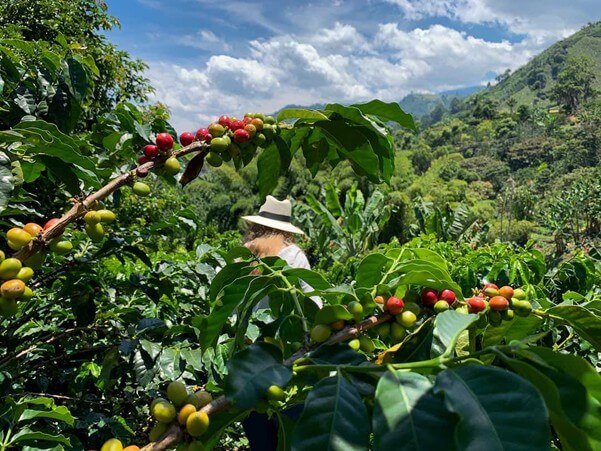
The Antioquian Colonization began when Colombians from the department of Antioquia began migrating southward after Colombian independence and formed the small pueblos of the Coffee Zone at the 2,000 meter/6,562 feet level, where a perfect climate for coffee awaited.
Remarkably, these towns were founded on the principles of small, single-plot family homesteads, challenging the vast land grants to elites during the colonial period. This democratic style of land use is still practiced today and is fundamental to the culture that has developed in the region.
Coffee arrived in the region in the mid- to late 19th century and quickly became popular with farmers because it made it possible to use their land intensively year-round. Coffee cultivation brought wealth and identity to the region. It also led to the creation of the Caldas department, which would later split into the three departments that form the core of the modern Coffee Zone—Risaralda, Quindío, and Caldas.
The Coffee Cultural Landscape of Colombia was officially recognized by UNESCO as a World Heritage Site, deemed of exceptional value to humanity in 2011. The region was cited as “An exceptional example of a sustainable and productive cultural landscape that is unique and representative of a tradition that is a strong symbol for coffee growing areas worldwide.”
Discovering the Coffee Zone
The Coffee Cultural Landscape of Colombia is one of the most outstanding places in the world and produces some of the most memorable coffee known. Colombians are proud to maintain this culture and the coffee that has been so carefully produced by the caficultores (coffee growers) of Colombia.
The region is truly an example of how small farms can co-exist with their environments while providing cultural and material sustenance for the families who live there. It is the hope that by supporting these small farms, their traditions can continue for generations to come.
Experience the Colours of the Region’s Traditional Pueblos
You will be amazed by the traditional architecture of Pijao, Salento and Filandia, where a myriad of colours create a magical ensemble with the landscapes.
So much so, these pueblos were the inspiration behind the famous Disney movie Encanto.
Colombia’s Black Gold
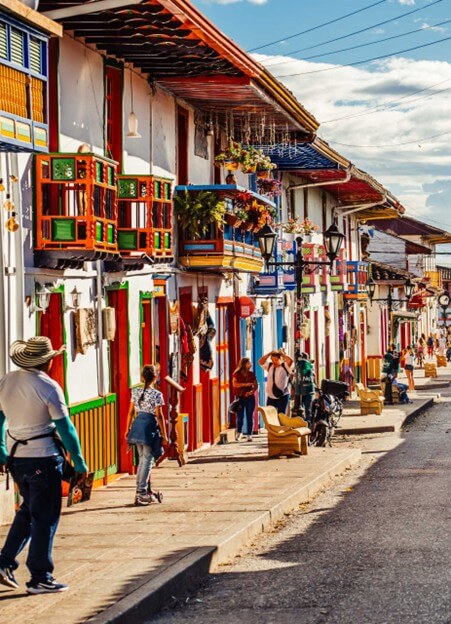
On weekends, the pueblo plazas come alive as a bazaar with people buying fruits and vegetables and other local produce. The Santa Rosa de Cabal hot springs, a natural wonder, are not far away, where you can relax with a spa session amid some of Colombia’s most beautiful mountains.
THE COLOMBIAN COFFEE ZONE IS ALSO A CULINARY DESTINATION
The Eje Cafetero is not just all about coffee. Blessed with a tropical climate and continuous production of fruits and vegetables, its cuisine has been enriched through all manner of traditions, creating incredible flavours.
 Sancocho
There is a vast array of restaurants and places where you can relish everything from traditional dishes to contemporary creations. Lunching in beautiful Salento is a wonderful occasion, where they serve what many say is the finest trout in South America. These wild trout thrive naturally in the cold rivers and streams flowing down from the Andes, including the Ruiz and Tolima snow-capped peaks, crossing through the Cocora Valley.
 Fresh grilled trout with a patacón (fried plantain)
The chorizos (sausages) from Santa Rosa de Cabal are just divine. These savoury chorizos undergo a special process, being infused with a variety of local herbs and slow-cooked to irresistible perfection.
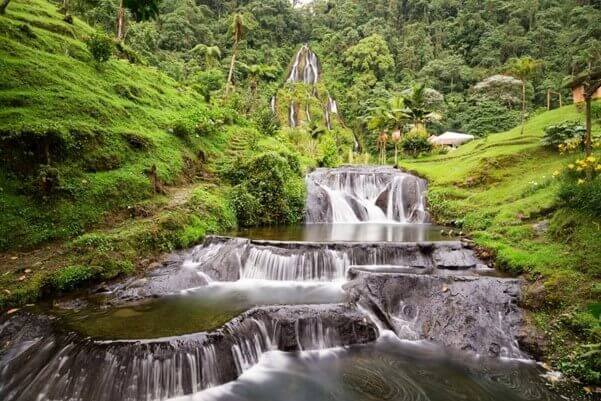 Thermal hot springs at Santa Rosa de Cabal
The Coffee Region is also known for its distinct arepas, which are made from ground white corn and are rolled out very thinly.
They are grilled until very crispy. Fresh off the grill, they are buttered and often laden with a soft cheese called quesito, accompanied with a black coffee or hot chocolate made with agua de panela, unrefined cane sugar water.
MUSIC IN THE COFFEE ZONE
Colombian music occupies a central place in society. In this country, music is everywhere. Everywhere. All the time. Colombians have a fusional relationship with music and dance and Colombia would not be Colombia without its music.
Born of mixed traditions, like its people, traditional music in Colombia is still very much alive. A blend of indigenous, African and European influences, Colombia’s traditional music forms the identity of its pueblos, departments and regions.
Each geographical area has its own musical tradition and the sheer number of genres in Colombian music is staggering. Contemporary music genres Reggaeton and Trap are immensely popular with the younger generations all over the country.
On a bigger scale, names as Shakira, Juanes, Maluma and J. Balvin are known worldwide and represent present Colombian culture in the field of music. Colombian music is certainly the country’s most powerful cultural marker.
QUIMBAYA GOLD MUSEUM
This fabulous museum is well worth a visit to gather a better understanding of the culture of the area prior to the arrival of coffee.
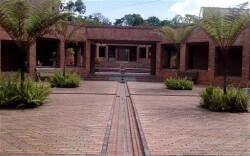 The Quimbaya Gold Museum, known as Museo del Oro Quimbayana, is a significant institution dedicated to preserving pre-Colombian archaeological artifacts. Located in the Armenia region of Colombia, the museum plays a crucial role in safeguarding the historical and cultural heritage of the Coffee Zone.
COLLECTION AT THE QUIMBAYA GOLD MUSEUM
The Quimbaya Gold Museum has on display a vast collection of gold, ceramic and stone objects. These artifacts originate from the pre-Colombian civilizations of the Quimbaya tribes, offering visitors a unique insight into the rich history and culture of these ancient societies. In Colombia, outstanding coffee is also produced in the north on the Sierra Nevada and to the south, in the Nariño region. However, this special area occupying the departments of Caldas, Risaralda and Quindío, is known worldwide for its landscapes, coffee culture and unique and colourful fincas cafeteras (coffee farms). It is recognised as the Coffee Region, the Coffee Triangle or Coffee Axis.
There is a special charm here. You will be amazed by the impressive green, mountainous landscapes, endless coffee plantations and unique colonial houses with colourful wooden balconies and flowers. It is a harmonious model of agricultural exploitation that coexists and takes care of the environment and people.
Like to create or customize a fantastico package tour of Colombia? Use our Plan My Trip page to start planning your dream Colombian vacation now!