
COLOMBIAN ANDEAN CULTURE TOUR
Andean Culture

The Andean region of Colombia is the central and western parts of the country. The Pacific Ocean borders it to the west, the Caribbean to the north, the Amazon Rainforest to the east, and the Venezuelan Andes to the south. It has a population of over 40 million people and constitutes the thirteen departments of Antioquia, Boyacá, Caldas, Cundinamarca, Huila, Nariño, Norte de Santander, Quindío, Risaralda, Santander, Tolima, and Valle del Cauca.
Colombian culture is shaped by its rich history, geographical diversity, and the amalgamation of indigenous, African, and Spanish influences. Located at the crossroads of South America, Colombia boasts a cultural landscape that is as varied as its terrain, encompassing lush rainforests, towering Andes mountains, and pristine Caribbean and Pacific coastlines.
Colombia is one of the most ethnically mixed countries in the world. This ethnic richness is also a cultural richness. This geographical diversity has given rise to a multitude of regional cultures, each with its own unique traditions, music, dance, cuisine, and festivals.
Andean culture is understood to mean traditions, customs, music, dances, religions, and values that have developed over thousands of years. The earliest traces of indigenous civilizations in the Andean region date back at least 10,000 years. However, today’s Andean culture was shaped by ancient pre-Columbian peoples such as the Incas, who developed a high culture in the central Andes from around the 12th century to the 16th century.
Colombian Andes
Andean peoples have inhabited the region for centuries and have developed a rich cultural tradition that is passed on from generation to generation. Despite the arrival of Spanish conquerors in the 16th century and subsequent colonization, the culture endured and remains an important part of the identity of the Andean indigenous peoples.
It is one of the oldest and richest in South America, which is why it includes different ethnic groups and communities in different countries of the Andean region, such as Peru, Bolivia, Ecuador, Colombia, and parts of Chile and Argentina. The indigenous communities are not just limited to the Quechuas, Aymaras, and a few others. They are also believed to belong to at least 77 ethnic groups that speak in excess of 57 languages.
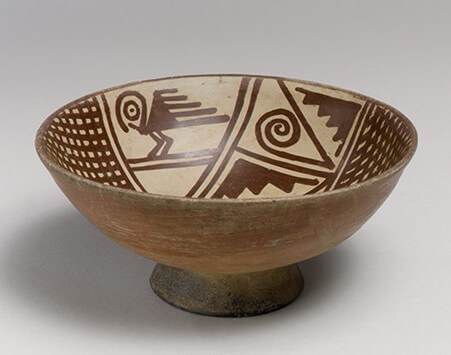
An absolute highlight of the Andean Region is this tremendous variety of cultures. Going from south to north, not only do you pass through different cultures of modern Colombia, but also through different cultures of the pre-Hispanic era. This can be experienced by visiting different archaeological sites, most of them in the south of Colombia, or in the many small, traditional pueblos in each department of the Andes.
Huila, located in southwestern Colombia, is a diverse and captivating destination for travellers seeking nature, culture, and adventure. The region is home to the San Agustín Archaeological Park, a UNESCO World Heritage Site that preserves mysterious pre-Columbian statues and tombs nestled in lush green hills. So too is the archaeological park of Tierradentro, in the department of Cauca. It is a privilege to visit them and learn about their fascinating history.
San Agustin
Further west, the colonial city of Popayán, known as the White City for its elegant whitewashed buildings, is a centre of history, architecture and gastronomy. Just north of Popayán, the Silvia Market is a vibrant hub of Indigenous Misak culture, where travellers can engage with local traditions and crafts in an authentic highland setting.
The Andean region is full of small pueblos and traditional townships. Some of them have been declared Pueblos Patrimonio, Heritage Towns. Passing through the likes of Salamina, Jardín, Villa de Leyva or La Playa de Belén is similar to rewinding hundreds of years in time and feeling the true traditional culture of the local people and community.
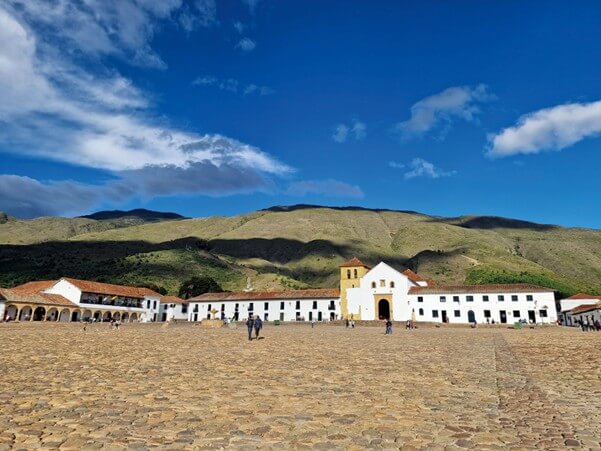 Villa de Leyva
The history of the Andean region is linked to many indigenous cultures, some of them as a memory, but others are still very much alive. A visit to the Gold Museum in Bogotá will be an eye-opener and will undoubtedly add an extra dimension to your trip when you visit the native regions of indigenous communities.
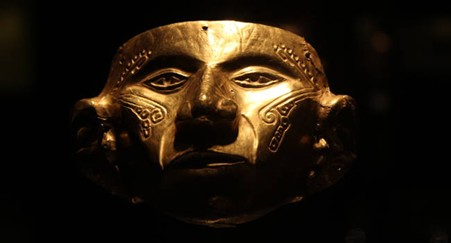 Gold Museum
GASTRONOMY
If you like to combine your adventure in Colombia with some gastronomic experiences, you will find many options in the Andean region. Although the ingredients are mostly the same, flavours and preparations vary a lot from region to region.
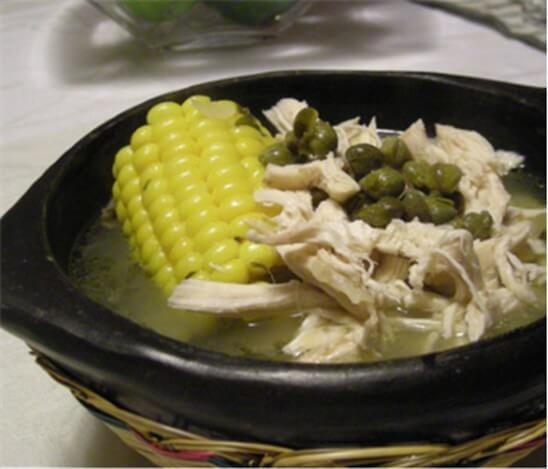 Ajiaco
There is no exact date for the origin of Andean cuisine, as it has evolved over the centuries based on the traditions of the pre-Columbian indigenous peoples of the Andes. They have used indigenous ingredients and their own cooking techniques since ancient times.
The arrival of the Spaniards began a process of cultural blending that produced a fusion of flavours and culinary techniques to create what is now Andean cuisine. Andean cuisine has evolved and adapted, but has always maintained its roots in connection with the land and an appreciation of local ingredients.
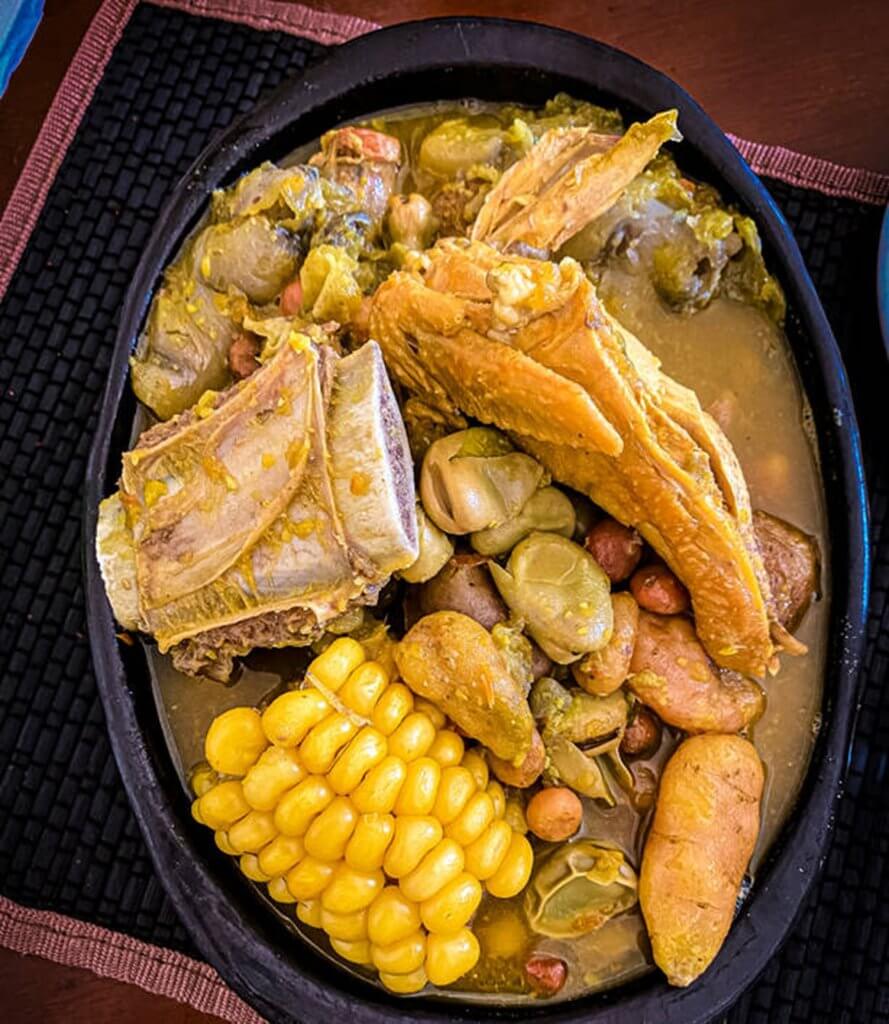 A classic Andean dish
The bigger cities offer both local and international cuisine. Bogotá has some of the finest restaurants in South America, and many locations offer cooking classes, workshops or tasting menus.
Andean Culture through Music
Andean dance is a centuries-old form of cultural expression that has its roots in ancient pre-Columbian civilisations and has evolved. Andean dances represent the identity, traditions and beliefs of the indigenous peoples of the Andes. Likewise, these customs have been passed down from generation to generation to preserve cultural richness.
Colombian music is enormously varied and is based on stringed instruments such as the guitar, mandolin and tiple, while to the south of the country it is enriched with the flutes and drums of the chirimías.
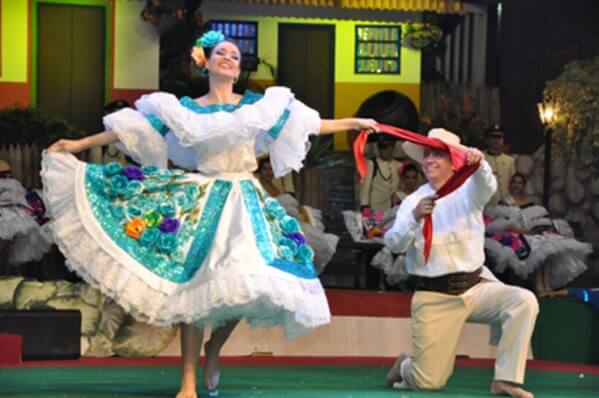 Traditional Andean wear
The Andean Region has a mestiza (mixed) culture. Most of its dances, songs and rhythms have Spanish roots with original Colombian creations and adaptations with instruments such as the tiple and guitars. The Andean Colombian music is wide and diverse, and every region has its own cultural impact. The traditional rhythms of the region include guabina, carranga, bambuco, hallway and san juanero, among others.
Nowadays, these traditional rhythms are seldom listened to other than at specific cultural events and fiestas (parties). However, daily the predominant rhythms are salsa, merengue, rock, pop, tropical pop, reggaeton and musical mixtures between traditional and modern rhythms. Colombia is known for its numerous festivals and in the Andean region, many options can be found.
Colombian festivals are exciting celebrations of the country’s cultural heritage, combining indigenous, African and Spanish influences. These celebrations, characterized by explosive parades, lively music and elaborate dances, play a crucial role in preserving cultural traditions and fostering a sense of national identity and pride.
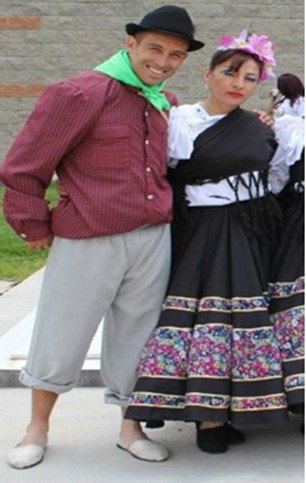 Traditional costume
In every region, the joyfulness of Colombian people expresses itself in their festivities, fairs, carnivals and cultural festivals, including these:
- Carnival of Blancos y Negros (Whites & Blacks), in Pasto, at the beginning of the year
- Manizales Fair in January
- Barranquilla Carnival in February
- Biennial Bogotá International Theatre Festival at Easter
- Vallenato Legend Festival in Valledupar, at the end of April
- Colombian Folkloric Festival in Ibagué and the Bambuco National Pageant in Neiva, held in June
- Medellín Flower Fair in August
- Cuadrillas de San Martin in September
- Festival in Cartagena in November
- Cali Fair at the end of the year
Like to create or customize a fantastico package tour of Colombia? Use our Plan My Trip page to start planning your dream Colombian vacation now!