
PUEBLOS PATRIMONIO JERICÓ
(Colombian Heritage Towns: Jericó)
Among the majestic mountains of Antioquia lies a relatively unexplored treasure waiting to be discovered. Jericó.
This charming town reveals itself as an idyllic destination for those seeking authentic experiences away from the hustle and bustle of modern cities.
Jerico, Antioquia
We work with and recommend booking flights with www.kiwi.com
Jericó is not only a destination, but a fascinating journey through multiple facets that make it your perfect haven. Experience Jericó’s authenticity, natural beauty, adventures, and warm hospitality for a truly memorable visit.
This picturesque pueblo reflects the past in its cobblestone streets and story-filled colonial facades. As you wander through its charming alleys, the very essence of Jericó will totally absorb you.
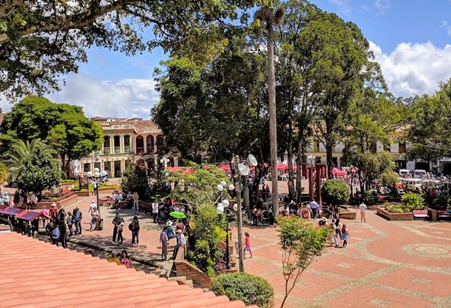
Jericó, a charming colonial town near Medellín, is emerging as a popular travel destination.
In recent years, the pueblo has become a top destination in Antioquia’s southwestern coffee region. Recognized as a Pueblo Patrimonio, Jericó is considered one of Colombia’s most beautiful pueblos.
Every street tells a story and every building is a door to the past. Discovering Jericó means connecting with authenticity, nature, and history for a unique, enriching experience.
CLIMATE AND WEATHER
The climate in Jericó is comfortable, although generally overcast. Over the course of the year, the temperature typically varies from 57°F/14°C to 73°F/23°C and is rarely below 55°F/13°C or above 76°F/24°C . The best times to visit Jericó for warm-weather activities are mid-June to August and mid-December to March.
The wet season lasts 8 months, from March to December, with a greater than 74% chance of a given day being a wet one. Even so, the rain has little impact on outdoor activities. October is Jericó’s wettest month, averaging 27 days with at least 1 millimetre of rain. The dry season lasts 3 months, from December to March. February is Jericó’s driest month, with an average of 18 days of at least 1 millimetre of rain.
Jericó is found at an elevation of 1,910m/6,266 feet and its humidity is generally comfortable, only occasionally muggy, and remains consistent throughout the year.
The most comfortable clothing to wear would be light tropical outerwear with good, reliable boots for hiking or indeed traversing the cobblestones. At high altitude, high-factor sunscreen and a wide-brimmed hat are essential.
A municipality since 1850, Jericó is one of the eighteen official Pueblos Patrimonio (Historical Towns) of Colombia. Spanish Conquistadors discovered Jericó in 1540, but abandoned it shortly after finding no gold, their primary objective.
Large landowners returned to the region around 1835, recognising the tremendous potential for agriculture. As a consequence, Antioquia began attracting paisas (Antioquia peasants) to work the lands and thus the pueblo of Jericó was born.
The 19th-century homes built for the paisas remain largely intact, allowing Jericó to become one of the eighteen Pueblos Patrimonio, recognized for its cultural heritage by the country’s tourism authority.
Jericó’s claim to fame is that it is the birthplace of Santa Laura Montoya. Canonized in 2013, she was the country’s first saint and founder of a religious order that is now spread across many countries.
She is venerated for her work amongst the poor indigenous communities of the area and her sainthood has made Jericó a destination for the devout.
Arguably, Jericó was, as a consequence, vaulted to become one of Colombia’s most consequential religious pilgrimage sites after the 2013 canonization of Laura of Saint Catherine of Siena.
The pueblo has fewer than 17,000 inhabitants, but has more than fifteen colonial churches, so it is no surprise that it has become one of Colombia’s most important destinations for pilgrims and worshipers.
SANTA LAURA SANCTUARY
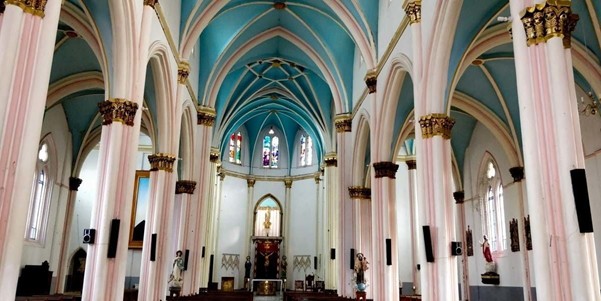
A neogothic pink church constructed in 1943, it was originally called the Sanctuary of the Immaculate Heart of Mary. The name was changed to Sanctuary of Santa Laura after the canonization of Mother Laura in 2012.
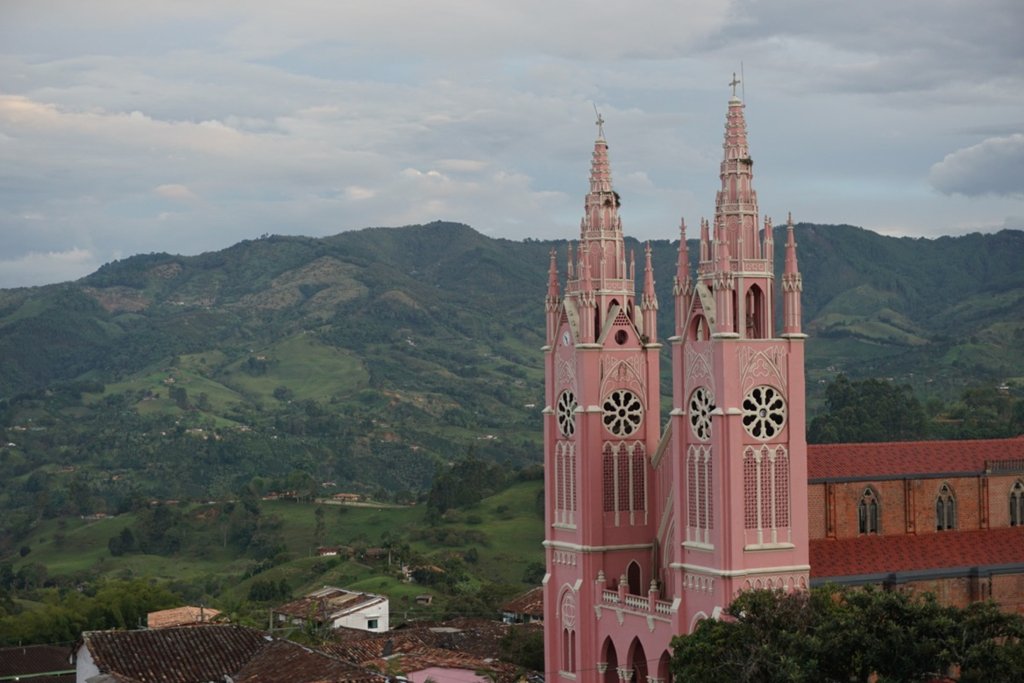 Sanctuary of Santa Laura
BEST VIEW POINTS OF JERICÓ, ANTIOQUIA
Parque Cerro Las Nubes
This makes for a fabulous hike high above Jericó. Las Nubes (clouds) will most likely develop, hence the name of the park, although you should still have fabulous views. There are several trails available, with the most popular found on the northwest edge of Jericó. After an hour or so of climbing, there is an expansive open area with charming places to picnic. The views of the town are sensational and on the other side of the mountain, providing the clouds do not roll in, the reward is a clear vista all the way to Cerro Tusa.
Morro El Salvador
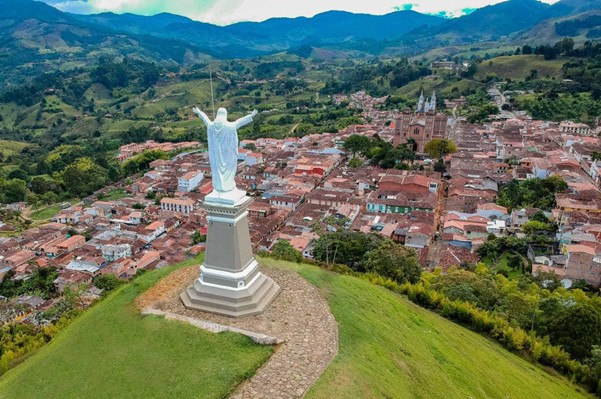
This is the hilltop where the massive Statue of Christ lords over the pueblo. It is only a short hike and well worth it with panoramic views of Jericó and Antioquia. It is possible to walk up the road, take a taxi, or the best option, which is to walk through the botanical gardens.
 Begin organizing your dream Colombian getaway right away by using our Plan My Trip page!
Los Balsos Botanical Gardens
Free to enter and located at the base of the Morro El Salvador bluff, this is a peaceful place for a casual and relaxing time walking across bridges over small fish ponds, manicured gardens and bamboo forests.
Hike and refresh in the river
There is no shortage of fantastic walks through the pueblos and along coffee farm trails. Take a BnB Colombia Tours guide and go west of the pueblo through some of the most beautiful coffee farms and mountains and swim in the Rio Piedras.
For more extensive hiking and experiencing the amazing waterfalls in the area, ask BnB Colombia Tours for a local guide to show you, among others, Humedal de Montaña La Cascada, between the pueblos of Jericó and Tarso. Also, Chorros De Quebradona, in a forest with naturally developed pools.
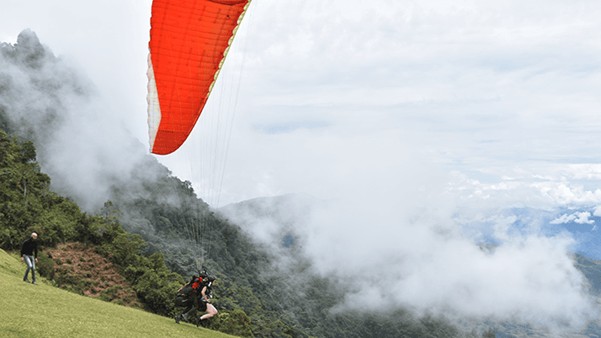
Paragliding is a very popular adventure sport in Jericó. Mirador Natural Puerto Arturo is a great place for paragliding, affording incredible views of the Cerro Tusa and Cerro Bravo mountains, along with the neighbouring coffee towns of Fredonia and Santa Barbara.
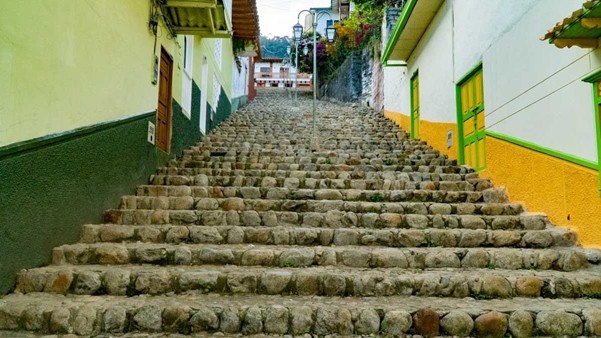
Passage of 100 stairs
This is a simple yet beautiful historical cobblestone flight of steps. Appropriately named 100 stairs for a good reason. Totally amazing views of the mountains along the way, too.
The Carriel Bag
The original name of this bag is Guarniel, but the word Carriel is a distortion of the English words carry all. It has twelve different pockets, including five secret ones. This is a man’s leather handbag, only made in Jericó. It resembles a saddlebag but is an intricate design with multiple pockets made from leather, rawhide, black patent, and animal fur.
Traditionally used by men, it is a symbol of the Paisa culture (People of Antioquia). Nowadays, businessmen all over Colombia use them, while small handbag versions are made for women. It is possible to visit one of the many workshops in Jericó where the artisans illustrate their extensive craft and provide the chance to make one for yourself.
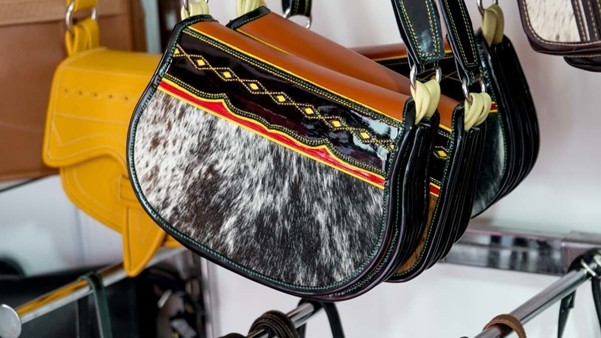 The finished product in traditional leather, fur and black Patton
MAJA Museum
In the main building of the MAJA Museum, there is an impressive collection of various works and artifacts that narrate the history of Jericó, as well as permanent and itinerant art exhibitions. The museum, located in a charming 1906 bahareque house, boasts excellent collections and an alluring atmosphere.
The house, expanded and restored in 2012, features two floors of exhibitions, a pleasant courtyard, a small café, Don Rafa, and a theatre.
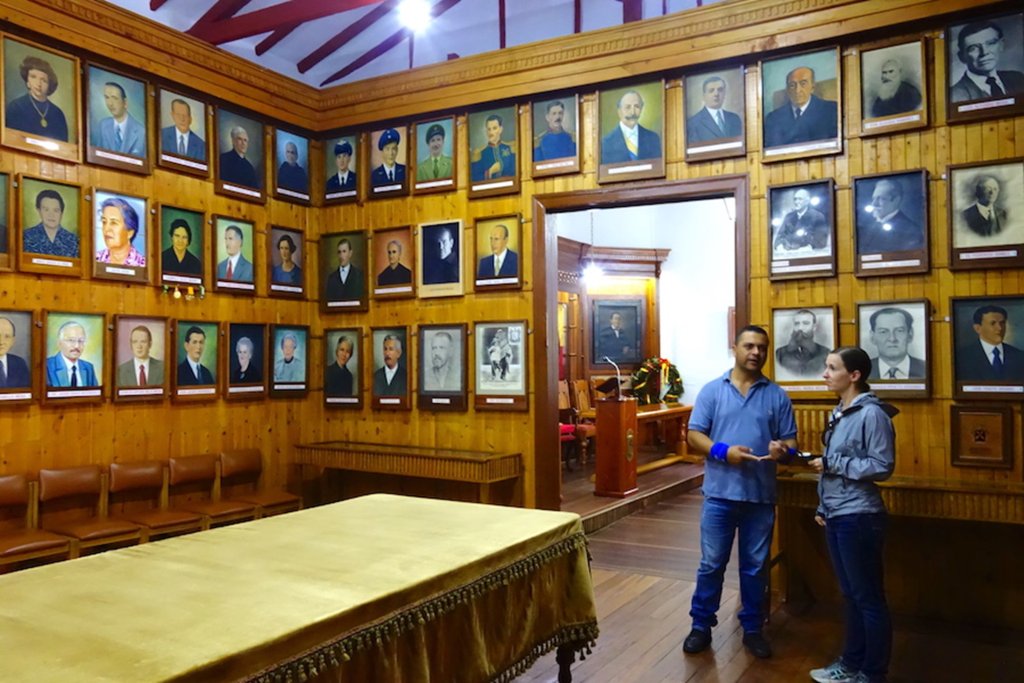 MAJA Museum
The museum also has two other locations in Jericó, one focused on decorative arts and the other on music. The museum gift shop sells books and films about Jericó, along with crafts from the region.
Cowboys
Jericó is surrounded by several pueblos nestled in the nearby mountains. Many of the inhabitants are coffee, fruit and vegetable farmers, so it is no surprise to see farmers on horseback in Jericó with sacks of fruits and vegetables for sale. At night, the town plaza opens up for paisas trotting their horses on the cobblestone streets, putting on a show for spectators.
Cardamom
Jericó is renowned for cultivating and producing high-quality cardamom. This aromatic, savoury spice with a floral, earthy flavour grows in a pod and is readily available in Jericó.
Cardamom has a unique and almost indescribable flavour.
 Cardamom
GASTRONOMY
Colombian cuisine may not have the world’s attention, but when travelling to Antioquia, one’s impression will change. Paisas, those from the state of Antioquia, are some of the most passionate proponents of Colombian cuisine. The fabulous range of local Antioquian cuisine could be the reason. The food is hearty, filling and oh so flavourful!
Here are some ideas on what dishes to enjoy during your tour of the Pueblos Patrimonio in Antioquia.
No list of Antioquian cuisine would be complete without a mention of coffee.
Tinto campesino is black coffee that is brewed with agua de panela (unrefined cane sugar water), cinnamon and clove. It is so good that even the staunch black coffee, no sugar drinkers find themselves ordering it again and again on their Colombia trip.
It is true that Buñuelos, cheesy fried dough balls will be available at nearly every stop on your Colombia tour. However, the Antioquian version is worth a special mention. Their texture and flavour are mouth-wateringly unique, as more than a few Buñuelerías in Antioquia have mastered the ideal consistency and mixture of the cheese. Buñuelos are the perfect appetizer between meals, especially with a tinto.
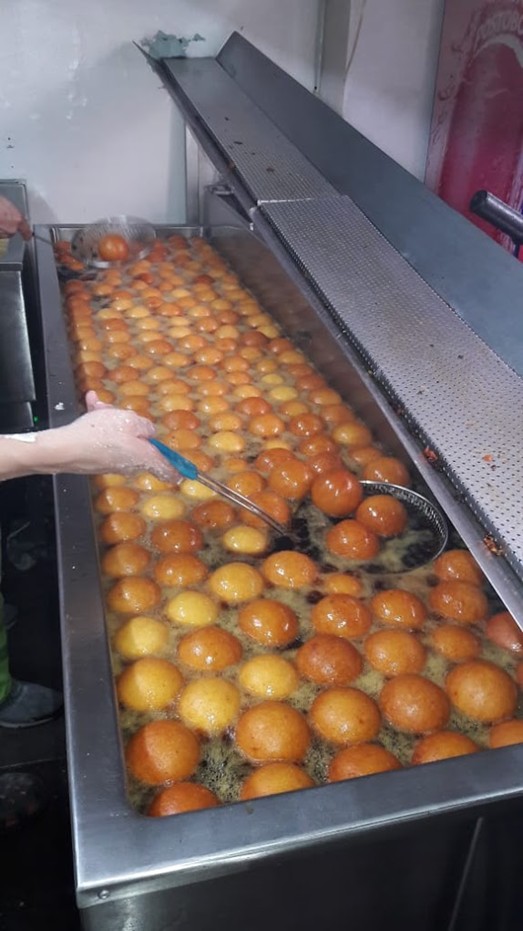 Buñuelos
While arepas are likewise found throughout Colombia, Antioquia’s arepas are something special in their simplicity. Made with cornmeal and grilled, these arepas are often served plain, allowing their natural corn flavour to shine.
However, arepas are also enjoyed with a variety of toppings, from cheese to avocado.
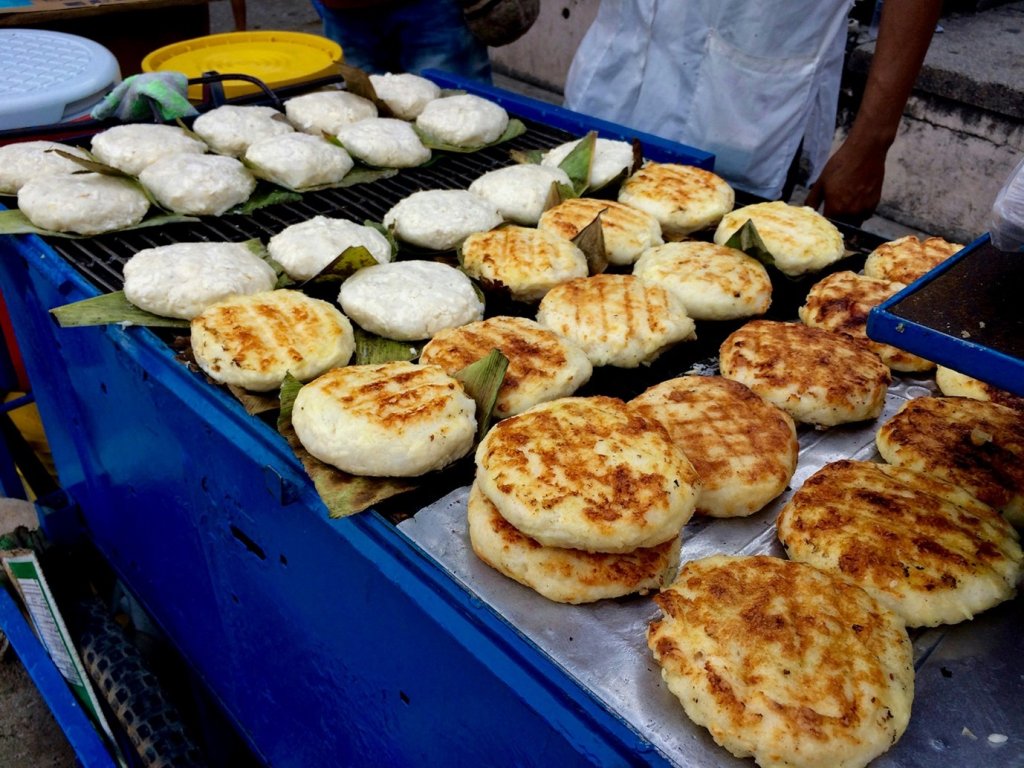 Arepas
Empanadas are Colombia’s de facto street food, found on virtually every street corner. These deep-fried pockets of goodness are a perfect quick breakfast or late-night snack. Derived from the Spanish word empanar, which means to wrap or coat in bread, empanadas are essentially small snacks packed with any number of ingredients.
Depending on where you are in Colombia, you can find empanadas filled with chorizo, beef, chicken or cheese.
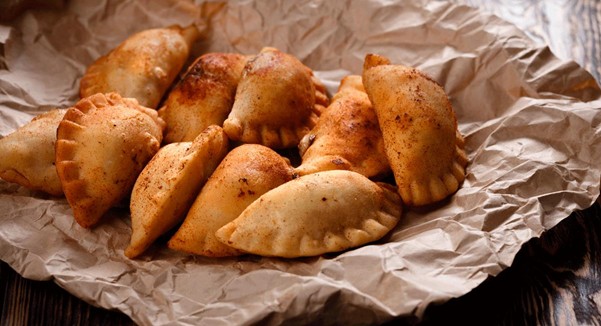 Empanadas
Bandeja Paisa is one of Colombia’s most iconic dishes, originating in the Antioquia region.
This massive platter includes rice, beans, ground meat, chicharrón (pork rind), fried egg, avocado and an arepa. Created for manual workers, bandeja paisa was designed to provide energy for farm workers and is beloved for its rich, satisfying flavours.
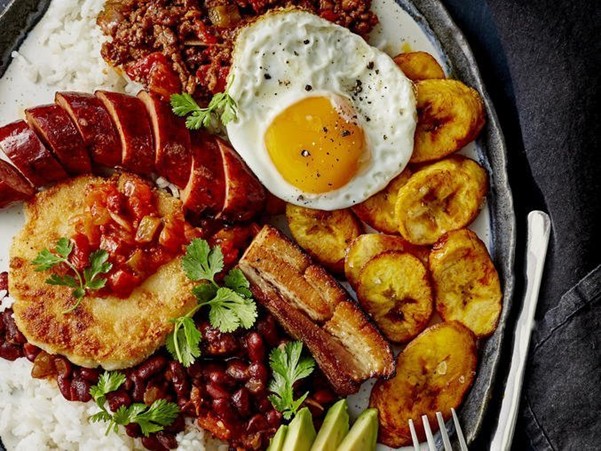 Bandeja Paisa
While a menú del día is not a specific dish per se, the meal of the day is the most commonly found lunch item throughout the country. For a very reasonable rate, you are served soup, a fresh juice, salad, the main course meal and sometimes dessert. The most common juice in Colombia is guarapo, which is the Colombian take on lemonade made with panela (sugar cane).
JERICÓ – JARDÍN
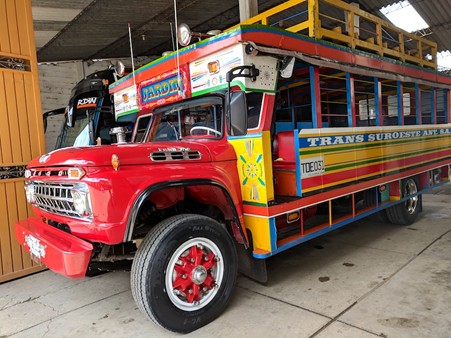
Travelling between the two Pueblos Patrimonio of Jardín and Jericó, one passes through the town of Andes with a daily chiva, on mostly unpaved roads. The open-air ride is a fun adventure in and of itself.
Like to create or customize a fantastico package tour of Colombia? Use our Plan My Trip page to start planning your dream Colombian vacation now!