
PUEBLOS PATRIMONIO MONGUÍ
(Colombian Heritage Towns: Monguí)
A Colonial Treasure in the Heart of Colombia
 We work with and recommend booking flights with www.kiwi.com
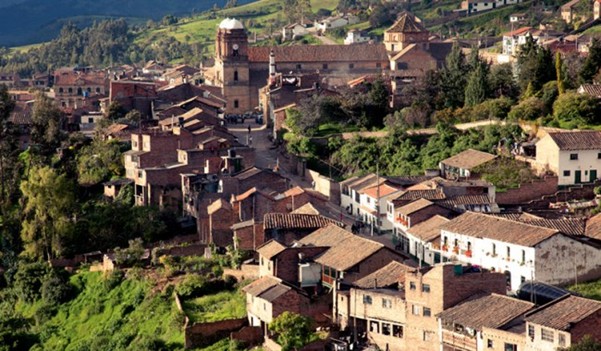
As a Pueblo Patrimonio, Monguí boasts colonial architecture, rich history, and exceptional preservation. Fortunately, the visitor numbers that the likes of Cartagena, Medellín and Salento receive are only a fraction of those. This makes Monguí so special for those who like to explore quieter, more relaxed places.
It may be a little more difficult to reach these gems, however, the reward is well worth it. So, if you want to get a feel for the real Colombia, then this effort is supremely satisfying. Red, green, and white paint Monguí, an idyllic pueblo nestled in Colombia’s highland countryside. This distinctive emblem makes the buildings look like a Christmas homage that the residents chose to preserve.
Monguí is the place that you think of when visualizing a small pueblo in the Andean highlands. This distinctive emblem gives the buildings a Christmas-like look that residents chose to preserve. Sitting on top of a mountain completely removed from the dust of the world, Monguí welcomes its visitors.
Here, there is no need to dream about distant lands. Glancing out the window keenly suffices. Monguí is truly one of those pots of gold at the end of the traveller’s rainbow, a place only minutely blemished by the often heavy hands of tourism.
The Department of Boyacá is one of the cultural and historical hearts of Colombia. Once the centre of the indigenous Muisca empire, which the Spanish fiercely fought to appropriate their gold. The nearby city of Tunja was their empire’s capital.
Most travellers do not consider a stop at Tunja, though it does possess an impressive city centre with well-preserved colonial homes and churches. Thus, the colonial town of Monguí, in the central mountains of Boyacá, was one of the first settlements in the Americas during the Spanish conquest.
In 1555, missionaries tried to convert the indigenous Muísca to Catholicism, but they preferred worshipping their cacique (chief). Drawn by the prospect of gold in nearby sacred lakes, missionaries made Monguí a conversion center and built a grand stone cathedral to honor the Virgin of Monguí.
CLIMATE AND WEATHER
In Monguí, the summers are short and cool while the winters are cold and wet. Overcast most of the year, the best time to visit is probably December through late March.
Typically, temperatures vary from 5°C/41°F to 15°C/59°F and it is rarely below 3°C/37°F or above 17°C/63°F. The wet season lasts nearly nine months, from mid-March to December. The month with the most wet days in Monguí is May, with an average of 23 days with at least some precipitation.
The dry season lasts four months from December to mid-March. Rain falls throughout the year in Monguí, with the most rain in May, with an average rainfall of 163mm/6.4 inches.
The month with the least rain is January, with an average rainfall of 27mm/1 inch. At an altitude of 2,900m/9,500 feet, Monguí is always chilly. It is a small pueblo of only 5,000 inhabitants. Monguí translates in English as sunrise in the local native language.
When visiting Monguí, it is best to have warm clothing and some type of rain gear to hand. A ruana (poncho) is a good investment. Good quality, sturdy footwear for negotiating the cobblestones and hiking is invaluable.
HISTORY
The city was officially founded in 1601 and as part of the Colombian Pueblos Patrimonio (Heritage Towns), Monguí is home to many renowned cultural and historical sites.
The pueblo’s architecture also illustrates fine details from its colonial past.
The economy of the municipality of Monguí is mainly based on tourism, industry, livestock, beekeeping, mining of coal and football manufacturing.
THINGS TO SEE AND DO
Basilica Menor Nuestra Señora de Monguí is a wonderful, emblematic building in the pueblo. Some say that the construction of the Basilica Menor and Franciscan convent began in the early 16th century and lasted over a hundred years. Others date the start of work at the end of the 17th century, with completion in 1760.
Builders used cut stone to construct the main church and convent, a project that took several years to complete. This religious building is remarkable for its Romanesque style and simplistic architecture. Inside, you will find an image of the Virgin and several stunning paintings by the artist Gregorio Vasquez de Arce y Ceballos.
Today, the convent serves as a museum of religious art. It explains the strategies used by the colonists to indoctrinate the natives and the whole process of synchronisation resulting from the blending of indigenous and Catholic cultures.
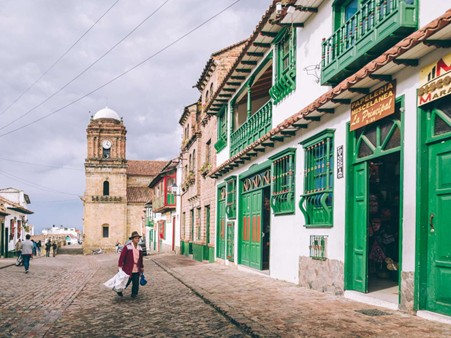 Basilica and Convent
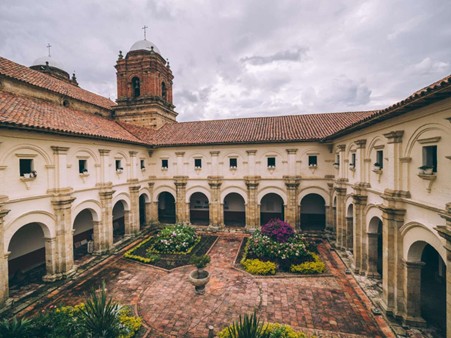 Monguí Convent
Made of cut stone, the Puente Real de Calicanto (Royal Bridge of Calicanto) has historical and cultural importance. This bridge is five meters wide and twenty meters long, dating back to the 16th century. Built during the colonial period, it provided easy access to transport stones for constructing the Basilica of Our Lady.
The native indigenous built the original bridge in 1557 using stone, lime, and bull’s blood. Legend says a snake and a golden ox are buried on either side of the bridge. However, the bridge as we see it today dates back to 1715. It is perhaps the most famous attraction in the pueblo and a must-see when visiting Monguí.
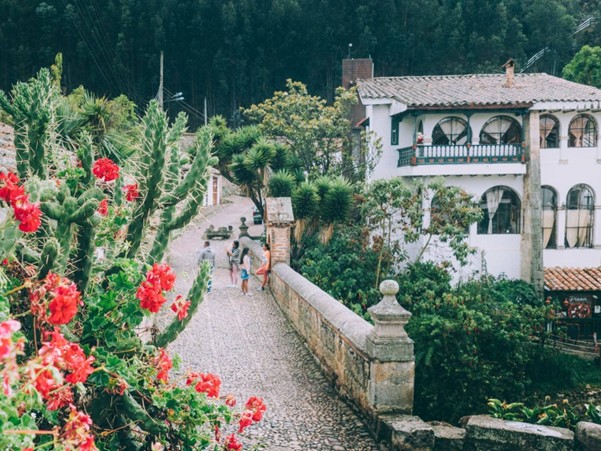 Calicanto Bridge
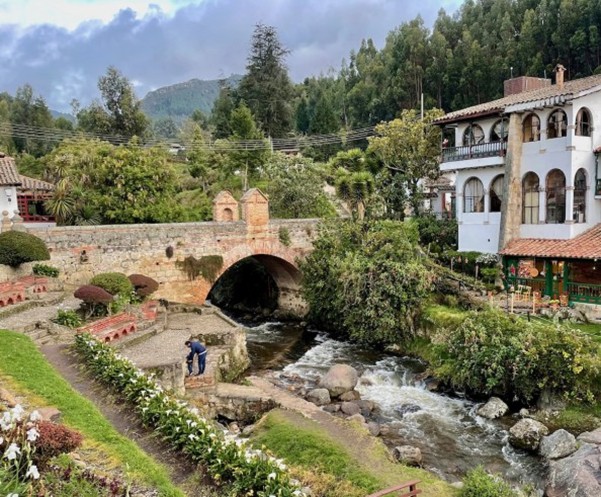 Another view of the bridge
In the pueblo of Monguí, a quarter of its 5,000 or so inhabitants make footballs, with about twenty businesses in operation. Some footballs are still hand-sewn, a technique adopted in the 1930s. In this municipality, artisans have passed down the skill of football manufacturing from generation to generation.
For Colombians, Monguí is mostly famous for its fábricas de balones, or football production. Given that so many visitors purchase one, it is an industry that is far from falling into decline, even with overseas competition.
In the main plaza, you can see dozens of colourful footballs hanging from balconies and doorways. Artisans in this municipality have passed down the skill of football manufacturing through generations. You can visit the workshops where artisans make hand-sewn footballs. The pueblo is also home to many other artisans who work with wool and knit ruanas (ponchos) to stave off the cold mountain air.
Monguí gets top honours for both its natural setting and impressive main square that extends into the horizon of Boyacá’s mountains. Built with stone hauled from coastal quarries during the Spanish conquest, Monguí was designed as an imposing New World outpost, featuring one of the largest plazas rivaling those of Cartagena and Quito.
Given its location in the windswept and frosty Andes, the pueblo has fortunately preserved much of its colonial splendour.
Festival of Balloons and Lanterns
The Festival of Balloons and Lanterns is celebrated in December. This event honours the tradition of ball making and the Christmas season with parades, competitions and the illumination of lanterns throughout the town.
The festival highlights the local culture and community spirit. During the festival, the streets come alive with music and colours, creating a magical atmosphere that invites locals and tourists to celebrate together and enjoy Monguí’s traditions.
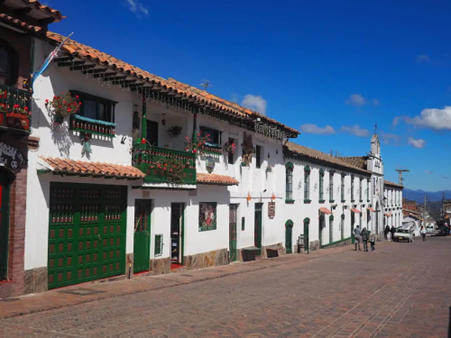 Near the Plaza
Begin organizing your dream Colombian getaway right away by using our Plan My Trip page!
Monguí is becoming better known as an intrepid traveller’s destination, not only for the pueblo, but also as a doorway to one of the most beautiful páramos in South America.
Páramos are high-altitude wetlands that largely exist in the Northern Andes of South America. They are considered one of the most important and fragile ecosystems in the world. They largely consist of moorland with plants that have the ability to capture moisture from the air and store it in the soil below.
Colombia is home to 40% of the world’s páramos. So much so that the Sumapaz Páramo, south of Bogotá, provides the majority of the city’s water supply.
The Páramo de Ocetá is widely regarded as the most beautiful and must be seen to be believed. These high-altitude moors are located around 3,500m/11,483 feet in the Andes mountain range. To be able to trek in these high-altitude mountains, you must be in good condition, mainly due to the low levels of oxygen.
The hike to the Páramo de Ocetá is quite strenuous, but immensely worth the effort. With no signs along the paths, it’s highly recommended to be accompanied by a BnB Colombia Tours guide to avoid getting lost.
The páramo is mysterious. As you ascend, the landscape changes dramatically. The famous frailejones, native plants of the páramo, abound in large numbers. The view from the top is totally breathtaking.
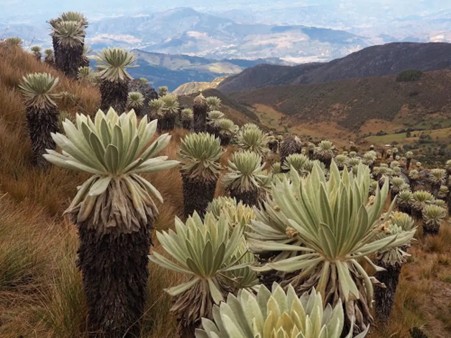 Páramo and the fraile jones plants
GASTRONOMY
Colombia is a diverse country in almost every way, gastronomy included. Less than three hours from Bogotá, there is the beautiful and culturally rich Colombian department of Boyacá. The region is known for its spectacular nature, fascinating history, four Pueblos Patrimonio (Heritage Towns), and friendly locals.
The traditional gastronomy of Boyacá uses farm-fresh ingredients and has been strongly influenced by local Indigenous cultures.
Here are some traditional dishes to try when visiting this beautiful area:
- Cuchuco de Trigo con Espinoza: Soups form an important part of Colombian cuisine and Boyacá is no exception.
This regional soup contains tender beans, broad beans, potatoes, carrots, green peas and pork. This hearty dish has been heavily influenced by local Indigenous cuisine and is very traditional in Boyacá. -
Changua Boyacense is a typical breakfast dish that is made with milk, broth, eggs, salt and pepper.
This Boyacense soup is almost always accompanied by one of the most traditional pastries from the region, almojábana, along with a dollop of rich cream that adds additional flavour.
You can enjoy this dish in restaurants across Boyacá, but of course, the best place to try it is in Monguí. -
Cocido Boyacense is another very traditional and unique stew that has been inherited from the ancient Indigenous Muisca gastronomy.
Using ancestral and farm-fresh ingredients, Cocido Boyacense is typically made with turnips, broad beans, hibia (a tuber known as uqa in Quechua), green peas and lots of chicken, pork and beef ribs.
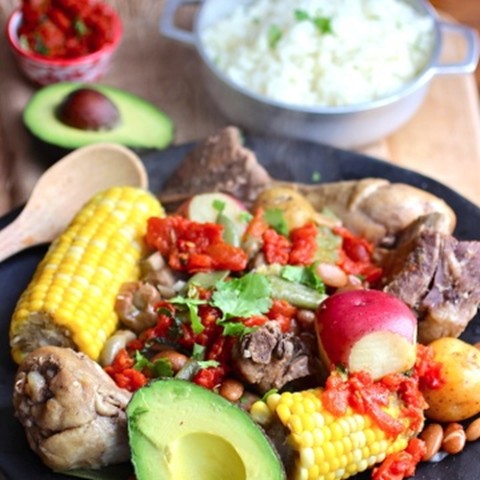 Cocido Boyacense
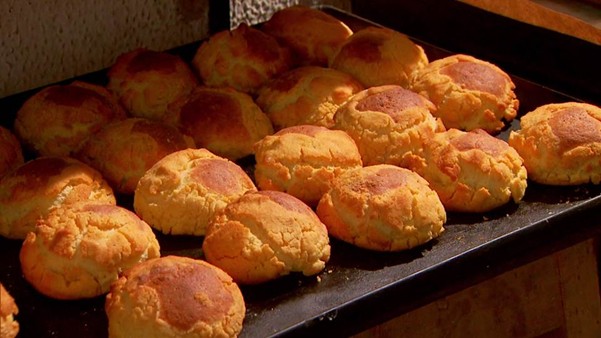 Garullas
Colombian baked goods, or amasijos, are among some of the most traditional foods in the country. Colombian bakeries serve many delicious traditional pastries and baked goods, but there are three that you absolutely must try when visiting pueblos in Boyacá.
Almojábanas are a type of corn cake made with the most delicious cheese. The salty and slightly sweet bread is a great accompaniment to a hot chocolate or a fresh cup of coffee. Pandeyucas are another favourite that is perfect for a quick snack. This slightly chewy and delicious cheese bread is made with yuca (cassava) flour.
The delicious garullas are similar to bread made with curd cheese, butter, sugar, eggs, flour and cornmeal. They are particularly popular in all of Boyacá and of course, Monguí.
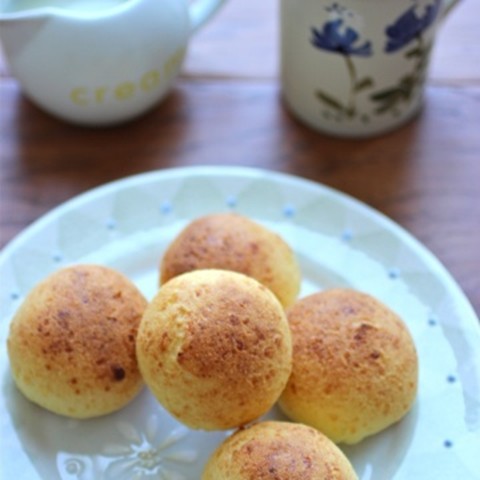 Almojábanas
Monguí, Boyacá, is a fabulous pueblo that combines history, culture and nature in a charismatic environment.
No matter your interests, there is a wide variety of things to do and see. Colonial architecture, hiking through the páramos, or simply enjoying meandering through its cobbled streets, Monguí has something to offer every visitor.
Come and discover the magic of this wonderful Colombian pueblo, with its rich cultural heritage and the warm hospitality of its inhabitants, will leave you with unforgettable memories and a desire to return.
Like to create or customize a fantastico package tour of Colombia? Use our Plan My Trip page to start planning your dream Colombian vacation now!