
PUEBLOS PATRIMONIO PLAYA DE BELÉN
(Colombian Heritage Towns: Playa de Belén)
The Spanish Conquistadors came to Colombia in the early 16th century with dreams of gold and visions of El Dorado. After the new country won its independence from Spain in 1819, the colonialists were vanquished. They left a legacy seen today in Colombia’s well-preserved colonial pueblos, admired by both locals and visitors.
Experiencing a colonial pueblo and its history makes Colombia a truly unique travel destination. Include Pueblos Patrimonio in your trip—they’ll take you back to Colombia’s age of exploration and colonialism.
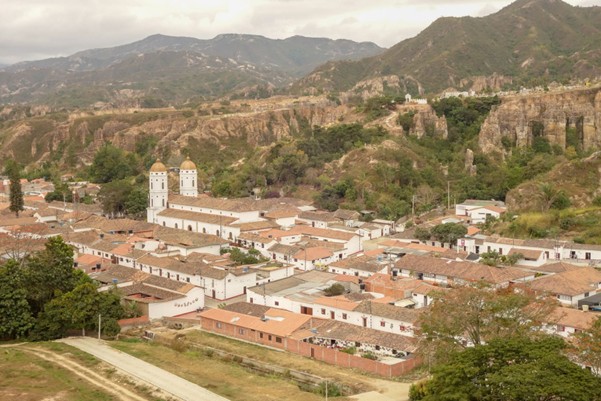 Playa de Belén
Playa de Belén is one of Norte de Santander’s most beautiful towns and a designated Pueblo Patrimonio. This municipality has an inspiring architecture that transports visitors to times of old.
Playa de Belén has a unique landscape among Pueblos Patrimonio, though it’s also one of the hardest to reach. Playa de Belén is a just reward for the truly intrepid and dedicated travellers.
This tiny pueblo packs three streets, a gold-capped church, and endless cobblestone into its compact charm. Unlike its colorful counterparts, La Playa de Belén features a red, white, and brown patchwork of buildings.
If there is one pueblo that deserves to be called off the beaten path, surely it is Playa de Belén. Thus, the chances are that if you do visit La Playa de Belén, you will likely be the only visitor in the pueblo. With outstanding colonial architecture, unique rock formations and the quintessential experience of a sleepy Colombian pueblo, Playa de Belén is well worth the effort to visit.
WEATHER AND CLIMATE
Playa de Belén has a tropical savannah climate with consistently warm temperatures, moderated by altitude. The period from December to March is fairly dry, while the rest of the year experiences some rainfall.
Daily high temperatures are around 25°C/77°F, rarely falling below 22°C/72°F or exceeding 28°C/82°F. Low temperatures are around 18°C/64f, rarely falling below 16°C/61°F or exceeding 19°C/66°F.
Precipitation is fairly consistent during the year. The average rainfall during the summer in Playa de Belén is essentially constant, remaining about 71mm/2.8 inches throughout, and rarely exceeding 170mm/7 inches or falling below 15mm/0.6 inches.
The pueblo is situated at 1,450m/4,760 feet above sea level and has a population of about 9,000 people. Light tropical clothing is advised, along with good-quality hiking boots. High-factor sunscreen and hats are essential, especially at altitude.
THINGS TO DO AND SEE
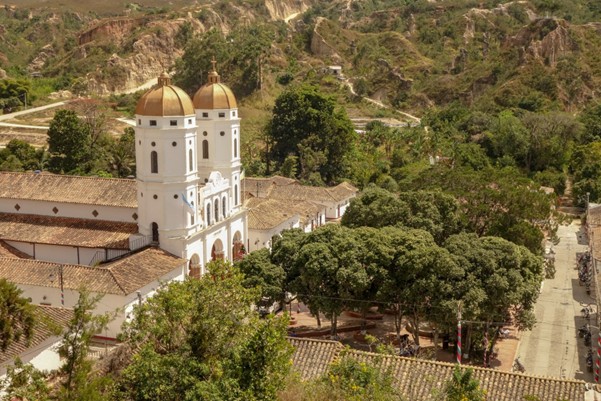
The best way to see the main attractions of Playa de Belén is on foot. The principal attraction in this remote pueblo is the colonial centre, which features three cobbled streets and a small central plaza dominated by the church with twin domed belltowers.
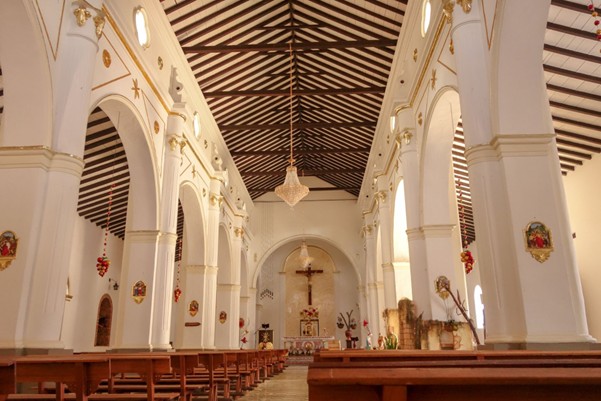
A good starting point for exploring the pueblo is the beautiful church that stands out among the surrounding vistas.
 We work with and recommend booking flights with www.kiwi.com
Although founded in 1862, the pueblo has made immense efforts to maintain a uniform colonial architectural style.
An interesting activity in Playa de Belén is visiting the Mirador de los Muertos, where the town cemetery lies. With its bright white crosses and tombstones, the cemetery is actually an intriguing place. Possibly one of the most picturesque cemeteries anywhere, this is an unusual choice to include on a hike.
However, with panoramic views of Los Estoraques and across to the Mirador Santa Cruz, it provides yet another perspective on this unique landscape.
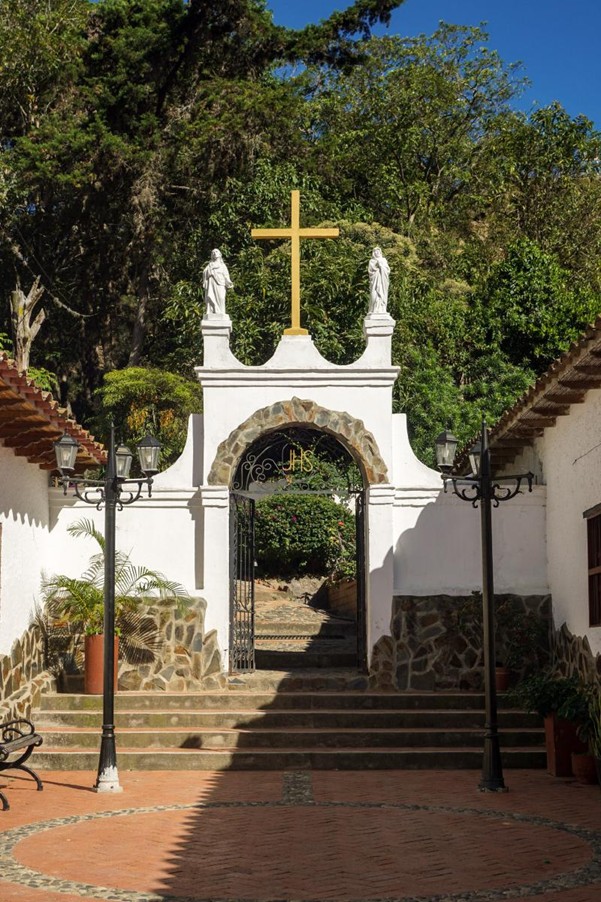 The cemetery entrance
Parque de Los Estoraques
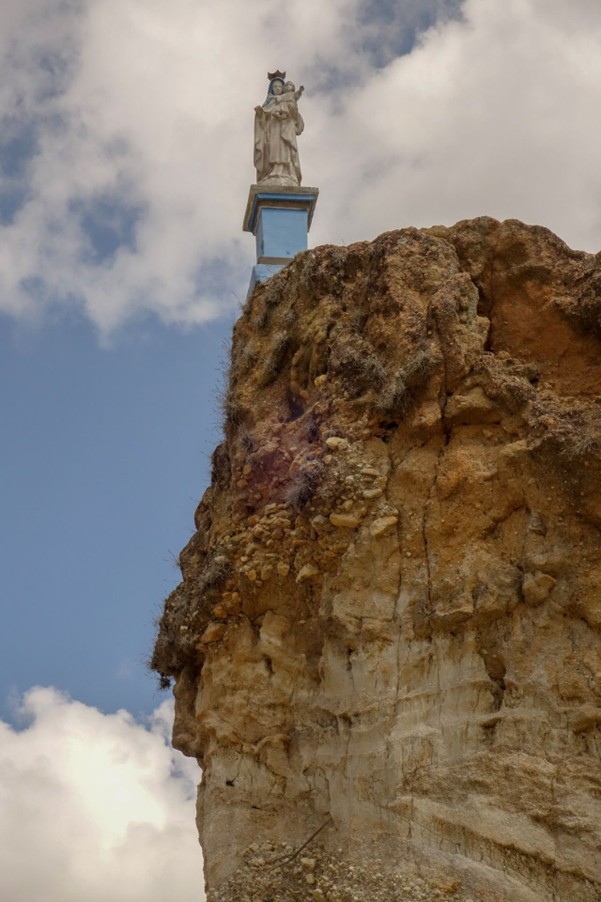
If you venture just a few minutes outside of the pueblo, there is Los Estoraques. This 640-acre/259-hectare protected park features towering rock formations that have been sculpted by erosion due to wind and rain over thousands of years. This park features unique rock formations, more concentrated and dramatic than anywhere else in Santander and Boyaca, right next to the pueblo.
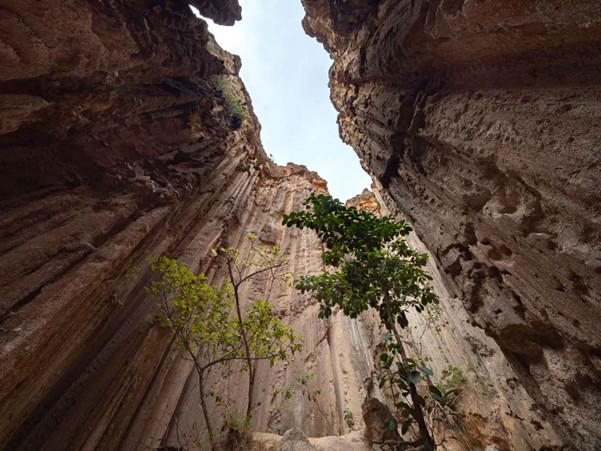
Much like the backdrop to a science-fiction movie, the passage of time has helped to carve out the granite, sandstone and sedimentary rock landscape into a weird world of pedestals, columns and caves. Sheer cliffs and oddly stacked formations create a truly unique landscape
You can appreciate this wonderful sight up close or from a distance. However, wandering through the park and climbing up to vantage points to peer in between them is at times a mesmerising experience. Keep an eye out for snakes!
 Begin organizing your dream Colombian getaway right away by using our Plan My Trip page!
After Los Estoraques, before heading back down to the pueblo, continue walking through the terrain to contrast the arid landscapes of the park with the green cultivated fields and sub-Andean natural vegetation. Among the farm fields, you will see onion and bean fincas (farms), two of the main products cultivated in the region. The pueblo often picks onions and sells them as one of its main culinary products.
The beans make up the region’s typical bean broth, with ruya, soft bits of rolled corn dough cooked in the soup.
One of the special places to visit in Playa de Belén is Los Pinos, where you will find trees of enormous proportions and where you can take incredible photographs.
GASTRONOMY
The gastronomy of Santander, in the heart of the Andes Mountains in north-central Colombia, stands out for its flavour, variety and quality, making it one of the most representative in the country. The traditional dishes of this region reflect the cultural influences that have shaped Santander’s history over time.
Here are some of the region’s most loved specialities:
Mute Santandereano
The Mute Santandereano is a thick, hearty soup that combines beef ribs, pork, tripe, chickpeas, corn, potatoes, yucca and different spices.
Its preparation is very time-consuming and requires several hours of cooking. It is often served with avocado and rice. This traditional dish reflects the delicious, rural character of Santander’s cuisine.
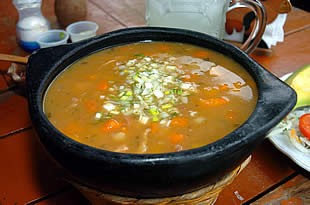 Mute Santandereano
Carne Oreda
This typical dish features beef seasoned with local spices, salt, lemon, and sometimes beer. The sun-dried meat gains its distinctive texture and flavor, usually served with yucca, and is a popular dining choice.
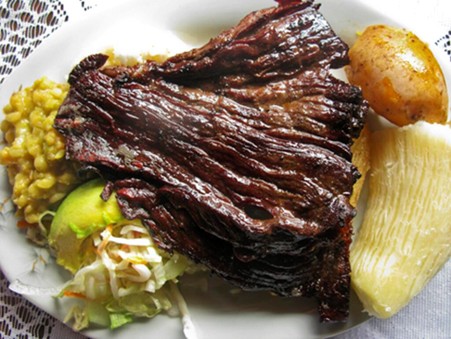 Carne Oreda
Cabro Asado
Roasted goat is one of the most exquisite and traditional dishes of Santander.
They cook the goat in the oven or on the grill and serve it with potatoes and yucca. Chefs prepare this dish with intense flavor and detail, making it a delicacy enjoyed on special occasions.
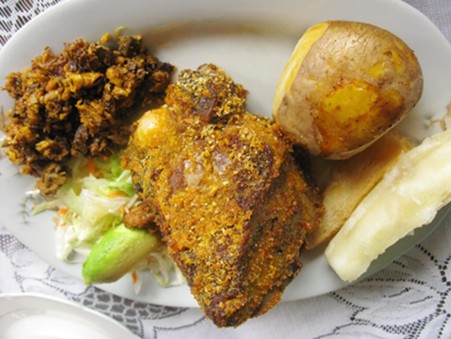 Cabro asado
Cebollitas Encurtidas
Spicy, pickled, baby red onions. Onion crops are one of the main economic drivers of the region, so their pickled version gained popularity. They pack a spicy touch and are typically enjoyed alone or with stews or meats.
HOW TO GET TO PLAYA DE BELÉN
To arrive at Playa de Belén, it is easiest to depart directly from Cúcuta, which has an airport. Alternatively, take a long-distance bus from any of the main cities of Colombia, such as Bogotá or Medellín, to Cúcuta.
Once in Cúcuta, from the Bus Terminal board a bus to Ocaña. This journey is about 4 hours. Once there, a taxi to Playa de Belén will take between 30 and 40 minutes.
FESTIVALS
Playa de Belén is vibrant with events, fairs and festivals throughout the year. Holy Week is celebrated with devotion, while the Fiesta de San Antonio de Padua takes center stage in June, followed by the Fiestas de la Virgen del Carmen in July.
In September, the Fiestas de la Virgen de las Mercedes fill the town with happiness. November sees the Fiestas de Santa Catalina de Alejandría and finally in December, the Festival del Retorno and the Birthday of La Playa de Belén.
With its combination of colonial architecture, unique natural landscapes and culture, La Playa de Belén is a destination that offers something for everyone. As a member Pueblos Patrimonio Network, this pueblo is a hidden treasure worth exploring.
Playa de Belén is the perfect place for your next adventure.
Like to create or customize a fantastico package tour of Colombia? Use our Plan My Trip page to start planning your dream Colombian vacation now!