
LOST CITY – COLOMBIA
 We work with and recommend booking flights with www.kiwi.com
For many travellers, Colombia offers a healthy dose of the unknown, and it does not get more mysterious than the country’s famed archaeological site, La Ciudad Perdida, which translates as the Lost City.
The warm waters of the Caribbean Sea wash up on the shores of Santa Marta, the gateway to the Tayrona National Natural Park and indeed to the wider Sierra Nevada de Santa Marta mountains. These are the highest coastal mountain ranges on earth, home to far-reaching, lush layers of dense greenery. It is also home to the indigenous tribes of the Kogi, Wiwa, Arhuacos, and Kankuamo, and also to Teyuna, an elaborate, terraced jungle citadel dating back to 800 AD, better known to visitors as La Ciudad Perdida.
Built in 800 AD by the Tairona people, some 650 years before Peru’s famous Machu Picchu, Ciudad Perdida lies in the Sierra Nevada de Santa Marta and Teyuna Archaeological Park in the Sierra Nevada region of northern Colombia, and originally it was named Teyuna. They lived there until the 16th century, when the Spanish invasion forced them to abandon their homes. Gnarled roots and creeping foliage slowly enveloped the land; it was almost completely overgrown when treasure hunters rediscovered the archaeological site in the early 1970s. The story goes that one of those treasure seekers shot a wild turkey while out in the jungle, and the bird happened to fall on one of the lower sections of the staircase leading to Teyuna. The group followed the steps to its summit and in doing so accidentally made one of the great archaeological discoveries of the 20th century.
Hidden in the jungle for more than a thousand years and only accessible by a 44 km/28 mile trek through inhospitable terrain, visiting Ciudad Perdida gives travellers the chance to live out their Indiana Jones fantasies as they battle rock scrambles, steep ascents and numerous waterfalls along the way, Biblical downpours with inescapable heat and insects that deeply penetrate the skin.
These might sound like scenes from an apocalyptic adventure movie, but on the trail to Colombia’s Ciudad Perdida, they are all in a day’s trek. The prize at the end of the trail is enchanting, cloaked in spellbinding history and ancient traditions. However, it requires plenty of fortitude to reach the promised land.
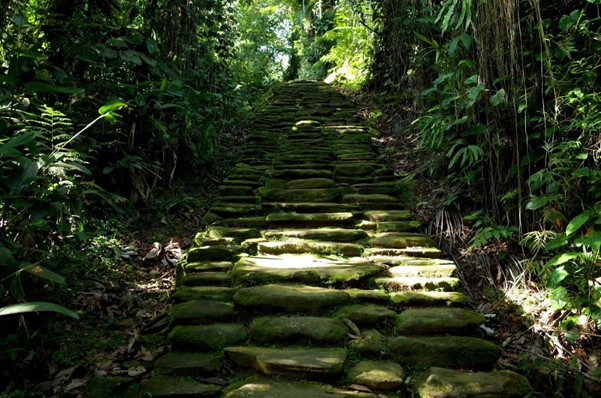 The staircase as it approaches Ciudad Perdida
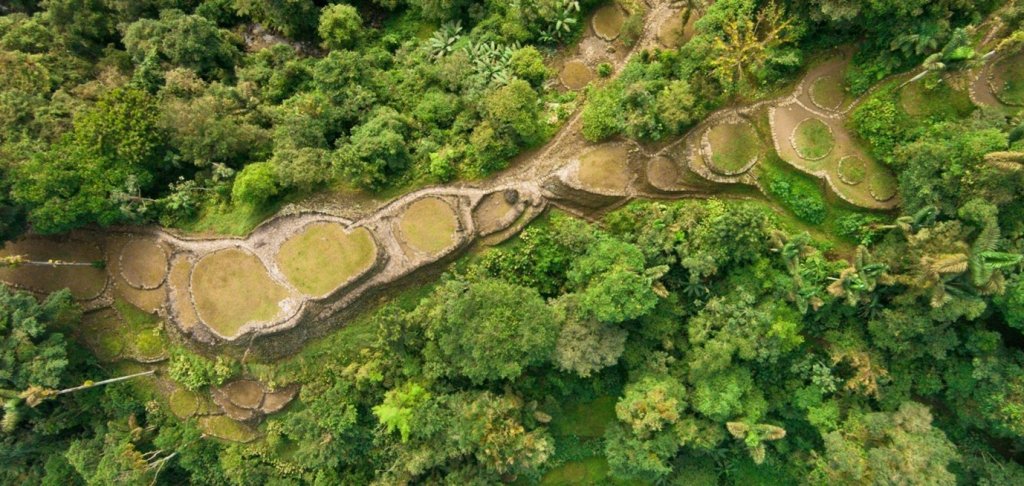
The ancient archaeological site is reached by ascending a series of 1,263 stone steps, which are hidden along the banks of the Buritaca River. The staircase takes you from the jungle floor up to the Ciudad Perdida and is an incredible feat of engineering in and of itself. The isolated site consists of more than 150 terraces, plazas, and stone paths that cascade down the mountainside. Thought to have once been a commercial centre for trade, only a fraction of the Ciudad Perdida has been excavated by archaeologists, giving it an eerie, haunted atmosphere.
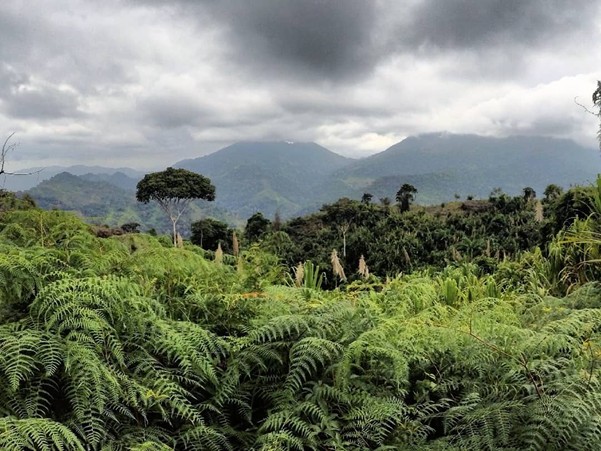 The view of the jungle from Ciudad Perdida, also known as Teyuna or the Lost City
Until relatively recently, the Ciudad Perdida was largely protected from outside influence, not only because of its isolated, dense jungle location but also because of the drug warfare and paramilitary activity that had plagued the jungle around Ciudad Perdida since the mid-1960s.
Today, the Colombian military maintains a strong, visible presence throughout the area, with tour groups often sharing camps with soldiers at night. As security in Colombia is now much improved, the Ciudad Perdida has soared in popularity among travellers.
You cannot visit the Ciudad Perdida without being part of a tour group, and the local communities only allow select companies to make the trip. The 44 km/28 mile trek lasts from three to six days, depending on how fast or slow you like to hike and unlike Peru’s most famous ancient archaeological site, Machu Picchu, luxury does not pave the way. There are no shiny trains full of well-to-do tourists chugging through the mountains or fancy lodges. Everyone journeys on foot and sleeps in sheltered camps in a bunk or hammock.
A popular route taken to the Teyuna, or the Lost City, involves five days of jungle trekking, but that figure will change depending on which route is chosen. Odds are that the trek will either start or finish at Machete, a sleepy pueblo on the fringes of the jungle, said to be so named for the way they once settled arguments there.
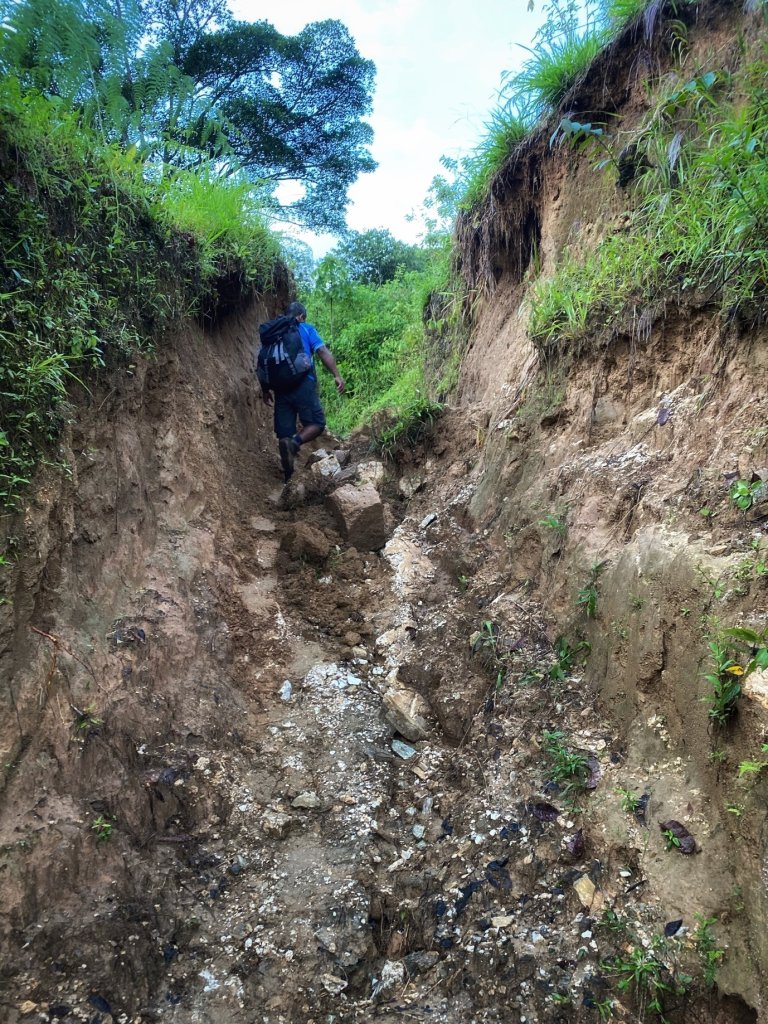 The trail when dry
The archaeological site itself is remarkable. It rises in layering stone circles up to a top circle. Here the mamos, spiritual leaders of the indigenous people, who lead the decision-making in their tribes, would come to communicate with the spirits of the forest and jungle, all the while gazing out over all the amazing jungle.
Before entering Teyuna, it is normal for guides to lead a cleansing ritual at the first circle to leave negative spirits behind. Each circle represents a moment of creation for these mamos, be it for the trees, rivers or mountains, and they were built so the tribes could keep these moments in mind as we live.
 Begin organizing your dream Colombian getaway right away by using our Plan My Trip page!
“What care or pain we cause to the Earth, we also cause to ourselves.”
The Kogi have lived in the area for countless generations and believe they are the descendants of the Tairona people who once occupied the Ciudad Perdida. Though they knew about Ciudad Perdida, they kept quiet for fear of attracting the very crowds that now visit the site, which could lead to the disruption of local indigenous populations and the destruction or looting of the site.
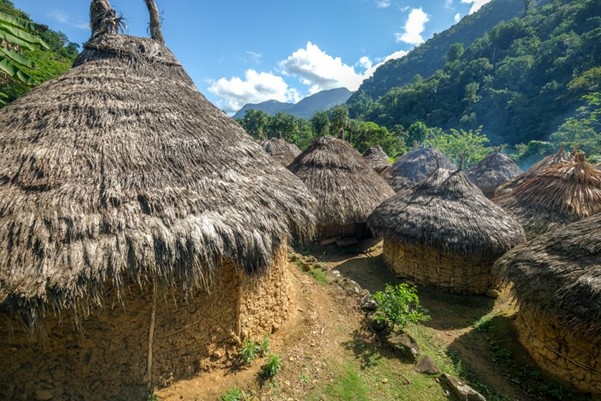 Mutanyi pueblo
There are many challenges facing the Cuidad Perdida and even more for travellers who wish to visit. However, even with the knee-deep mud, the swarms of mosquitoes and almost vertical climbs, the Ciudad Perdida is well worth the effort.
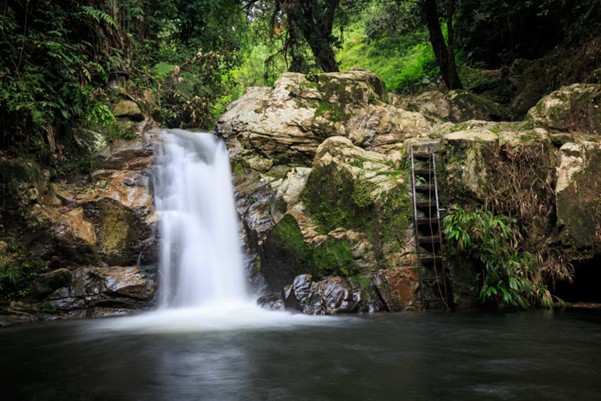 One of many waterfalls
Nursing bruises and bites, travellers are able to discover an abandoned city that is still revealing its secrets, exploring green thickets and stone paths through dense jungle, bathing in waterfalls, sleeping among ruins and most majestic of all, watching the clouds spill across the terraces at sunset each night.
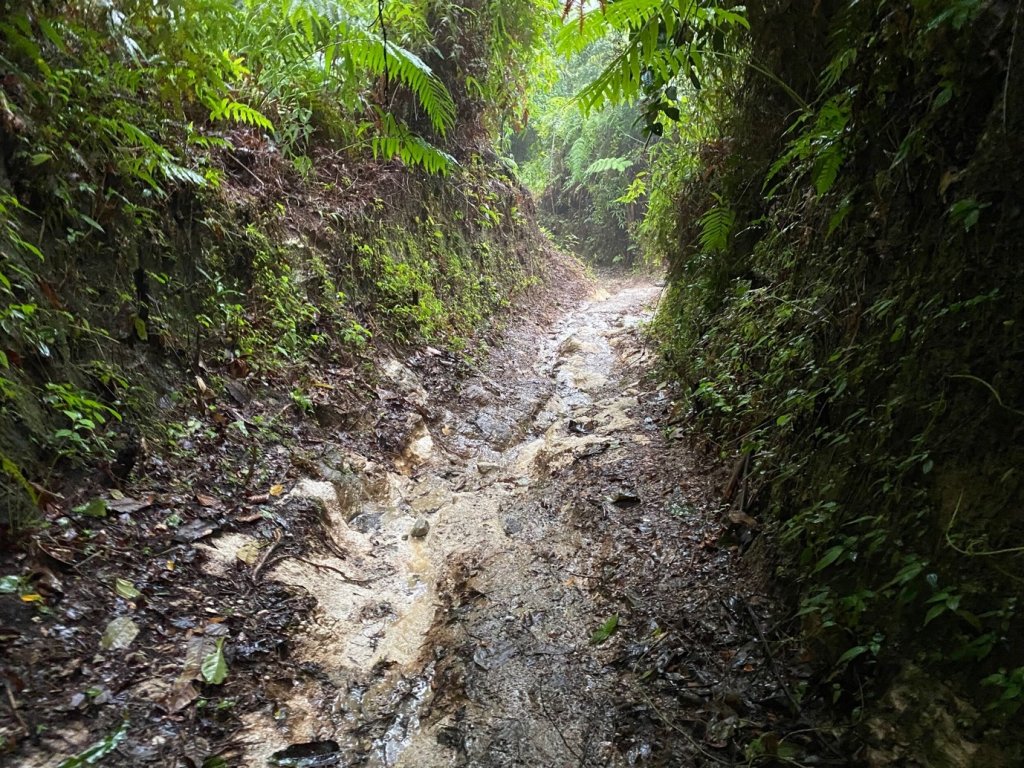 The trail is carved out by water from huge and frequent rains
Colombia’s Ciudad Perdida is fast becoming one of the world’s wonders, featuring on must-see lists of historical sites and ancient ruins for visitors from across the globe.
Although when tourism started in Ciudad Perdida in the 1980s, it had no benefits to the indigenous people, this changed in 1991 with a new constitution where the indigenous people were recognised as such and given autonomy over their land. Thus, since tourism to Teyuna now comes under the control of the indigenous people, if they ever did want to stop it, they at least have the power to do so. For now, at least, they have chosen to make it work for them.
Nowadays, only one hundred and sixty people are allowed to visit the Ciudad Perdida on a given day so as to protect the site and the trek is closed in September, during which the temples are used for meetings between mamos from the indigenous tribes, just as it was all those years ago.
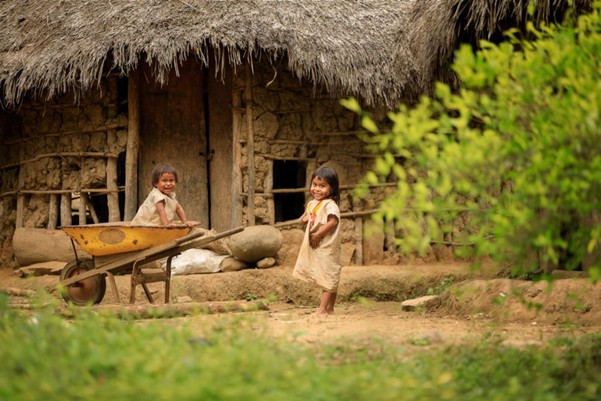 Indigenous children
It is not glamorous, but it is an incredibly rewarding experience.
Quick Facts
Distance: 44 kilometres/28 miles
Elevation Gain: 2,650 metres/8,694 feet
Max Altitude: 1,190 metres/3,904 feet
Duration: 3 – 6 days
Difficulty: Hard
Like to create or customize a fantastico package tour of Colombia? Use our Plan My Trip page to start planning your dream Colombian vacation now!