
The Medellin Flower Festival
(Feria de las Flores Medellín)
Antioquia, the area in northwest Colombia that counts Medellín as its capital, is one of the largest cut flower-producing regions in the world. With ample sun, year-round spring temperatures and regular rain, the climate in this mountain region ideally suits an incredible conglomeration of blooms. Seventy percent of cut flowers imported to the U.S. come from Colombia’s prolific flower industry.
Medellín is a city ttransformed,and there is no better way to experience this wonderful city than by visiting its annual Feria de las Flores (Flower Festival), the highlight of which is the Desfile de Silleteros (Flower Parade), held every year at the end of July and into August.
The original Flower Festival was born in a small village outside of Medellín, the beautiful mountain pueblo of Santa Elena. One of the local epicenters of flower growing for the region and in Colombia in general, Santa Elena is now a tradition.
An important part of Antioquia’s culture for more than 50 years, Santa Elena is 45 minutes east of Medellín. The sunbathed fields surrounding Santa Elena make up the traditional home of Antioquia’s flower industry.
Flower vendors in the area, known as silleteros, a name derived from the wooden seats (silletas) that were used to manually transport people in a distant colonial past. They have long been renowned for their artistry and for the quality and variety of their flowers.
In 1957 the very first Medellín Festival de Los Flores (Flower Festival) was inaugurated. By all accounts, it was a very modest event by today’s standards, attended by just a few hundred people in the city of Medellín. About forty silleteros made the trip that year from Santa Elena, and since the locals received them with such exuberance, the display became an annual event.
The modern-day Flower Festival has gradually accumulated events over the decades and has now transformed itself into a massive celebration that transpires over several weeks towards the end of summer.
For weeks on end, the city of Medellín and its surrounding communities explode into a cataclysm of colors, sounds, anand,f course, the glorious flowers of Antioquia. Many consequently flock to Medellín during this time of year to experience these extraordinary festivities.
The origins of the Flower Festival come from a somewhat dark chapter in Colombia’s and the world’s history. The flowers that participants wear on their backs are there to commemorate the end of slavery in Colombia.
We work with and recommend booking flights with www.kiwi.com
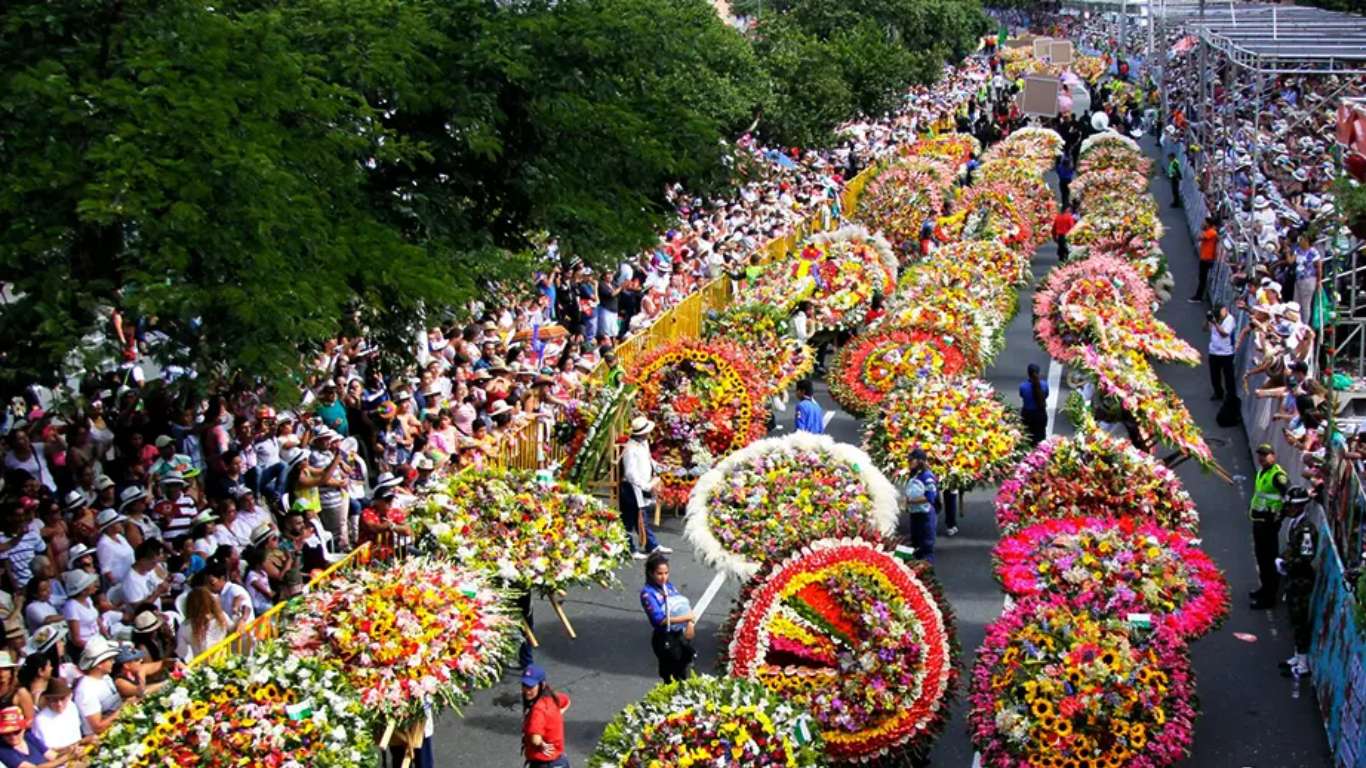
Today, the Desfile de Silleteros (Silleteros Parade) is without a doubt the central event of the festival. It includes hundreds of silleteros carrying beautifully crafted floral arrangements on their backs. It creates such a tremendous explosion of vibrant color.
The locals who shepherded humans and goods across the mountains were known as silleteros and were utilized as serfs by their Spanish Conquistadors to carry not only goods but also the Spanish lords across mountain passes.
They would hoist their Spanish masters up on their backs, negotiate steep hills and pass through treacherous territory. This was undertaken in the most inaccessible of places that were considered too unwieldy for horses or mules.
Sometimes this would involve carrying hundreds of pounds of weight over mountain passes at very high elevations.
It was considered very rare for even healthy silleteros to live beyond the age of forty.
Silleteros still play an important role in the cultural identity of Antioquia. However, nowadays they only carry goods across mountains and no people or live animals.
The Silleteros of today symbolize the resiliency of the mountain peoples of Antioquia. This sense of resiliency has spilled over into the silleteros of the Flower Festival tradition.
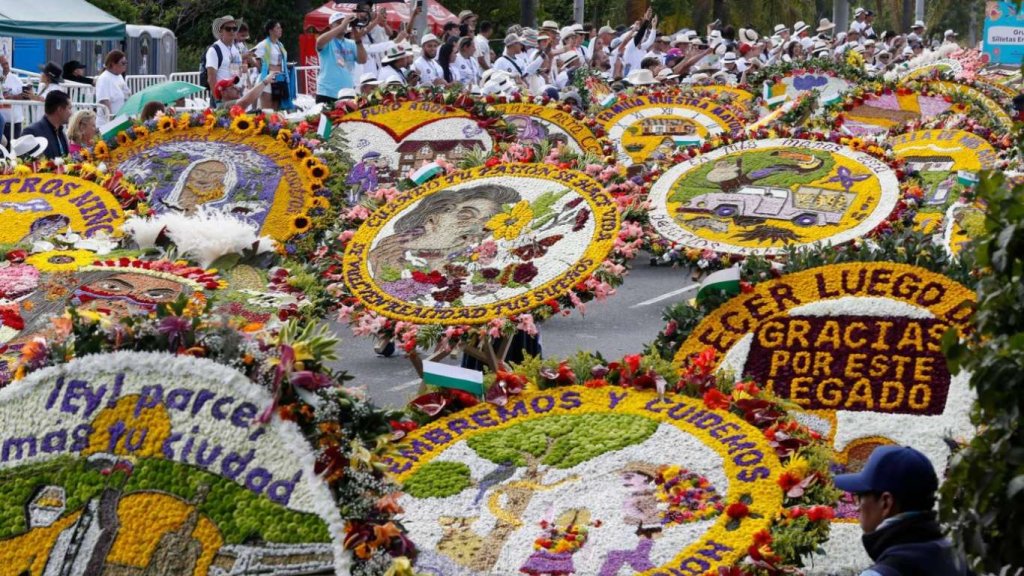
The modern silleteros only carry flower arrangements on their backs to honor the work of their ancestors. The Silleteros Parade is arguably the most impressive part of the festival. A procession of large lightweight frames decorated with incredibly hued flowers is an explosion of color and a photogenic celebration that is held on the last day of the festival.
Begin organizing your dream Colombian getaway right away by using our Plan My Trip page!
Santa Elena remains the staging area for the Flower Festival. In the electrifying days leading up to the festival, silleteros arrange any amount of flower buds onto three types of silletas (chairs).
The more traditional silletas are worn on the back and closely resemble the wooden seats previously used for human transport generations ago.
An inset wooden grid in the silleta holds flowers at a 45-degree angle. Before modern-day transport, vendors carried flowers door to door to Medellínsidents on silletas.
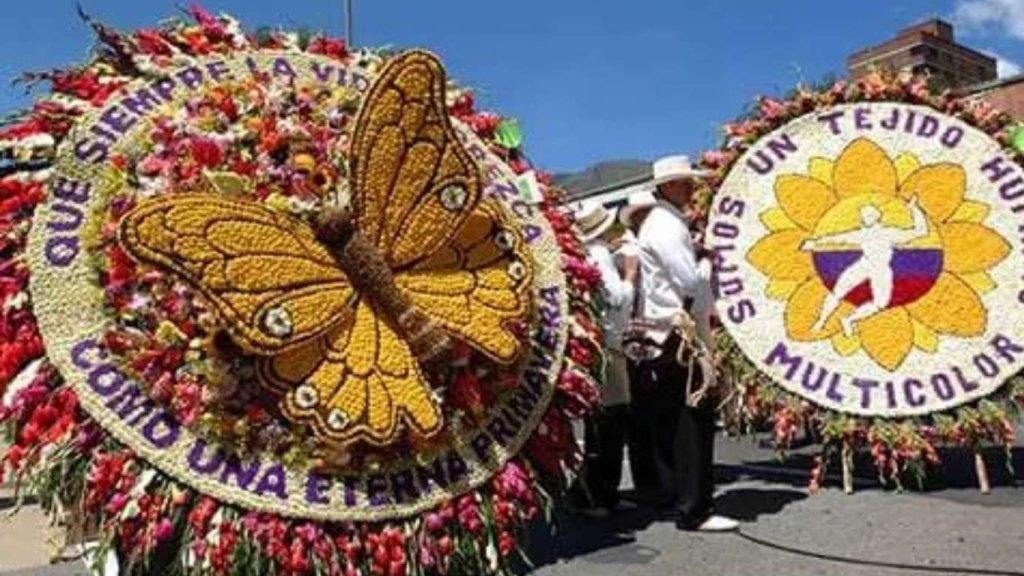
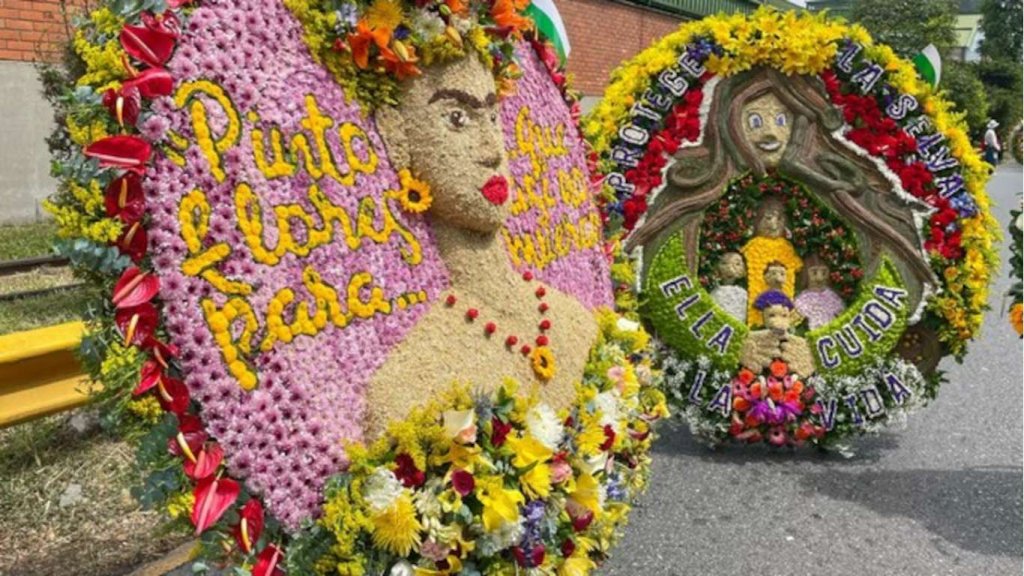
The larger silletas emblemáticas (emblematic silletas) add a robust base to the traditional design, which results in a floral diorama, which displays vivid scenes and written messages that are designed with contrasting blooms and flexible pine buds.
The silletas monumental (monumental silletas) are the largest class of silletas, which are massive interpretations of either of the two smaller ones. Nowadays these monumentales are often commercial silletas, sponsored by companies.
The weight of these huge arrangements can often reach 170 pounds/77 kilos. Those silleteros that bear them are often elders, revered in the Paisa (farming) culture and honored by adoring parade-goers.
The tradition of the silletas monumentales is a family affair and is passed down with pride through generations.
Take the first step in planning your dream Colombian vacation by using our Plan My Trip page now!
The festival has many varying, interesting and enthralling events and festivities for all to engage, regardless of age.
With events include convoys of festively decorated chivas (festive buses, common in all of Colombia), processions of hundreds of horses and traditionally clad riders, a children’s parade and many others.
The Desfile de Autos Clasicos y Antiguos (Parade of Classic and Antique Cars) sees three hundred or so classic cars slowly undertake a procession over 19 km/5.6 miles.
There is also a display with performing troubadours, the flower fair concert, and other participants as part of the celebrations.
An additional attraction is that the majority of the events in the Flower Festival are free.
Even so, it is the people of the Antioquia who make this event so unforgettable. Some of the finest flowers in the world come from Antioquia, and the artistry of the silleteros, who spend all year practicing and refining their original designs, is legendary throughout South America.
Flowers express nature’s beauty and the Paisa people, who send their blooms to all parts of the globe, reflect this beauty with an abundance of heart, generosity and goodwill.
The Flower Festival presents a showcase of Medellín, a city of resilience, hospitality and tremendous charm.
Like to create or customize a fantastico package tour of Colombia? Use our Plan My Trip page to start planning your dream Colombian vacation now!