
ANDES NATURE TOUR
 We work with and recommend booking flights with www.kiwi.com
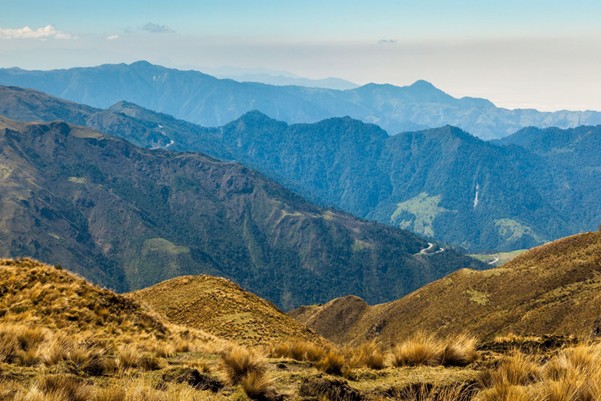
Some 3,500 metres/11,483 feet up in Colombia’s Sumapaz mountains, the mist is rushing and the air is cold and thin. A thousand frailejónes, plants of human height and girth, stand like silent guardians over the landscape, their thick brown stems and silver green crowns like apparitions in the fog.
This is the páramo, an ecosystem in the high Andes, where these strange shrubs are exquisitely adapted to the often fierce ultraviolet radiation, low temperatures, and high humidity. Slowly over the past few years, this unusual environment has begun to give up its secrets.
The Andes Mountains are the mountainous spine that dramatically dissects South America from north to south, crossing seven countries: Argentina, Bolivia, Chile, Colombia, Ecuador, Peru, and Venezuela. The continent’s most magnificent natural attraction stretches for over 7,500 kilometres/4,660 miles from Venezuela all the way to Patagonia and has spawned, in one way or another, the continent’s incredible natural biodiversity.
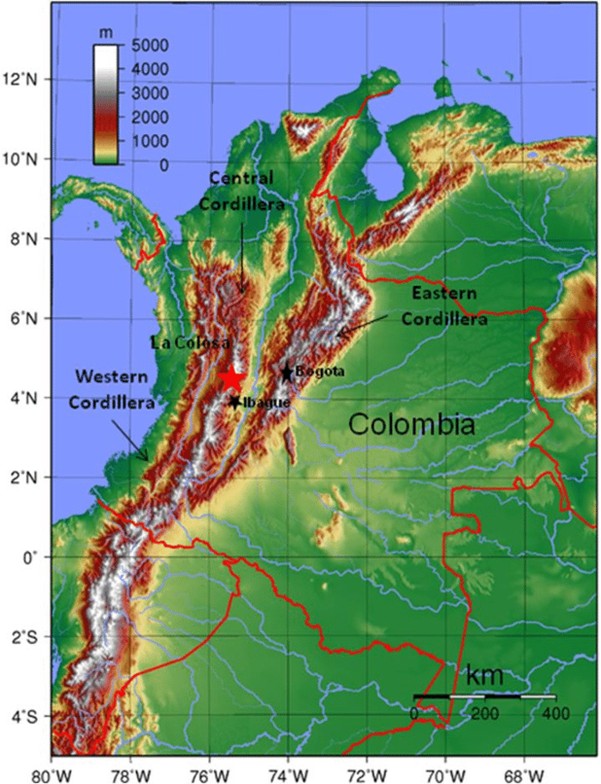
Contrary to popular belief, the Andes is not one mountain range but a series of distinct ranges, also known as cordilleras. Some of these peaks are volcanic, surrounded by otherworldly lava formations and crater lakes. Elsewhere lie high-altitude plateaus, cloud forest, and an Alpine tundra habitat unique to the Andes, known as páramo.
As water vapour from the Amazon moves west, it rises and cools, causing the clouds that perpetually blanket the Andes. The extraordinary cloud forests of the Andes are a type of mid-altitude tropical rainforest extending from about 3,000 feet/914 metres in elevation to about 8,000 feet/2,438 metres.
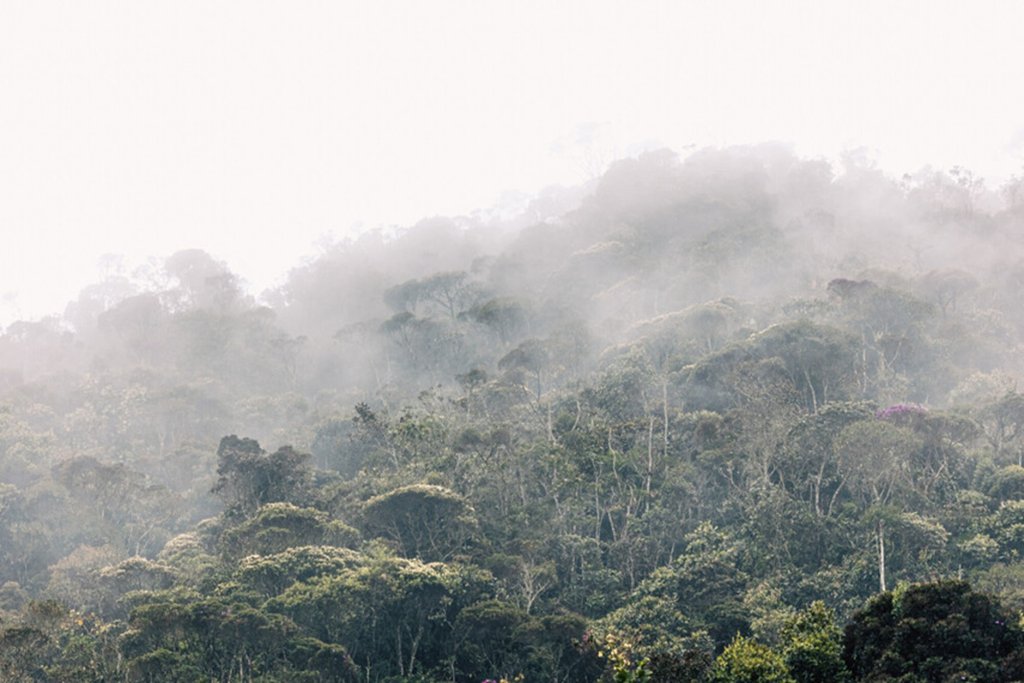 Fog hangs over the cloud forest
When humid air, transpired from the billions of trees in the lowland Amazon, moves west and up the mountain slopes of the Andes, some of it condenses and falls as rain or remains in the form of low clouds and mist.
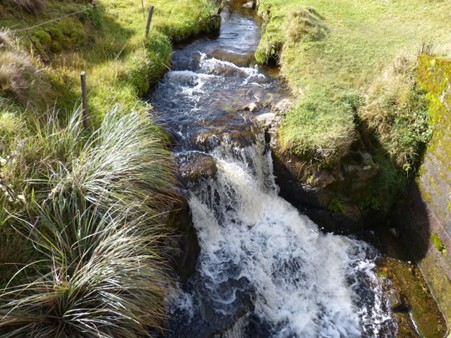
The terrain in Cloud Forests is often on steep slopes. These higher elevation forests are characterized by waterfalls and fast-moving, shallow rivers. Trees are often covered in plants called epiphytes, which capture much of the moisture found in cloud forests. Clouds and mist condense on the epiphytes’ leaves and pool at the bases of epiphytes, providing habitat for insects and some types of frogs.
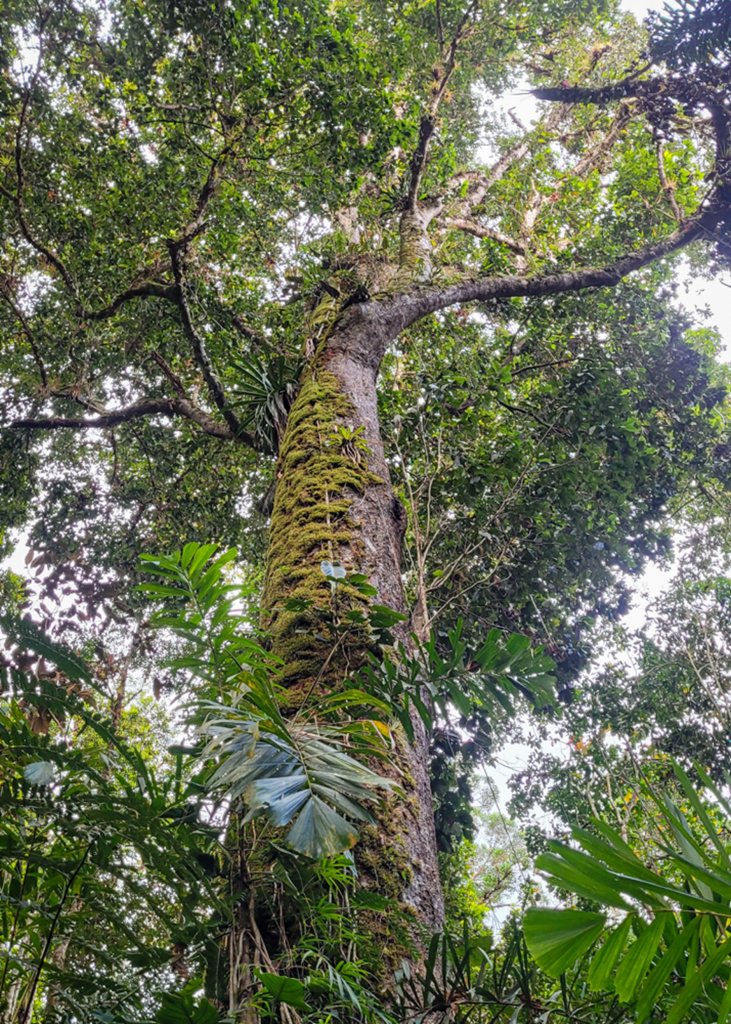 Epiphytes on an old oak tree
Andean cloud forests are a top priority for biodiversity conservation because they are home to a remarkable number of endemic species. The three branches of the Colombian Andes, the Cordillera Occidental, Cordillera Central and Cordillera Oriental, are home to valleys, canyons and plateaus that fill the area to the brim with breathtaking beauty. Among these majestic mountain ranges is a unique river system composed of the two most important rivers in Colombia, the Magdalena and the Cauca.
The Andes region’s diverse ecosystem is another of the area’s attractions. This ecological diversity is reflected in its numerous natural parks, including Los Nevados National Nature Park, El Cocuy National Nature Park and the Galeras Volcano Wildlife Sanctuary, home to hundreds of plant and animal species, many endemic to the Andes.
Everything about South America is directly related to its existence: not only the dramatically different landscapes but also the indigenous cultures and their histories, their diverging cuisines, the immensely diverse wilderness and the incredible wildlife, among countless other aspects.
The Andes Mountains were created over 50 million years ago, when the South American and Pacific tectonic plates collided. It is a collection of numerous mountain chains which join together in what are called orographic knots.
These are the high-altitude plateaus, the kind that have created the Bolivian Altiplano, which have allowed for the establishment of human settlements. Modern-day cities like La Paz, Quito, Arequipa, Cuenca, Bogotá and Medellín are among the most famous cities found on Andean plateaus.
Renowned for its incredible biodiversity, the Andes Mountain Range comprises three different main climatic zones, known as the Tropical Andes in the north, Dry Andes in the centre and Wet Andes in the south.
The ranges are home to an astronomical array of wildlife, including just under 600 different species of mammals, an equal number of reptile species, 400 species of fish, over 1,700 types of birds, more than 1,000 amphibians and way over 30,000 species of endemic plants.
Frailejónes, those amazing high-altitude shrubs, are known scientifically as Espeletia. They are unique plants in the sunflower family that are found in the páramos, the high-altitude tropical regions of the Andes in Ecuador, Colombia and Venezuela.
Best seen on the beautiful Páramo de Oceta trek out of sleepy Monguí, these amazing plants capture huge amounts of water and are becoming highly endangered due to the destruction of páramo land for planting potatoes.
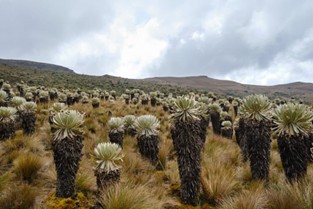 Frailejónes
The Páramo de Sumapaz is the largest alpine tundra, páramo, on the planet. The conditions are harsh, but the tundra has this earthy, rugged beauty to it. This area is fortunately protected, though, and it offers a surreal landscape well off Colombia’s normal tourist circuit.
An interesting fact about Páramo de Sumapaz is that it is home to the only native bear species on the continent, the spectacled bear or Andean bear. Spotting bears in the wild would be the highlight of any tour there.
 Begin organizing your dream Colombian getaway right away by using our Plan My Trip page!
As one of the most biodiverse countries in the world, Colombia is home to almost 2,000 bird species, which is the highest number found anywhere on Earth. It is a birder’s paradise, as you can go from the cloud forest to the páramos and lowlands and constantly see different birds.
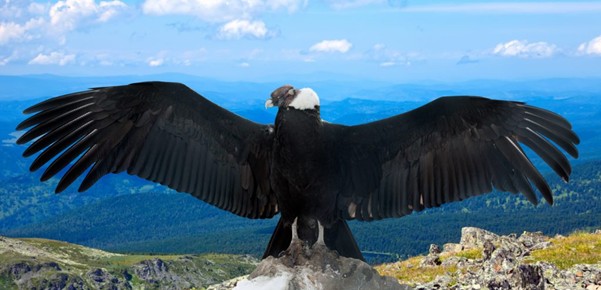
Few animals are as iconic in the high Andes as the spellbinding Andean Condor, the largest bird to take to the skies. This incredible beast boasts the largest wingspan in the bird world of up to 3.2 metres/10.5 feet and can weigh up to 15 kilos/33 pounds and has been known to live for more than 50 years. An intrinsic part of ancient Andean mythology since before the Incas, the Andean Condor still holds a revered spot in many of the region’s indigenous religions.
This fierce-looking bird loves travelling and can sometimes even be found at lower altitudes. Seeing them take flight off a high Andean peak, however, is still the most unforgettable spectacle of all.
One of the world’s most magnificent and unique birds is the Andean cock-of-the-rock, noted for its colourful males performing a lekking ritual, where they dance and squawk in order to attract a female mate. The loudest bird with the flashiest moves gets to mate with the surrounding females.
While it is often very hard to spot these colourful birds, due to their inhabiting trees in dense forest, Colombia is home to places like Jardín, where several homes have leks right in their backyard, and visitors can be invited to observe this slice of bird heaven.
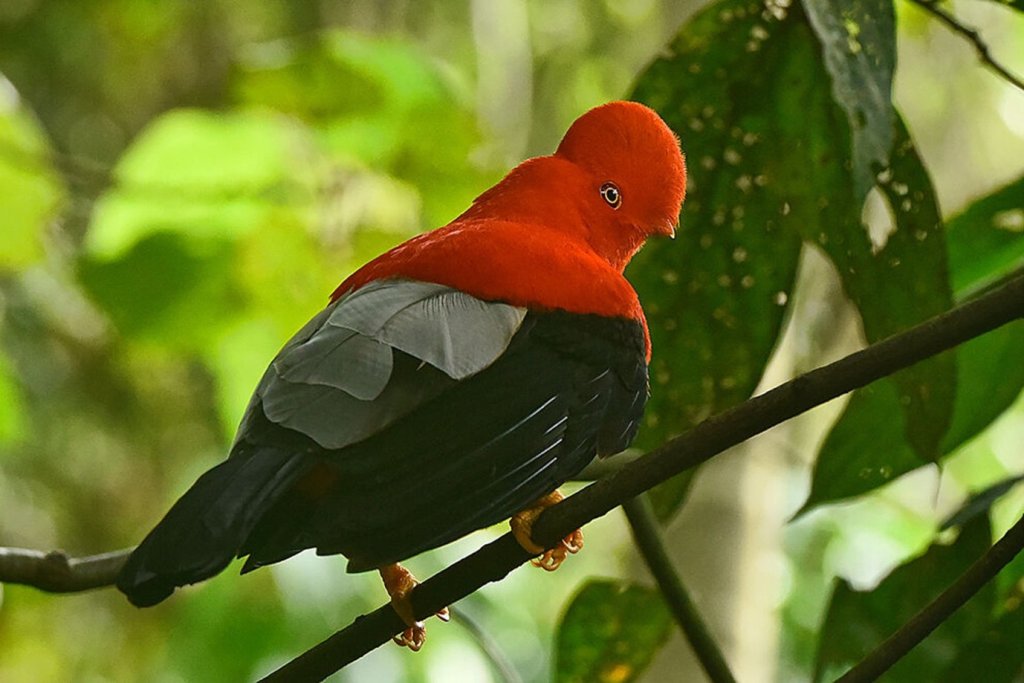 Cock-of-the-rock
Often described as one of the country’s most unusual ecosystems, Chingaza National Park runs along the eastern range of the Colombian Andes, just outside Bogotá. Hike up 13,200 feet/4,023 metres for unbeatable views of arid valleys along the Orinoco River and over 40 glacial lakes.
For animal lovers, one might be able to spot bears, jaguars, woolly monkeys and many birds that call the park home. While some prefer the freedom of exploring alone, the park also offers guided hikes and other group activities.
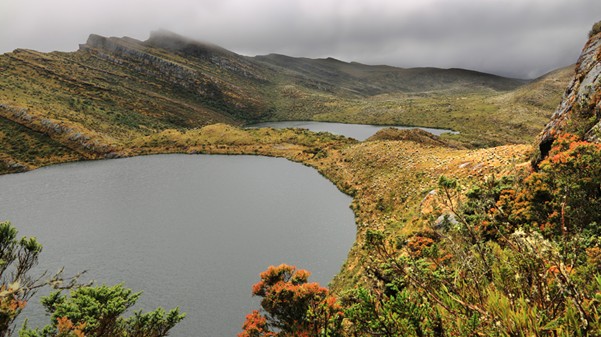 Chingaza National Natural Park
Colombia, a country with lush and extraordinarily beautiful natural diversity, hosts some of the mightiest and most varied ecosystems on the planet within its National Natural Parks/Parques Nacionales Naturales.
From the towering snowy heights of Los Nevados to the Amazonian depths of Chiribiquete and the north eastern area of El Cocuy National Natural Park, these protected areas offer a unique window into the ecological and cultural richness of the country.
These are Colombian destinations that beckon adventurers, conservationists and nature lovers to discover the beauty and conservation challenges of these vital spaces.
Here are some parks and sanctuaries well worth visiting:
North eastern Andes Region
- Los Estoraques Catatumbo Barí
- El Cocuy
- Pisba
- Los Yariguíes
- Tamá National
- Guanentá Alto Río Fonce Flora and Fauna Sanctuary
- Iguaque Flora and Fauna Sanctuary
Western Andes Region
- Doña Juana – Cascabel Volcanic Complex National Natural Park
- Cueva de los Guácharos
- Las Hermosas – Gloria Valencia de Castaño
- Las Orquídeas
- Los Nevados
- Nevado del Huila
- Puracé
- Selva de Florencia
- Tatamá National
- Otún Quimbaya Flora and Fauna Sanctuary
- Galeras Flora and Fauna Sanctuary
- Isla de la Corota Flora and Fauna Sanctuary
Colombia is a wild paradise. The only risk about travelling here is that you never want to leave!
The country is beautiful in a variety of ways – shown through its landscapes, biodiversity, traditions, people, culture and food. The Andes are Latin America’s most rewarding destination for active travellers.
For lovers of high-altitude adventures, there really is no more promising playground. From climbing to hiking, white water rafting, cycling, horse riding, skiing, stargazing, and so much more. These are just some of the phenomenal ways you can squeeze the most out of your Andes Mountain adventure.
Like to create or customize a fantastico package tour of Colombia? Use our Plan My Trip page to start planning your dream Colombian vacation now!