
Yipao (Willys Jeep) Festival
Festival del Yipao
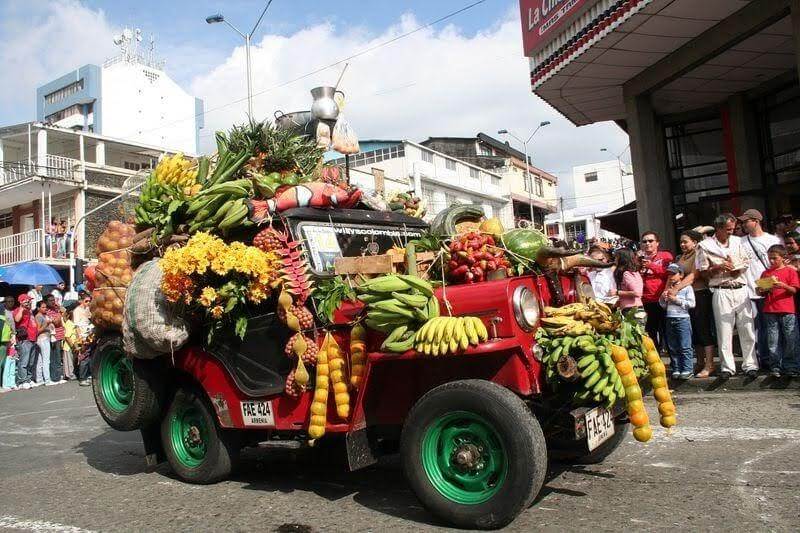
The Jeep is Colombia’s most iconic mode of transportation, especially in the coffee-growing regions where farming is an integral part of life. These rugged vehicles are used by farmers to transport massive loads of cargo as well as people between towns located in the country’s mountainous terrain.
Willys Jeeps were first introduced in Colombia in 1946 following the end of World War II. The US Army had surplus Jeeps and parts from the war, which they began to sell to the developing countries at bargain prices.
The term Yip came from the mispronunciation of the word Jeep. A Yipao means a Jeep load, the term used to refer to whatever could be carried in a yip and still allowing someone to drive it. Like the chiva (a colourful bus with partygoers), the Yipao is one of the most indigenous expressions of the landscape and folklore of the coffee belt in Colombia.
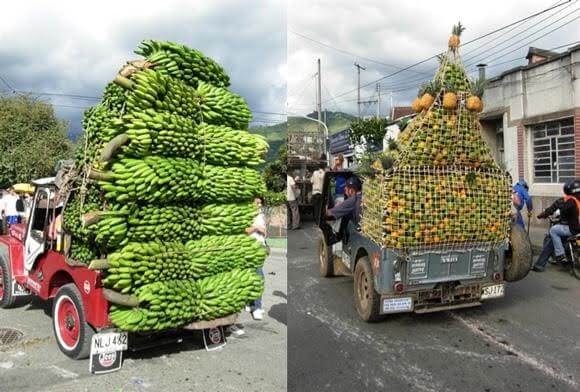
If you visit the Colombian coffee region, do not be surprised if you come across Willys or Yipaos Jeeps on the roads carrying an astonishing amount of all kinds from chickens, beds, mattresses, bicycles and agricultural products to passengers squeezed into any free space or clinging to the sides of the car.

A large number of them were procured by the farmers in the Quindío Department of western Colombia. Prior to the introduction of the Jeep, the main transportation in the mountainous topography was mules, which led people to call Jeeps mulitas mecánicas, mechanical mules.
Willys are the coffee region’s workhorses thanks to the vehicles’ robustness and versatile nature. They are used to transport agricultural produce such as heavy loads of coffee beans, massive bevies of bananas and plantains, melons, milk urns, animals and of course even household items. They are always fully loaded right to the top. Not only can the Willy manage all this, but it can navigate those steep mountain tracks in Colombia with ease.
In some areas where there is no electricity, the Jeep’s running engine is used to power water pumps and generators. The Jeeps, despite their age are still functioning and many still have their original parts.
Yipao Festival

Colombia is full of culture, but nothing really compares to El Desfile del Yipao, the Yipao parade. Once a year, almost every small town in Colombia’s coffee-growing region organizes a parade called Yipao to celebrate this iconic vehicle. The word yipao, as previously stated, means a fully loaded Willy and that is exactly how the festival is celebrated.
Every vehicle that takes part is loaded to the brim with everything the locals can get their hands on. A popular way of loading a Jeep for the parade is with furniture and antiques representing all of a family’s possessions. The Jeep is loaded with so much weight that sometimes the front wheels barely touch the ground.

The vehicles are driven through the main streets of the pueblos and the Willy with the largest amount of objects carried and with the most harmonious arrangements earns prizes.
The Yipao jeep parade is held annually in the pueblo of Calacá and the city of Armenia. This takes the Colombian love of the jeep to a whole new level.
Jeeps are loaded up with as many objects as possible and paraded through the streets. With this event, the inhabitants of the capital of Quindío pay tribute to the iconic Jeep Willy, the flagship vehicle of the coffee-growing regions of Colombia.

The Yipao Parade (Desfile del Yipao) happens twice a year in late June or early July in Calarcá and then early October in Armenia. The Yipao Parade is one of the highlights of the annual ten day National Coffee Festival, as the region is famous for its abundant coffee harvests, the so-called Eje Cafetero, Coffee Triangle. In February 2006, a Guinness World Record was established the for the Longest Jeep Parade in Calarcá, with a caravan of over 370 Jeep Willys vehicles.
Given how deeply Jeeps have impacted the life of locals, it is only befitting that they pay homage to the vehicle during the annual Yipao parade. The event now has several categories for prizes that are usually separated according to the products carried in the vehicles:
- Agricultural products
- Coffee
- Furniture
- People
- Institutional advertisement
- Piques
Piques refers to daring tricks performed by the drivers of these yipaos. Some of these include going up and down steps, spinning the yip on two wheels and watching the driver get out of the driver’s seat while the yip continues to spin faster and faster with no driver. While the yip spins, the driver climbs on the roof and dances or hangs from the front bumper with his head inches away from the pavement and yes, the yip continues to spin on two wheels while the nervous crowd shouts, claps and laughs.
The Yipao Parade is one of the most popular fiestas in Colombia but very little known outside the country.

Gastronomy
When traveling in Quindío, you will find a plethora of Colombian food options perfect for those who are seeking authentic dishes.
The Andean mountains are an essential part of Quindío’s food identity and this is reflected in the cuisine. Colombian cuisine combines ingredients from the mountains, rainforests and oceans that surround it. This culturally diverse country has Indigenous, African and Spanish influences and culinary traditions. Colombia’s agricultural culture has also had a strong influence on some of its most popular meals.
The best dishes in Colombia are essentially put into three categories: street food, seafood and soups and stews. Honourable mentions also go to hardy grilled meat dishes, an amazing selection of exotic fruits and Colombia’s pride and joy, coffee.
Here are some specialities of Quindío:
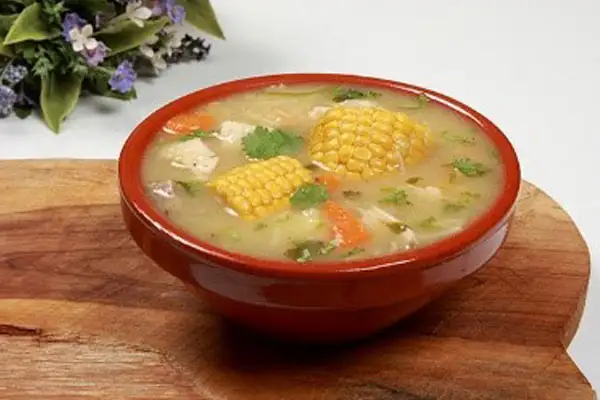
Sancocho
Sancocho de Gallina evolved from a traditional Spanish stew, the basic ingredients always including yuca, potatoes, plantain and corn. Added are large pieces of chicken to the hot broth. This dish is served with a side of rice and salsa de hierbas (spicy herb sauce). The recipe does vary from one region to another, the original version being from Valle de Cauca, bordering Quindío. However, Sancocho de Gallina is very popular in the Eje Cafetero, the coffee region of Colombia. This is one of the tastier versions of this dish, using free range chicken. You can find it everywhere in Quindió. There are also other varieties of this dish that feature beef or fish.
An extremely popular Andean treat is Trucha, which is a local rainbow trout served crispy and deliciously fried. It can be served with various side dishes such as arepas, papas criollas and a selection of salsas, including hogao, a typical Colombian sauce made with tomato, onion and coriander.
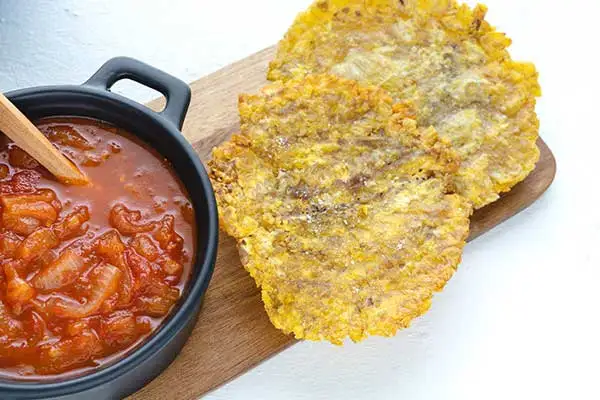
Patacones con Hogao
Lechona is a mix of rice, yellow peas, pork meat and spices that is usually served with an arepa and a piece of crispy pork skin. The preparation involves slow cooking the mix inside a full pig for around 10 hours. The dish originates from the Tolima region but is very popular in Quindió.
Bandeja paisa is a typical Antioquian meal that has become so popular with Colombians that it is known as the national dish of Colombia. You can find it everywhere, but its origin began in Santa Fe and Medellín. This meal is made with ingredients including white rice, chorizo, plantain, red beans, chicharron (pork crackling), a fried egg, some ground or minced beef, an arepa and a slice of avocado. Traditionally, it is served on an oval plate. The dish was originally meant to provide field workers with enough energy to get through their hard workday.
Arepas are a common street food popularized in Central and South America.
In Colombia, the most popular arepas are loaded with cheese (arepa con queso) or with eggs and meat (arepa con huevo). This popular street food is a good option for a quick meal on the go any time of the day. You can also find a version of arepas that is larger and flat. This corn-based bread accompanies breakfast, lunch, or dinner, especially in farming areas like Quindío.
Try the Antiochian style of arepas served with pork sausage.
Street food is a fundamental part of the culture in Quindío. Popular street food options include Empanadas, Tamales and Agua Panela con Queso.
Empanadas are stuffed pastries that can be filled with meat, cheese, rice, potato or a combination of these fillings.
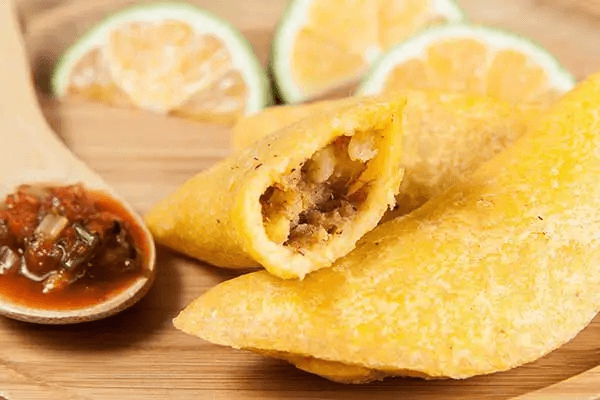
Empanadas
Tamales are made of corn dough filled with succulent pieces of chicken, potatoes and carrots combined with spices and wrapped in plantain leaves.
Agua Panela con Queso is a beverage made with unrefined Colombian sugar called panela, which is served hot with cheese. This is the perfect drink for cooler mountain nights.
The Greek philosopher Heraclitus said, “No man can cross the same river twice, because neither the man nor the water will be the same”. This is true to say about the traditional annual Desfile del Yipao held in both Armenia and Calarcá. The answer is more than philosophical. It is simply not the same. There is always something that varies in the parade or the substance of this beautiful spectacle.
The point is that in order to talk about the Yipao Parade, which has been taking place since 1988 in Quindío, you have to attend it, enjoy it, smell it, touch it and let yourself be infected by everything it represents for Quindío and the world.
People come far and wide to witness the parade for the good weather, lots of joy, and the sheer amazement of those who see it for the first time.
Acrobatics by the daring drivers, the history, Cuyabra identity, colour and beauty are just some of the ingredients that the traditional Yipao Parade carries in its enormous procession.
Like to create or customize a fantastico package tour of Colombia? Use our Plan My Trip page to start planning your dream Colombian vacation now!