
CITY GUIDE BOGOTÁ
Bogotá is a fantastic starting point on any traveller’s journey to Colombia. Begging to be discovered, there is a fascinating history, delicious food and the most incredible street art.
Bogotá’s history shapes its urban growth, seen in architectural landmarks blending colonial and modern styles. This blend is clearly visible in barrios like the historic La Candelaria neighbourhood and the famous Plaza de Bolívar. They are like open-air museums, teeming with cultural heritage and traces of indigenous history. The Gold Museum and the Botero Gallery offer a more in-depth look into the city’s past.
All these historical factors have moulded Bogotá into the bustling metropolis it is today. It is a city that honours its past while also looking forward to the future. The blend of old and new creates a vibrant vibe that invites you to explore Bogotá’s rich, layered history.
We work with and recommend booking flights with www.kiwi.com
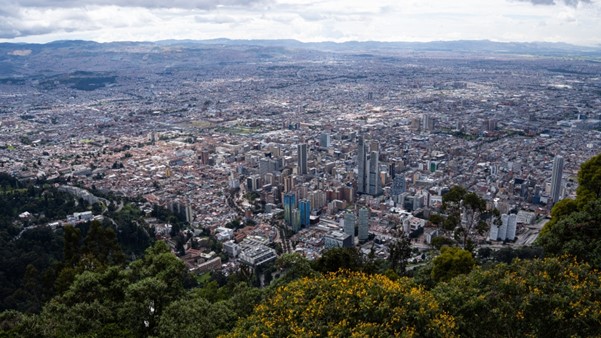
Bogotá is an ever-evolving city. Skyscrapers rise over sprawling barrios, as trendy shops move in and crime rates continue to fall. La Candelaria’s cobblestone alleys, colonial homes, and Baroque churches offer visitors a sophisticated, historic welcome. Natural beauty also surrounds Bogotá, with the city being flanked by the stunning Andes.
CLIMATE
Bogotá’s climate is characterized by two main seasons that control the city’s weather cycles. The rainy season occurs from around March to May and then from September to November. Mist and cloud cover are common in the city, but so is plenty of sunshine. Always have a light sweater and rain protection to hand since the temperature may fluctuate considerably throughout the day. The sun sets and rises consistently throughout the year, around 6:15 evening and morning. As soon as the sun dips below the horizon, the temperature drops significantly.
In terms of temperature, there is significant variation as a result of Bogotá’s high altitude at about 2,640m/8,660 feet above sea level. Average temperatures generally fall between 46°F/8°C and 66°F/19°C.
CITY SIGHTS
Bogotá has expanded at a breakneck pace over the last forty years or so and now is home to almost 20% of Colombia’s population. While that rapid development has not created the world’s most attractive city, it is a fascinating place.
To understand Colombia’s tumultuous history and see firsthand how the country has emerged from years of conflict into a modern-day wonder is alone enough reason to visit.
In Bogotá, there is no shortage of museums. We suggest you focus on four: the Museo del Oro (Gold Museum), the Botero Gallery, the International Emerald Museum and the National Museum of Colombia. The first three are located in the historic Candelaria district.
Museo del Oro (Gold Museum)
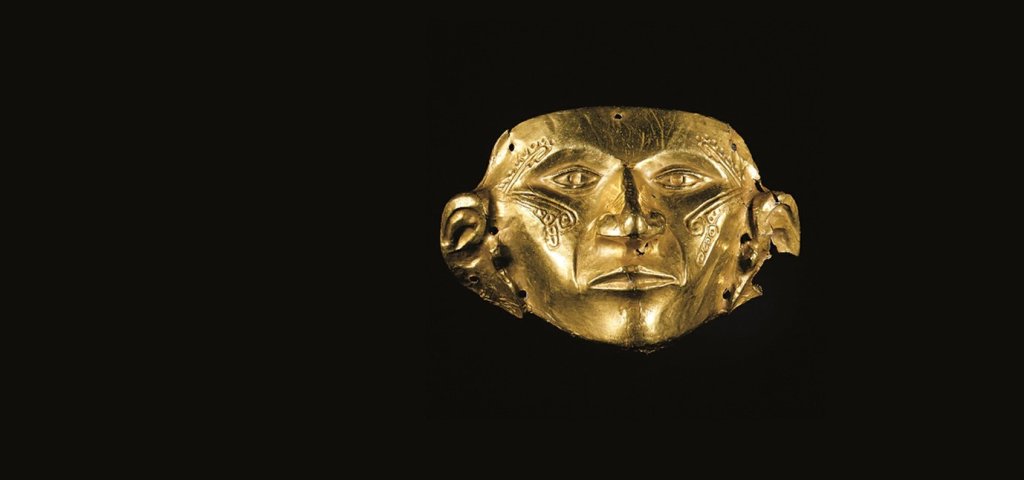
This is the most interesting museum in the entire country and sees over half a million visitors annually. Opened in 1939, the Gold Museum documents the importance and use of gold in pre-Hispanic civilizations in Colombia and is home to over 55,000 gold items.
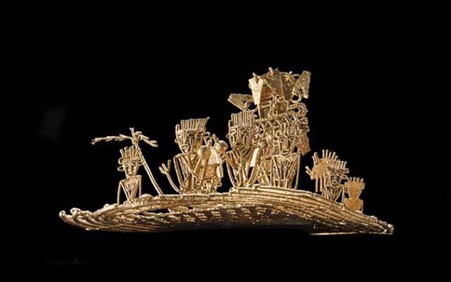
On the fourth floor, an item of Colombia’s pre-Hispanic history gleams with extraordinary beauty – the Muisca Raft. This intricate gold artifact, steeped in the mythology of El Dorado, dazzles audiences once again as part of a revamped exhibition that opened in December 2024.
For the first time, visitors will experience the iconic raft alongside an array of objects discovered with it. These include a ceremonial ensemble unearthed in a cave in Pasca, Cundinamarca.
The raft’s discovery was as serendipitous as it was surreal. Now, almost six decades later, the raft remains a symbol of Colombia’s indigenous heritage is a part of its national identity. There is a lot of information to take in, so be sure to get the audio guide.
 Muisca Raft
Botero Gallery
Even though you may never have heard of Fernando Botero, you likely will recognize some of his highly distinctive paintings of oversized, chubby characters. These included dodgy dictators, dancers, dogs and birds. Colombia’s most famous artist was also a prolific sculptor and his curvaceous bronze statues display equally generous girth.
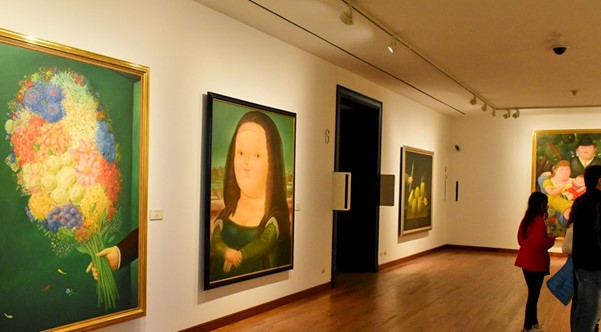
The museum, which belongs to the Banco de la República de Colombia, was founded in 2000 when Botero donated more than 100 of his own works, along with 85 from his personal collection of other artists’ work. These include pieces by Picasso, Monet, Matisse and Klimt.
Botero paintings to particularly look out for include a parody of Di Vinci’s Mona Lisa (1978), the wonderfully intimate Pareja Bailando (1987) and the haunting studies of Colombia’s drug-cartel violence in the 1980s and ’90s. The artist curated the museum himself with the promise that all exhibits would be displayed for free for everyone to see.
Emerald Museum
The International Emerald Museum, located very close to the Gold Museum, is dedicated to this stunning Colombian treasure.
Inside, a real mine has been reconstructed to allow the visitors to discover the process of formation and extraction of the emeralds from the Colombian mountains.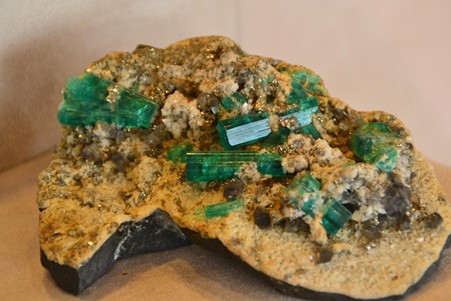 Begin organizing your dream Colombian getaway right away by using our Plan My Trip page!
National Museum of Colombia
Situated in the heart of Bogotá, this is the oldest and biggest museum in the entire country and one of the oldest on the continent.
Built in 1823, it is home to over 20,000 pieces of art and historical artifacts, some dating as far back as 10,000 years ago.
The building was actually used as a prison initially and it certainly is imposing, until it transitioned into a museum in 1946. To learn more about the country and its wonderful history, this museum is a must.
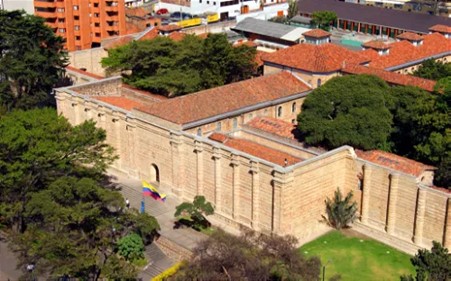 National Museum of Colombia
Plaza Bolívar
As a centre of historical and cultural significance in Bogotá, the Plaza de Bolívar is the pulsating hub in the Colombian capital. Notable architectural features surrounding Plaza de Bolívar include the statue of Simón Bolívar, the Primatial Cathedral of Bogotá, and the Palace of Justice, all contributing to its majesty. Throughout history, Plaza de Bolívar has been a hotspot for political gatherings, presidential inaugurations, and protests, underlining its role in Colombian history.
Under Spanish rule, the plaza was home to bullfights, circus acts, and public markets. Meandering around the square today, there are local vendors selling traditional Colombian snacks and crafts. A common sight is people feeding the plethora of pigeons, adding an element of charm to the plaza.
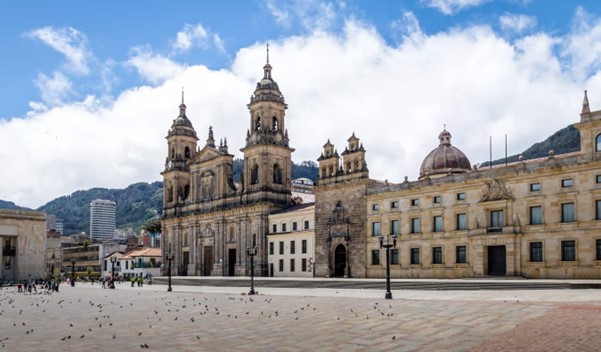 Plaza Bolívar
Cerro de Monserrate
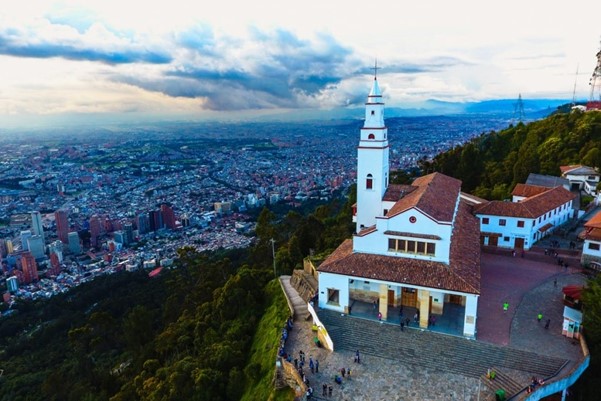
Experience the awe-inspiring beauty and significant cultural heritage of Bogotá’s Cerro de Monserrate. Towering at a height of 3,152m/10,341 feet above sea level, the mountain provides sweeping views of the city. At the top is the Basilica of Señor Monserrate, built in 1925 after an earthquake destroyed the chapel that had stood there since the 17th century.
There is the option to hike up, ride the funicular railway, or take the cable car, each offering its own unique views. Once at the summit, the spiritual importance of this site becomes obvious. Pilgrims often perform rituals at the church and shrine dedicated to El Señor Caído, a tradition rooted in the city’s history.
La Candelaria
Those interested in colonial architecture can explore the charming streets of La Candelaria. This is the old section of Bogotá. Wander the narrow cobblestone streets and take in the eclectic architecture, with art deco, colonial and baroque styles all calling the neighbourhood home.
Many of the city’s best attractions are here too, such as the Botero Museum, the Gold Museum and several churches and universities.
La Candelaria & Monserrate in Bogotá at a slow pace is an adventure
 La Candelaria
LOCAL MARKETS
Local markets in Bogotá are always abuzz, providing a window into the city’s daily life and opportunities to find unique items indigenous to the city. Bogotá has many markets and some of them are real institutions.
The Paloquemao market is highly recommended for epicurean visitors. Inside a former railway warehouse, this market is the ideal place to taste exotic Colombian fruits and discover the incredible diversity of what grows in the country. An explosion of flavours and colours guaranteed.
Close to Bolívar Plaza is Pasaje Rivas, the city’s first commercial thoroughfare. Here, many merchants sell handcrafts, pottery, hammocks, jewellery, hats, wicker basketsand the like. This is the place to go if you are looking for small souvenirs to take back home.
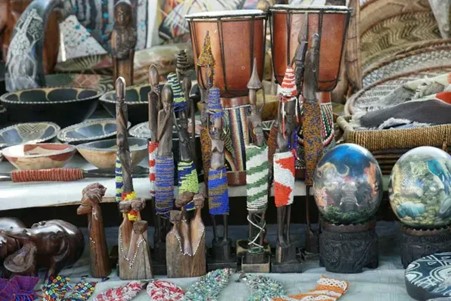 Pasaje Rivas
Usaquén Market, every Sunday, is where artisans line the cobblestoned streets to sell all sorts of local crafts and goods. While it is usually referred to as a flea market, items here are somewhat better and more upscale than some of the other markets. It is quite affordable and makes for a fun way to spend the day.
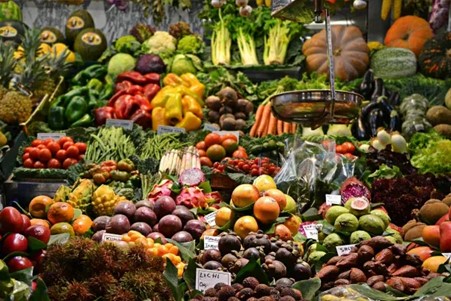 Market produce
CIUDAD BOLIVAR IN A CABLE CAR
The sprawling working-class districts of southern Bogotá can feel like another planet from the wealthy northern areas. To have a glimpse of this other side of Colombia, a good option is to visit Ciudad Bolívar, home to more than a million people. The cable car line TransMiCable, which opened in 2018, will let you soar safely over four colourful neighbourhoods clinging to the hills.
Look out for the amazing street-art murals.
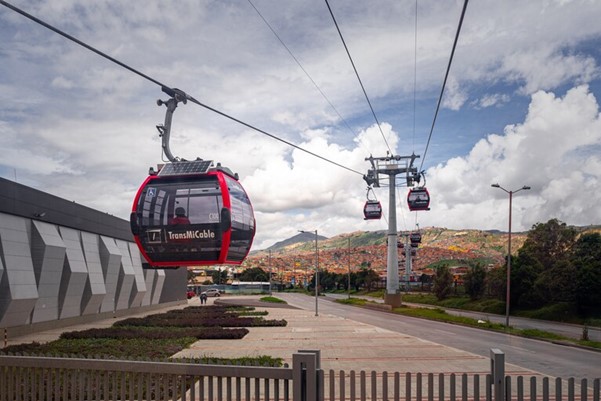
Quinta Camacho
This prosperous neighbourhood, close to the city’s financial district, is where well-heeled Bogotanos dine, frequent lively bars, shop in high-end boutiques, and wander art galleries. Early 20th-century architecture prevails, and the Four Seasons Casa Medina, a 1946 brick-and-stone landmark, is located.
Graffiti.
Bogotá is all about its street art. Walk around barrios like La Candelaria or Las Aguas and there are many incredibly beautiful murals. To get the best experience and context, join a Graffiti Tour with BnB Colombia Tours. The tour helps to reinvest in future community art projects.
EVENTS FOR FAMILIES
Parks: a nature break in the city
If you feel like taking a little nature break while exploring the city of Bogotá, there are several options available to you:
To familiarize yourself with the different ecosystems and the diverse flora that you will encounter during your trip to Colombia, there is nothing like spending half a day in the José Celestino Mutis Botanical Garden in the northwest of the city. In its greenhouses, you will find hundreds of species of plants and flowers from different regions of the country, from the Amazon to the Caribbean, the Andes, and the páramo. Among the incredible collections are orchids, including the national flower of Colombia. It is a really peaceful place to walk around, and there are some food stalls nearby so you can grab a quick bite as you explore the gardens and browse the exotic flowers and trees.
For a truly relaxing experience, have a picnic, read a book or play sports. The perfect spot is the Simón Bolívar Park: With more than 113 hectares/279 acres, it is the largest park in the city. It has some 16 kilometres/10 miles of paths for walking, running or cycling, a large lake for boating, and hundreds of trees.
CUISINE
Delving into Bogotá’s vibrant food scene is an adventure that combines traditional Colombian dishes with international flavours, making it a haven for food lovers. Colombian food is a blend of indigenous, Caribbean and European traditions. Bogotá, in particular, is an amazing city for gastronomic delights.
This is backed by the city’s hosting of numerous food festivals yearly, which feature everything from local specialties to fusion cuisine that melds Colombian traditions with worldwide culinary influences
One of the best ways to get a sense of the city’s culinary offerings, though, is to take a Bnb Colombia Tours food tour. This takes you on a tasting extravaganza that lasts several hours, stopping at different eateries within the La Candelaria neighbourhood.
CULTURAL FESTIVALS
Participate in Bogotá’s cultural mosaic by taking part in one of the many cultural festivities held throughout the year. These events honour everything from traditional dances to local gastronomy, offering a distinctive perspective on Colombian traditions and customs. In April, since 1988, the Bogotá International Book Fair has been held. For two weeks, Bogotá transforms into a giant bookstore, promoting reading across Colombia.
In June, Bolívar Park becomes an open-air stage for Rock al Parque, a free festival featuring local and global artists. More music in October for Hip Hop al Parque, while in November there is the Salsa festival. August hosts the meeting of gourmet chefs for the Alimentarte Festival, which gathers together the greatest Colombian chefs over five days. During the first part of the festival, a guest country is honoured, before giving pride of place to a region of Colombia (different each year) for the remaining days. The Festival Ibero-Americano de Teatro de Bogotá is held in July every two years, and also the Bogotá Film Festival is held in October.
As for nightfall in Bogotá, it ushers in a lively nightlife scene where you will find everything from fashionable bars to time-honoured salsa clubs.
PLACES TO STAY
Bogotá has great places to stay to suit all budgets and preferences.
Here are some to consider:
In Bogotá, every corner harbours a slice of history waiting to be unearthed, every meal offers a fresh gastronomic experience and every interaction serves as an opportunity to immerse oneself in the vibrant Colombian culture.
Like to create or customize a fantastico package tour of Colombia? Use our Plan My Trip page to start planning your dream Colombian vacation now!